- Wheel off, tire off, full check
- Told if it's cosmetic only
- Licensed mechanics Alex and Dan
- Serving Orléans since 2013
Deciding Between Rim Repair and Replacement
Most cosmetic damage, small bends, and slow leaks from a corroded rim edge can be repaired. Cracks, bends near the centre of the wheel, and damage around the lug holes usually mean replacement is the safer call. The right answer depends on where the damage is, not just how bad it looks.
A rim can look awful and still be easy to fix. It can also look almost fine and need replacing. That's why the first step is a close look at where the damage sits and what it's doing to the wheel. Here's how we think about it, so you can follow along and make the call with us.
Repair usually makes sense when:
- You've got curb rash or scrapes on the outer edge. This is mostly about looks, and the wheel is still strong.
- There's a small bend on the inner or outer lip, often from a pothole, and you can feel a light shake at highway speed.
- The tire keeps losing air slowly because the edge of the rim has corroded where the tire seals. Ottawa winters and road salt are hard on that sealing surface.
- The wheel is part of a matched set and a replacement would be hard to find or wouldn't match the others.
Replacement is usually the safer choice when:
- There's a crack in a spoke or in the face of the wheel. A crack can grow, and that's not something to gamble on.
- The bend is close to the centre of the wheel where it bolts to your car.
- There's damage or wear around the lug nut holes.
- The wheel has a deep bend, more than one bend, or has already been repaired before in the same spot.
Here's a common situation: you hit a pothole on the way home, and a day later the tire pressure light comes on. Sometimes that's just a bent lip letting air escape, and fixing the rim solves it. Other times the hit also cracked the wheel behind the spokes, where you can't see it while it's on the car. You won't know which one you have until the wheel comes off for a proper look.
Cost comes down to a few things. The type of wheel matters most. Basic steel wheels, like a lot of winter setups, are often cheap enough to replace, so repairing them doesn't make sense. Alloy wheels cost more to replace, so repair is often worth it. The finish matters too, since a painted or machined face takes more work to look right again. How easy it is to find a matching wheel can tip the decision as well.
Before you agree to anything, it's fair to ask a few questions. Where exactly is the damage? Is it about looks or about safety? Would a new wheel cost less than fixing this one? If your car has tire pressure sensors, will the sensor move to the new wheel or need replacing?
Our goal is simple. We want you to make an informed choice about your own car. With our digital inspections, you can see what we see, so if repair is the smart move we'll tell you, and if a new wheel is the safer bet we'll tell you that too, even when it's the smaller job.
Pothole and Curb Strikes Behind Most Bent Rims
Most bent rims come from one sharp hit. A pothole's back edge or a curb catches the wheel at speed, and the force has nowhere to go but into the metal. The lip of the rim takes the hit first, which is why most bends show up on the edge and not the face of the wheel.
Ottawa roads make this easy to do. Every winter and spring, water gets into cracks in the pavement, freezes, swells, and thaws again. After enough cycles the road breaks apart, and new potholes open up faster than they can be patched. Many sit full of meltwater, so you can't tell how deep they are until you're already in one. Snowbanks also narrow lanes and hide curb edges, making it easy to scrape or bump a wheel while parking.
Low-profile tires make it worse. There's less rubber between the road and the rim, so a hit that a taller tire would soak up goes straight into the wheel. Alloy wheels can bend or crack this way. Steel wheels tend to bend instead of crack.
According to TriState Ford, a bent rim doesn't always look bent. The damage is often on the inner lip, facing your brakes, where you'd never see it while the wheel's on the car.[1] So it helps to pay attention to how the car feels in the days after a hard hit. Here are the signs to watch for:
- A shake or shimmy in the steering wheel or seat that shows up at highway speed and wasn't there before.
- One tire that needs air more often than the others, or a tire pressure light that keeps coming back.
- The car pulling to one side, or the steering wheel sitting off-centre when you're driving straight.
- A bulge or bubble on the sidewall of the tire. That points to tire damage and should be looked at right away, even if the rim seems fine.
- A visible dent, flat spot, or fresh scrape along the edge of the wheel.
Not every shake after a pothole means a bent rim. A wheel can lose a balance weight in the same hit, and that causes a vibration too. Tire balancing fixes that quickly, and it's one of the first things worth ruling out. The opposite is also true. A wheel can be bent just enough to slowly leak air without any shake at all.
A hard hit doesn't always stop at the wheel, either. The same force travels into the parts that hold the wheel in place. If your steering feels loose, you hear a new clunk over bumps, or the car pulls even after the wheel checks out, have the suspension and tie rods looked at too. Those are separate jobs, but they often get missed when everyone's focused on the rim.
Here's the honest part. You don't need to guess which of these you're dealing with. Once the wheel's off the car and spun up, a bend or crack is easy to find, and you'll know whether you're looking at a quick fix, a new wheel, or just a lost balance weight. Catching it early also protects your tire, since a bent edge that keeps leaking air can wear the tire unevenly or damage it from driving low.
Signs a Damaged Rim Needs Attention Now
You already know what a damaged rim can feel like. The bigger question is how fast you need to deal with it. Some rim problems can wait for your next tire swap. Others shouldn't wait until tomorrow. Here's how to tell the difference.
Get it looked at today if:
- The tire goes soft within hours or won't hold air at all. A rim that leaks that fast is close to letting the tire come off the bead.
- You can see a crack anywhere on the wheel, even a small one. Cracks don't stay small.
- The shake is getting worse each time you drive, not staying the same.
- The steering feels very different right after a hard hit, like it's wandering or suddenly pulling hard.
- You spot a sidewall bulge. As we mentioned above, that's a tire problem that can't wait, whatever shape the rim is in.
In any of these cases, put the spare on or leave the car parked instead of pushing it across town. A few kilometres on a failing wheel can turn a rim repair into a new wheel, a new tire, and a ruined afternoon.
Book it within the week if:
- One tire needs topping up every few days or once a week.
- There's a mild shake at highway speed that hasn't changed since the hit.
- You found a bend on the lip but the tire's holding air and the car drives straight.
These aren't emergencies, but they don't fix themselves. Ottawa's cold makes a slow leak worse, too. Tire pressure drops as the temperature falls, so a tire that's a little low in the afternoon can be a lot lower on a frosty morning. If you're adding air every few days, that's your sign to stop topping up and get the rim checked.
It's okay to wait if:
The damage is curb rash or light scrapes only. There's no air loss, no shake, and no pull. That's a cosmetic fix, and it can wait until it suits you. One thing to watch: if a scrape has gone through the paint to bare metal, road salt will start eating at it over the winter. That's how a looks-only problem turns into a slow leak later on. A good time to deal with it is your spring or fall tire swap, when the wheels are already coming off the car.
Not sure which group you're in? That's normal. Many drivers can't tell a lost balance weight from a bent lip just by how the car feels. We'll take a look and give you a straight answer. With our digital inspections, you'll see photos of exactly what we found, and we'll text you updates so you're never left wondering. If it can wait, we'll tell you that.
When a Scuffed Rim Does Not Need Repair
Plenty of scuffed rims don't need us at all. If the tire holds air, the car drives straight, and there's no shake, a mark on the wheel is often just a mark. Here are the common cases where we'd tell you to save your money.
Your winter steel wheels look rough. That's normal. Steel winter wheels spend months in slush, salt, and snowbanks, and nearly all pick up scrapes, dings, and surface rust along the way. They're built to take it. A scuffed steel wheel that still holds air and runs true can keep going for years. It only becomes a problem if it starts leaking where the tire seals.
The damage is on a wheel cover, not the wheel. Lots of cars with steel wheels have a plastic cover snapped over them. When that cover cracks or gets chewed up on a curb, the metal wheel underneath is usually fine. Pop the cover off and look. If the steel behind it isn't bent, all you need is a new cover, which you can pick up and put on yourself.
It's a small chip in the paint. A tiny chip on a painted alloy wheel doesn't call for a full refinish. Covering the spot with touch-up paint keeps bare metal away from road salt, which is the part that matters. It won't look factory perfect up close, but from a few feet away most people will never notice.
You're selling or trading the car soon. If the car is leaving your driveway in the next few months and the damage is only cosmetic, it's fair to ask whether a repair is worth it to you. Just make sure the wheel is safe and holds air. Making it pretty is your call.
The scuff is on the tire, not the rim. A light scrape on the sidewall rubber, the kind you get from brushing a curb while parking, often looks worse than it is. A shallow scuff isn't the same as a cut, a gouge you can see into, or a bulge. If you're not sure which one you have, that's worth a quick look.
A few quick checks will tell you if you can relax:
- The tire pressure on that wheel stays the same as the others over a week or two.
- There's no new shake or pull at highway speed.
- You can't see a crack, a flat spot, or a bend along the edge of the wheel.
- Any bare metal is small and you're able to cover it.
If all four are true, you can leave it alone. When your wheels come off for the next seasonal tire swap, ask whoever's doing the work to take a quick look at that one. That's the easiest time to spot anything hiding on the inner lip, and it won't cost you an extra trip.
We'd rather you trust us with the repairs that matter than pay for ones that don't. If the wheel is fine, it's fine.
What Happens During a Rim Inspection and Repair
A lot of people picture rim repair as someone tapping a dent out with a hammer. A good repair takes more care than that. Most of the work goes into finding everything that's wrong before anything gets fixed. Here's what a proper job looks like.
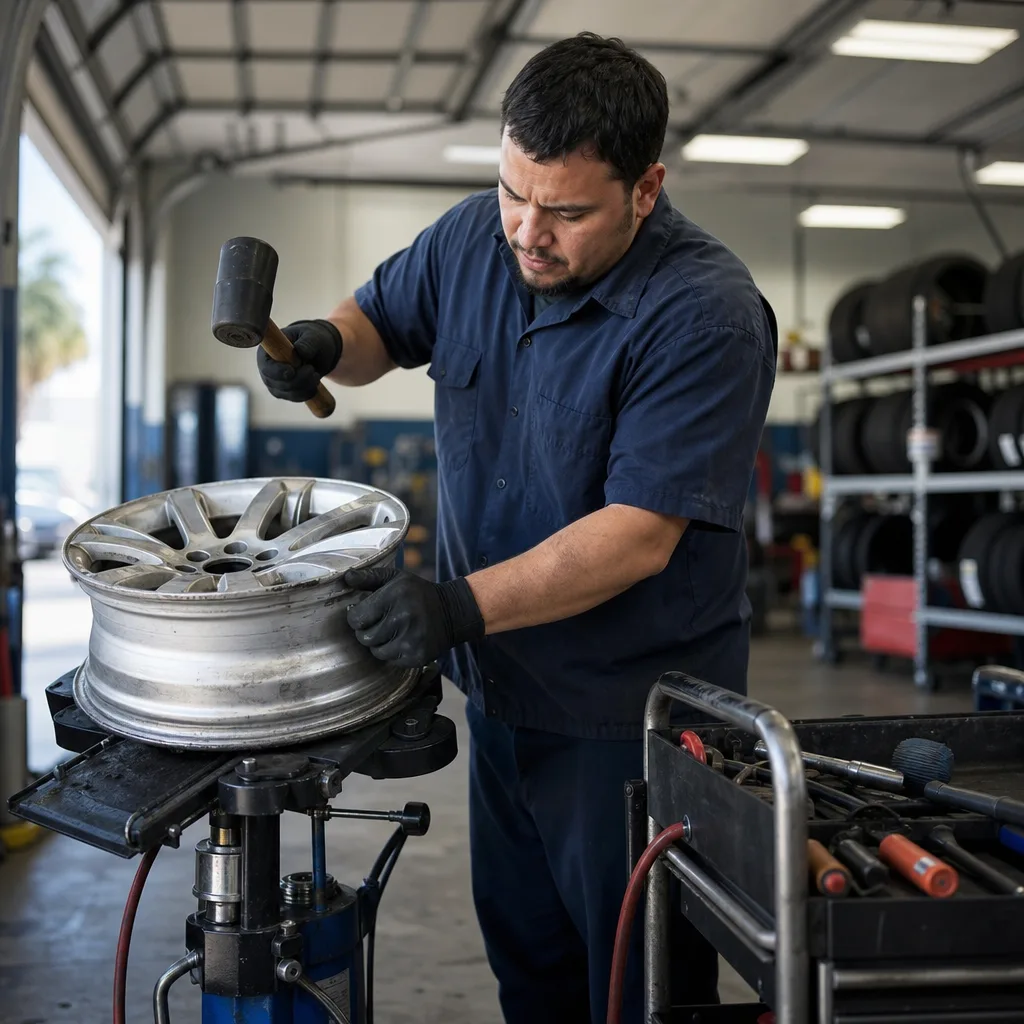
It starts with getting the wheel off the car and the tire off the wheel. That matters more than it sounds. With the tire still on, you can't see the inner lip or the bead seat, and those are the spots where bends and corrosion like to hide. Once the rim is bare, it gets cleaned so dirt and road salt aren't covering up anything important.
Next comes the close look. A careful inspection checks for these things:
- Cracks in the spokes, the face, and the back of the wheel, including areas you can't see while it's mounted
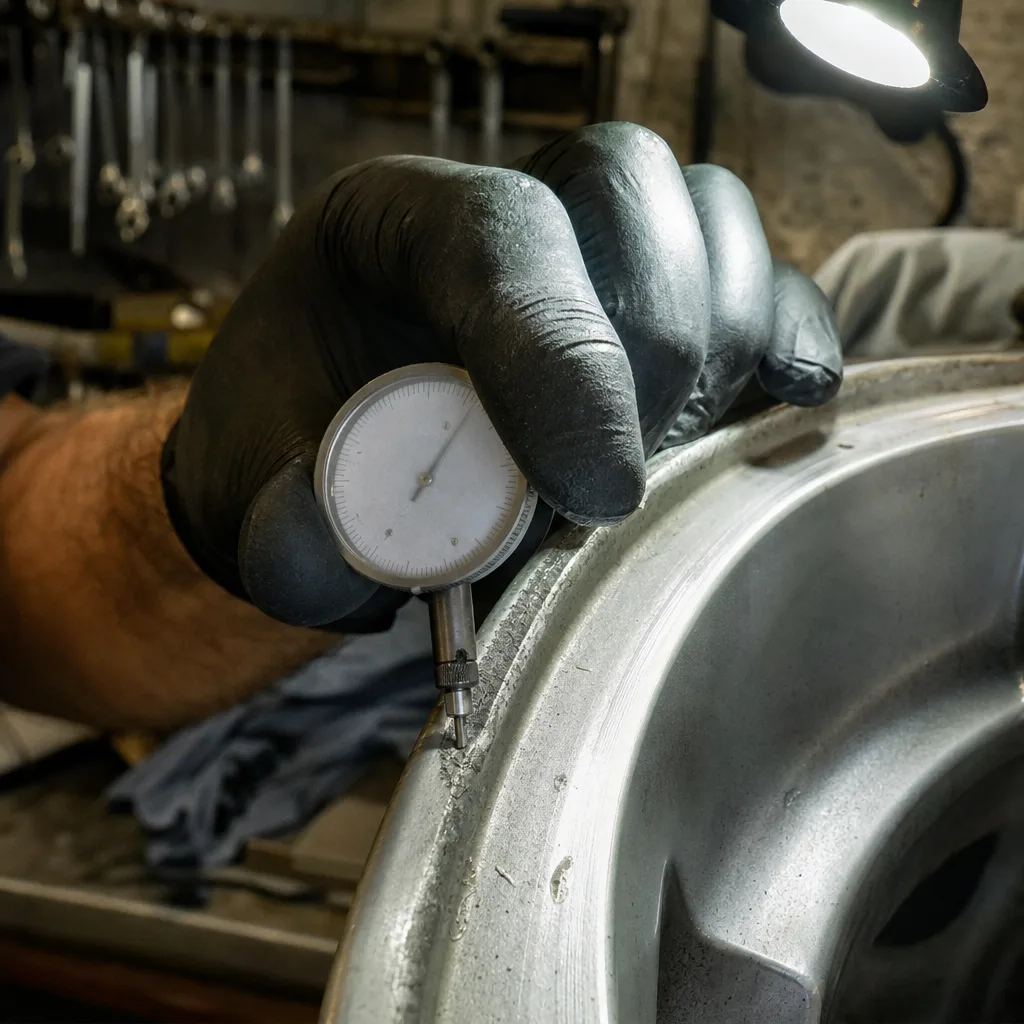
- Bends along the inner and outer lip, found by spinning the wheel and watching how true it runs
- Corrosion or pitting on the bead seat, where the tire seals against the rim
- The area around the lug holes and the centre bore, where the wheel bolts to your car
- The tire pressure sensor, if your car has one, to make sure it wasn't damaged in the hit
This is the point where you should hear what was found before any repair work starts. With our digital inspections, you'll get photos of your actual wheel, and we'll text you so you can see the bend or the corrosion for yourself. If something turns up that changes the plan, like a crack nobody could see from outside, you'll know right then.
The repair itself depends on what the wheel needs. A bent lip is straightened slowly and carefully until the wheel runs true again. A leaky bead seat is cleaned down to good metal so the tire can seal tight. If you're having cosmetic damage fixed too, the scraped area is smoothed, filled if needed, and refinished. That part usually takes the most time, since paint and finish need care to match the rest of the wheel.
Putting it back together is just as important as the fix:
- The tire goes back on, and the sensor is reinstalled or replaced if it was damaged
- The tire is inflated and checked for leaks around the bead and valve
- The wheel is balanced, because a repaired rim still needs to spin smoothly
- The wheel goes back on the car and the lug nuts are tightened to the right spec
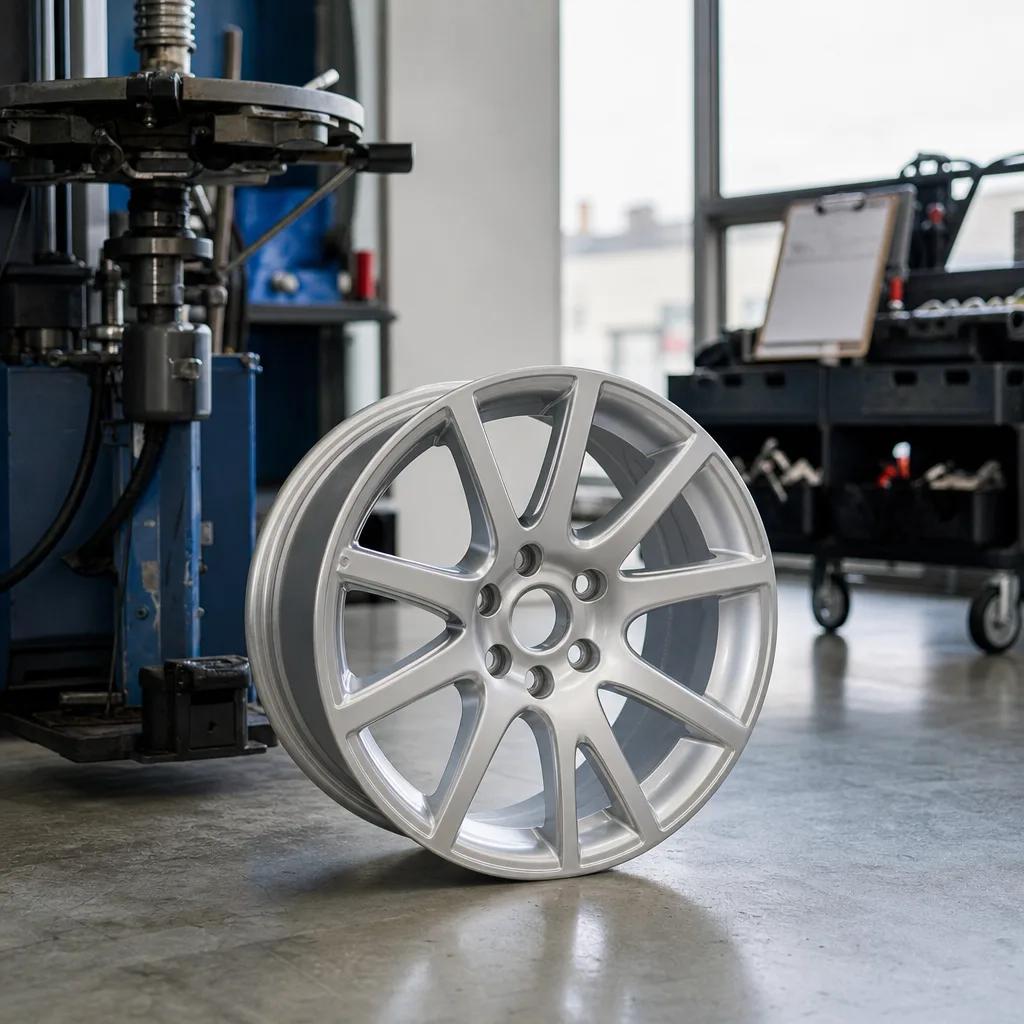
How do you know it worked? The shake you felt on the 174 or the Queensway should be gone. The car should drive straight. Over the next couple of weeks, that tire should hold its pressure just like the other three. If anything still feels off, say so. Sometimes the shake was coming from more than just the wheel.
Frequently Asked Questions
Can I keep driving on a bent rim for a few days before getting it checked?
It depends on how the car feels, not just how the wheel looks. A mild shake at highway speed that hasn't gotten worse can usually wait a week, but a tire going soft within hours, a visible crack, or a shake that keeps getting worse means you should stop driving on it and get it looked at right away. Pushing a failing wheel across town can turn a simple rim repair into a new wheel and a new tire.
Will a bent rim also throw off my wheel alignment or suspension?
A hard hit can affect more than just the rim, since the same force travels into the parts holding the wheel in place. If your steering feels loose, you hear a new clunk over bumps, or the car still pulls after the wheel checks out fine, it's worth having the suspension and tie rods inspected too. Those are separate jobs from rim repair, but they often get missed when everyone's focused on the wheel.
My tire pressure sensor light came on after I hit a pothole. Does that mean my rim is damaged?
Not always, but it's worth checking either way. Sometimes a sensor light means a bent lip is letting air escape slowly, and fixing the rim solves it; other times the sensor itself was knocked loose or damaged in the same hit. Since the sensor is checked during a proper rim inspection, it gets caught either way once the wheel comes off the car.
Why do so many rims get bent on Ottawa-area roads in winter and spring?
It comes down to freeze-thaw cycles chewing up the pavement. Water gets into cracks, freezes, swells, and thaws again, and after enough cycles the road breaks apart faster than crews can patch it. Many of those potholes sit full of meltwater, so you can't tell how deep they are until you're already in one, which is why rim damage spikes during winter and spring.