
Winter Tire Change in Orléans
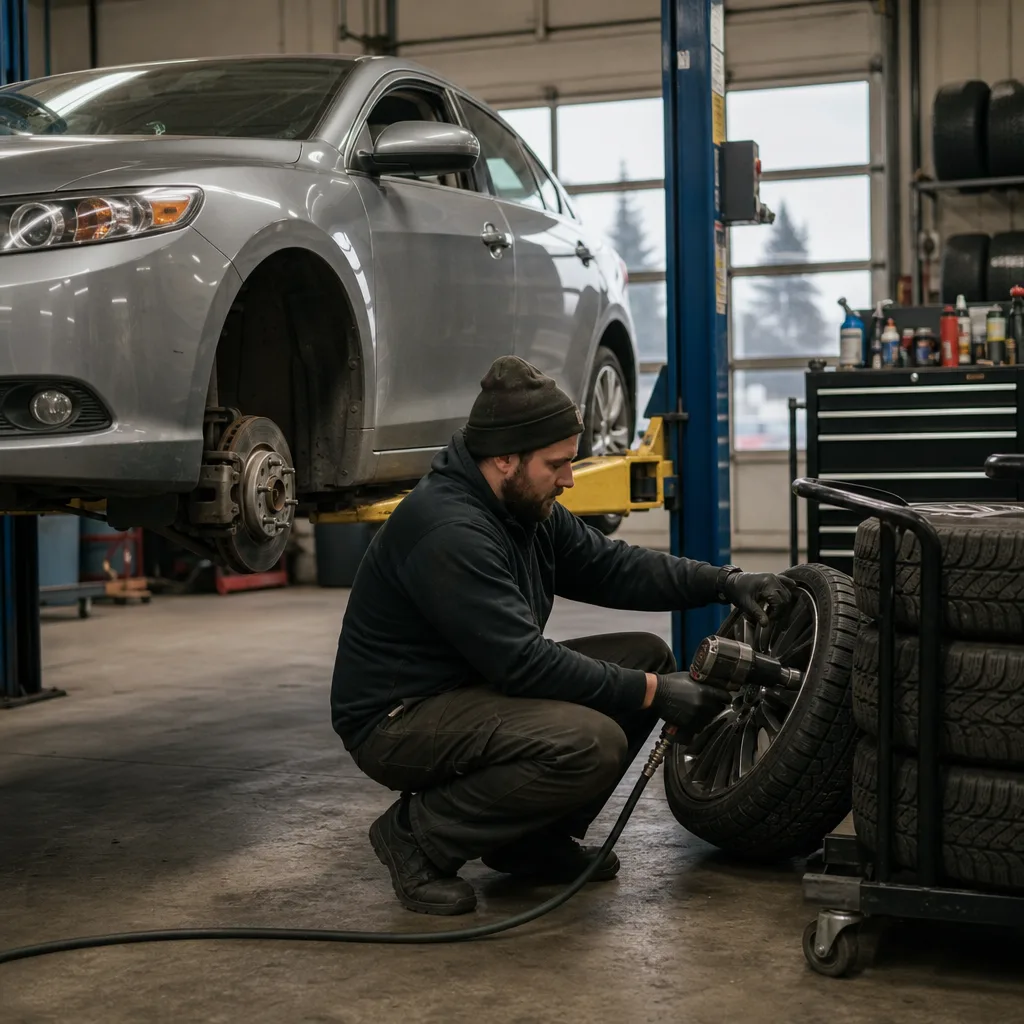
- Torqued, not just air-gunned
- Told if the set has life left
- Licensed mechanics Alex and Dan
- Serving Orléans since 2013
Know When to Switch to Winter Tires
The best time for a winter tire change is when daytime temperatures stay around 7°C or colder, not when the first snow falls. In Orléans, that's often late October into November. In the spring, switch back once it's staying warmer than that, because winter tires wear down quickly on warm pavement.
Most people wait for the first snowfall before they think about a winter tire change. That's usually a little too late. Snow isn't really the signal. Cold is.
All-season tires are made of rubber that starts to stiffen as it gets cold. According to Continental Tires, once temperatures drop to about 7°C, they don't grip the road as well, even when it's dry [1]. Winter tires use a softer rubber that stays flexible in the cold. They also have deeper grooves and lots of tiny slits that help them bite into slush, snow and ice. So if your mornings are already near freezing, you're giving up grip before you ever see a flake.
Around Orléans, those cold mornings tend to show up well before the snow sticks. You might leave for work on Highway 174 with frost on the windshield and slick spots on the ramps, then drive home in the afternoon on wet, chilly pavement. That's exactly when winter tires start earning their keep.
Here are some simple signs it's time to book:
- Daytime highs are staying around 7°C or lower for a week or more.
- You're scraping frost off your car most mornings.
- The forecast is starting to mention flurries or freezing rain.
- You've got a long drive or a trip out of town coming up in November.
Now for the honest part. You don't need to rush in September or early October just to be safe. If it's still warm out, putting winter tires on early only wears them down faster. Their soft rubber doesn't last as long on warm pavement, so a few extra weeks of mild driving can take real life out of a set you paid good money for. Waiting until the cold arrives is the smarter move for your wallet.
The one thing worth planning ahead for is the rush. Once the first real snowfall hits Ottawa, lots of people call shops up and down St. Joseph Blvd on the same day. If you book when the temperatures start to dip, rather than after the storm, you'll get a time that works for you instead of whatever's left.
Spring works the same way in reverse. Don't swap back at the first sunny day in March. Ottawa loves a late cold snap, and you'll want winter tires for it. Once the days are staying above about 7°C and the overnight freezes are mostly done, usually sometime in April, it's time to put your all-seasons back on. Leaving winter tires on through a warm spring and summer is one of the quickest ways to wear them out.
If you're not sure whether your current set will make it through another season, that's worth checking before you book. We'd rather tell you straight that your tires have plenty of life left than have you guess.
Check If a Tire Swap Is Enough or You Need New Tires
A lot of people come in for a winter tire change already braced for bad news. Here's the good news. If your tires were in decent shape last spring and they've been stored somewhere cool and dry, a simple swap is often all you need. You don't have to buy new tires every few years just because someone tells you to.
You can check a few things yourself before you book. Pull the tires out of the garage or shed and take a close look in good light.
- Tread depth: Winter tires need deep grooves to push slush and snow out of the way. Look for the small raised bars inside the grooves. If the tread is close to level with those bars, the tire won't grip well in snow, even if it still looks okay on dry pavement.
- Uneven wear: If one edge is worn much more than the other, or the tread looks choppy, it can point to an alignment or suspension issue. It's worth sorting out before you put tires back on.
- Cracks and dry rot: Small cracks in the sidewall or between the tread blocks mean the rubber is drying out. Older rubber gets harder, and hard rubber is exactly what you're trying to get away from in winter.
- Bulges, cuts or plugs near the sidewall: A bubble on the side of a tire is a sign of internal damage. That tire shouldn't go back on the car.
- Age: Every tire has a date code on the sidewall. Rubber hardens with time even if the tread looks deep, so a set that's been sitting around for many years deserves a closer look.
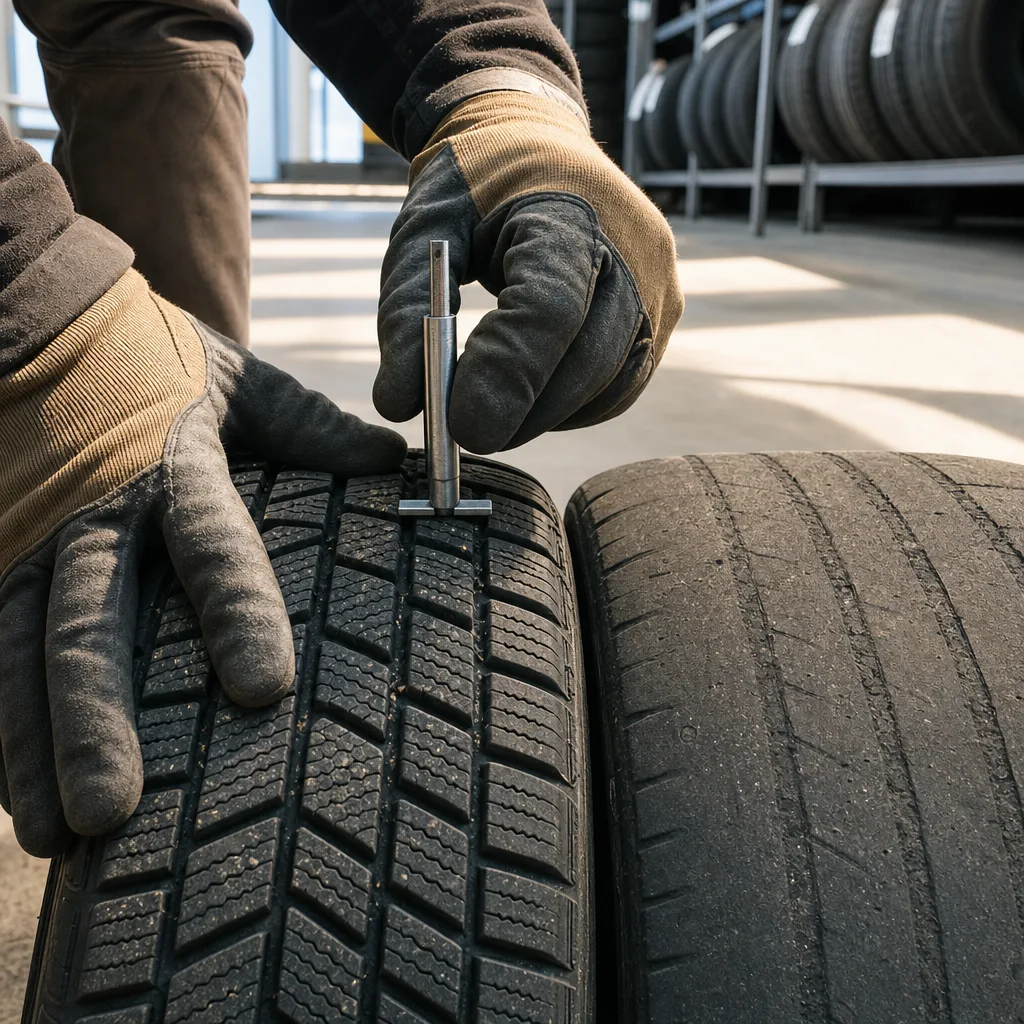
Think back to last winter, too. Did the car slide more than you expected coming down a hill or stopping at a light on St. Joseph Blvd? Did it feel like you were losing grip in slush that used to be no problem? Those are real clues. Tires can wear past their best without looking dramatic.
How your tires are set up also changes what the job involves. If your winter tires are already mounted on their own rims, the change is a straight swap: take one set off, put the other on and torque the wheels properly. If you only have one set of rims, each tire has to be taken off the rim and the other mounted on, then balanced. That takes more time, and it's one of the main reasons a winter tire change costs more at some visits than others. A second set of rims can pay off over a few seasons if you plan to keep the car.
If you're not sure what you're looking at, that's fine. Bring the tires in with you. We'll check the tread, the sidewalls and the date codes and show you what we found. If they've got another good season in them, we'll tell you that and swap them on. If they don't, we'll explain why and help you look at new tires that fit how you drive. Either way, the decision is yours, and you'll make it knowing exactly what shape your tires are in.
One more thing worth mentioning. If your tire pressure light comes on after the swap, it may be a sensor issue rather than a tire problem. That's something we can look at separately with TPMS sensor replacement if needed.
What Happens During a Winter Tire Change
A winter tire change looks simple from the waiting room. Wheels come off, wheels go on. The small steps in between decide whether your car feels solid on a slushy morning or starts to shimmy at highway speed on the 174. Here's what a careful job involves, so you know what to expect.
A few small things on your end make the visit go faster:
- Bring your locking lug nut key if your wheels have one. It's usually in the glove box or under the trunk floor. Without it, the wheels can't come off.
- Load your winter tires into the car or have them ready to drop off. If you marked which corner each tire came off last spring, that's helpful.
- Clear out the trunk if your tires are going in there for the ride home.
Once the car is in the bay, it gets lifted and the wheels come off. If your winter tires are already on their own rims, they go straight on. If you're sharing one set of rims, each tire has to be swapped on the rim and balanced first, as we covered above. Balancing matters more than people think. A tire that's even a little out of balance can cause a vibration in the steering wheel and uneven wear over the season.
Before anything goes back on, each tire should get a quick look for the things you checked at home: tread, sidewall damage and age. It's also a good habit to move tires to a different corner than last year. Front tires on most cars wear faster than the rears, so rotating them helps the set wear more evenly and last longer.
With the wheels off, it's also an easy moment to take a look at your brakes. You don't have to do anything with what you learn. It's just good to know before winter, when stopping on icy roads like the hills off Jeanne d'Arc Blvd puts your brakes to work.
Then come the steps you shouldn't skip:
- Tightening the lug nuts to the right torque. Too loose and a wheel can work its way free. Too tight and you can damage the studs or warp the rotors. A proper job uses a torque wrench and tightens the nuts in a star pattern, not just a quick blast from an air gun.
- Setting the tire pressure to what your car's maker calls for. You'll find it on a sticker inside the driver's door, not on the tire itself.
- Checking that the tire pressure light behaves. Some cars need the system reset after a swap.

When it's done, you should leave knowing what shape your tires are in. We like to keep you in the loop, whether that's showing you what we noticed or sending a quick text when your car is ready. If something needs attention, like a worn tire or a brake pad getting thin, you'll hear about it plainly, with no pressure to fix it that day. You can decide what makes sense for your car and your budget.
Understand What Drives Winter Tire Change Cost
If you've called around for a winter tire change, you've probably noticed the quotes don't always match. That doesn't automatically mean someone's overcharging. It usually means the jobs aren't the same. Once you know what changes the work, you can compare quotes fairly and walk in with no surprises.
The biggest factor is one we touched on earlier: whether your winter tires are already on their own rims. A straight wheel swap is quicker than taking tires off and on a single set of rims and balancing them. If that's the only thing you take from this section, you'll already understand most of the difference between two quotes.
After that, a few other things can add time or parts:
- Tire pressure sensors. Many newer cars have a sensor in each wheel. If your winter rims don't have sensors, your dash light may stay on all season. If they do, some cars need the system reset or relearned after the swap, which takes a bit of extra time.
- Wheel size and tire type. Larger wheels and low-profile tires take more care to mount and balance without damaging the rim. Truck and SUV tires are heavier and bigger, so they take longer too.
- Rust and road salt. Ottawa roads get a lot of salt every winter, and it builds up on hubs and lug nuts. A wheel that's rusted onto the hub, or a lug nut that's seized, takes extra work to free up safely.
- A missing lock key. If your wheels have locking lug nuts and the key can't be found, removing them takes special tools and more time. A quick look in the glove box before you come in can save you that cost.
- New tires instead of a swap. If your old set doesn't pass the checks from earlier, the cost now includes the tires themselves, plus mounting, balancing and getting rid of the old ones.
It also helps to know what isn't part of the tire change. If something comes up during the visit, like thin brake pads or a tire that can't be repaired, that's a separate decision with a separate cost. You should hear about it and get to decide before any extra work happens, not find it on your bill afterward.
Here are a few good questions to ask any shop before you book, ours included:
- Is balancing included, or is it extra?
- Does the price change if my tires need to be mounted on rims?
- Will you reset the tire pressure system if my car needs it?
- Will you check with me before doing anything beyond the swap?
Clear answers to those four questions tell you a lot about a shop. Our goal is simple: you should understand what you're paying for and why, so you can make the choice that fits your car and your budget. Tell us what you drive and whether your tires are on their own rims, and we'll walk you through what your visit involves before you ever pull into the bay on St. Joseph Blvd.
Avoid Common Mistakes With Seasonal Tire Swaps
Most tire problems don't come from the swap itself. They come from small things that happen before and after it. These are the mistakes worth knowing about, because each one can cost you a season of tire life or some grip when you need it most.
Storing tires the wrong way. Tires spend about half the year sitting in a garage or shed, and how they sit matters. Here's what helps them come out in good shape:
- Wash off the road salt and grime before you put them away. Ottawa's winter salt keeps working on rubber and rims all summer if you leave it there.
- Keep them out of the sun. A shed window or an open carport lets in sunlight that dries out rubber over time.
- Keep them away from heat and motors. Don't park them beside a furnace, a water heater or a freezer that runs all summer.
- Store tires on rims lying flat in a stack, or hang them. Tires without rims should stand upright and get turned now and then, so they don't develop a flat spot.
Forgetting about pressure once it gets cold. Your pressure was set right on swap day, but air shrinks as it cools. A tire that was fine on a mild November afternoon can be low after the first deep freeze in January. Low tires wear faster on the edges and don't grip as well in slush. Check your pressure against the door sticker every few weeks through the winter. Do it in the morning before you drive, when the tires are cold and the reading is accurate.
Running only two winter tires, or mixing sets. It's tempting to save money by putting winter tires on just the front, or by pairing two newer tires with two tired ones. The problem is balance between the ends of the car. If the front grips and the back doesn't, the rear can slide out on a slippery turn or ramp. Winter tires work best as a matched set of four with similar wear.
Ignoring something new after the swap. If you notice a fresh vibration in the steering wheel, a pull to one side, or a clicking or knocking sound from a wheel in the first few days, don't just turn up the radio. It could be a balance issue or a wheel that needs another look. It's a quick thing to check, and it's much better caught early than on a fast stretch of the 174.
Waiting too long in the spring. We covered timing earlier, but it's worth saying again as a mistake because it's such a common one. People get busy, the snow melts, and the winter tires stay on into May or June. That soft rubber wears quickly on warm pavement, and it's an easy way to lose a season you already paid for.
None of this is hard. A little care between seasons means your tires last longer and you're not shopping for a new set before you need to. If you have a question about how your tires look or how you're storing them, just ask. We're happy to explain it in plain language and help you make the call that's right for your car.
Frequently Asked Questions
Is there an actual law requiring winter tires in Orléans like there is in Quebec?
No, Ontario does not have a law requiring winter tires the way Quebec does. That means the timing is entirely up to you and your driving conditions. The smart move is still to watch the temperature rather than the calendar, since grip drops once mornings stay near 7°C. Waiting for a law that doesn't exist here just means you risk driving on stiff rubber during the first cold snap.
Can I just bring in my own winter tires if I bought them somewhere else?
Yes, you can bring in winter tires you already own, whether you bought them locally or elsewhere. What matters most is whether they're mounted on their own rims or need to be swapped onto a single set. If they're on their own rims, it's a straight wheel swap. If not, each tire has to come off the rim, get mounted, and be balanced, which takes more time.
What should I do with my all-season tires once the winter ones go on?
Set your all-season tires aside somewhere cool, dry, and out of direct sun until spring. Road salt and grime should be washed off before storage, since salt keeps working on rubber over time even when the tires aren't on the road. Keeping them away from heat sources and sunlight helps prevent the rubber from drying out while they wait for their turn again.