Wheel Repair in Orléans
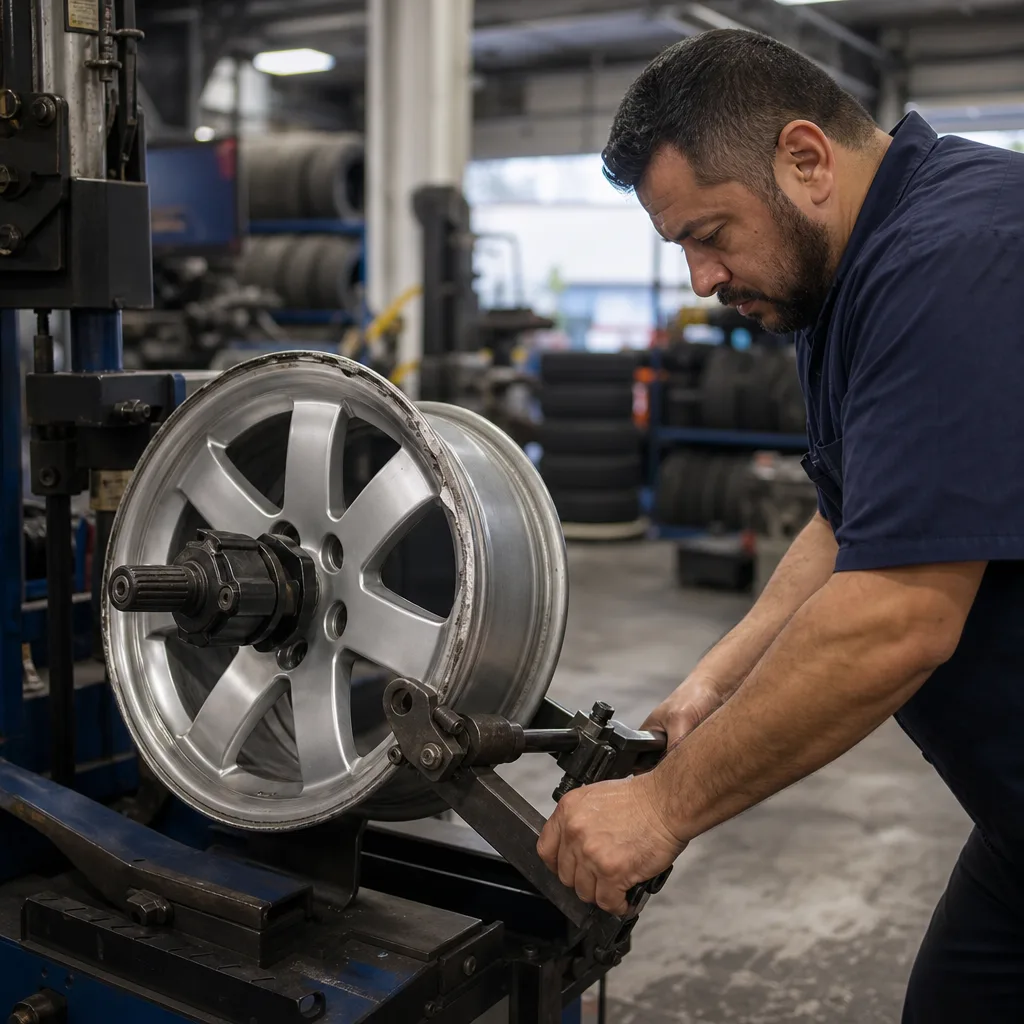
- Tire off, inner barrel checked
- Told if it shouldn't be fixed
- Licensed mechanics Alex and Dan
- Serving Orléans since 2013
Repair or Replace: The Decision That Matters Most
Most cosmetic damage and many mild bends can be safely repaired. Cracks, bends near the centre of the wheel, and badly damaged or previously repaired wheels usually mean replacement is the safer choice. The goal is a wheel you can trust on the road, not just one that looks good.
This is the part that really matters, so we'll be straight with you. A wheel isn't just a part that looks nice. It holds your tire, carries the weight of your car, and takes every bump on the road. Some damage is easy to fix and safe once it's done. Other damage looks small but means the wheel shouldn't go back on your car. Knowing the difference is the whole job.
Think about the drive home after a hard spring thaw in Orléans. The freeze and melt cycle opens up potholes fast, and winter salt eats at wheel finishes all season long. You might notice a scrape on the rim edge, a new shake in the steering wheel around highway speed, or a tire that keeps losing air. Each of those points to a different kind of damage, and each one has a different answer.
Damage that's often a good fit for repair:
- Curb rash and scrapes on the outer lip of the wheel
- Peeling, chipped, or salt-worn finish
- A mild bend in the barrel or lip causing a small vibration or a slow leak
- Corrosion where the tire meets the rim, which can cause slow air loss
Damage that usually means a new wheel is the safer choice:
- Any crack, especially in a spoke or near the lug nut holes
- A bend close to the hub, where the wheel bolts onto your car
- A severe bend or a flat spot that changes the wheel's shape
- A wheel that's already been bent and fixed before in the same spot
- Heavy corrosion that has eaten into the metal, not just the paint
Here's the honest truth: sometimes the right answer isn't the one that makes more money. If a wheel is cracked or bent in the wrong place, fixing it to save a few dollars isn't worth the risk to you or your family. If it's only a light scuff that doesn't bother you, you can leave it alone for now. The goal is helping you make informed choices about your car. That means telling you what we see and what your options are, then letting you decide.
If you're weighing cost, it helps to know what drives the price of a wheel repair in general. Larger wheels take more time. Painted wheels are simpler to refinish than machined or two-tone finishes. Fixing a bend is a different job than fixing the finish, and some wheels need both. The tire also has to come off and go back on, and tire balancing afterward keeps the ride smooth. If your car has tire pressure sensors, those need careful handling too. A fair shop will explain each of these before any work starts, so the bill doesn't surprise you.
Good questions to ask any shop include these: Is this damage safe to repair? Where exactly is the bend or crack? What would replacing the wheel cost instead? Clear answers to those three questions will tell you most of what you need to know.
Signs a Wheel Needs Professional Inspection Now
A damaged wheel doesn't always look damaged. A bend on the inside of the barrel can hide behind the tire and the brake parts, so you won't spot it walking past your car in the driveway. Most of the time, your car tells you something's wrong before your eyes do. Here's what to watch for.
Your car will often tell you through how it drives:
- A new shake or shimmy in the steering wheel, especially one that shows up at a certain speed and wasn't there last week
- A vibration you feel in the seat or floor rather than the steering wheel, which can point to a rear wheel
- The car pulling to one side when you let go of the wheel on a flat road
- A rhythmic thump or wobble that speeds up as you go faster
Some signs show up as air loss:
- Your tire pressure warning light keeps coming back on after you've filled up
- One tire looks lower than the others every few days, even though there's no nail or screw in it
- You hear a faint hiss near the rim or see bubbles there when it's wet
A slow leak with no puncture often means the tire isn't sealing against the rim anymore. That can come from a small bend in the lip or from corrosion where the tire sits. It's easy to keep topping it up and forget about it, but the cause is still there.
Other signs you can see for yourself:
- A visible dent, flat spot, or wavy edge on the rim lip
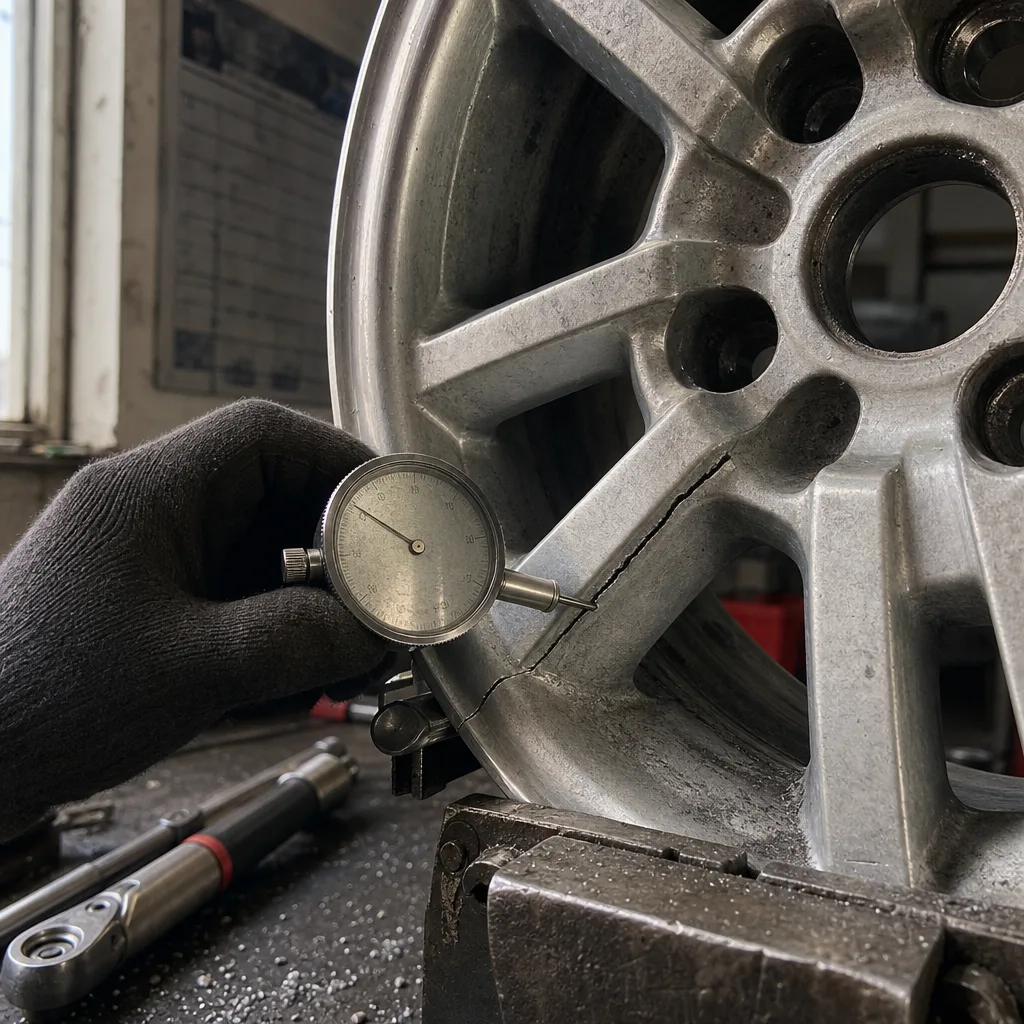
- Any line that looks like a crack, even a thin one, on a spoke or around the lug nuts
- A bulge or bubble on the side of the tire, which often happens in the same hit that bends a wheel
- Paint that's flaking off in patches with rough, pitted metal underneath
Then there's the hit itself. If you've just hit a deep pothole or clipped a curb hard, pay attention to the next few drives even if nothing seems off right away. After a long Orléans winter, potholes can be deeper than they look, and a hard impact can bend a wheel without leaving a mark on the outside face. If any of the signs above show up afterward, that's your answer.
Treat these as don't-wait signs: a crack you can see, a bulge in the tire, or a shake that gets worse as you drive. Ease off on speed and have the wheel and tire looked at before you put more kilometres on them.
On the other hand, a shallow scuff on the outer edge with no shake, no pulling, and no air loss isn't urgent. It's a cosmetic issue you can fix whenever it suits you, or leave alone.
One more thing: some of these symptoms don't come from the wheel at all. A shake can also come from a tire that's out of balance, worn suspension parts, or a tired wheel bearing. That's why it's worth having someone take the wheel off and check it properly instead of guessing. Once you know what's causing the problem, you can decide what to do next with a clear picture instead of a hunch.
When Wheel Repair Isn't Needed
A lot of people come in thinking their wheel is bent, and it turns out the wheel is fine. That's good news, and you should hear it. Here are the times when wheel repair isn't the fix you need.
The wheel checks out straight, but the car still shakes. If the wheel spins true once it's off the car, the shake is coming from somewhere else. Sometimes a tire has simply lost its balance after a season of rough roads, and tire balancing is all it takes. If balancing doesn't solve it, the next place to look is the suspension or steering parts, like tie rods or control arms. Repairing a wheel that isn't bent won't make a shake go away.
The leak is in the tire, not the rim. A slow leak doesn't always mean the tire isn't sealing on the wheel. A nail, a screw, or a small cut in the tread is far more common, and a proper tire repair or patch takes care of it. The valve stem can also leak, and on cars with tire pressure sensors, the sensor itself can wear out. In that case, TPMS sensor replacement is the fix, and the wheel can stay as it is.
The tire is damaged, but the wheel isn't. A pothole can put a bulge in the sidewall without bending the rim at all. When that happens, you need a new tire, not wheel work. It's still worth checking the wheel, because the same hit can do both, but you shouldn't pay for a wheel repair if the rim measures straight.
It's a steel winter wheel. Many Orléans drivers keep a set of plain steel wheels for their winter tires. A bit of surface rust on those after a salty winter is normal and doesn't affect how they work. If a steel wheel gets bent, replacing it is often the better choice, since steel wheels usually don't cost much to replace. We'd rather tell you that than charge you to fix one.
It's only the wheel cover. Some cars use plastic hubcaps over steel wheels. A cracked or scraped cover is just a cover. You can swap it out yourself, and the wheel underneath is often untouched.
You're about to sell or trade in the car. Cosmetic repairs on a car you're letting go of soon don't always pay you back. A bend that causes a shake or a leak still needs fixing for safety. Curb rash on a car leaving your driveway next month is a different story, and it's fair to skip it.
The damage is past repair. As we covered above, cracks and bends near the hub mean the wheel should be replaced, not fixed. In those cases, repair isn't just unneeded. It's the wrong call.
There's also a small thing you can do on your own. Rinsing road salt off your wheels during the winter, especially along the inner barrel where slush packs in, helps slow down the finish wear and corrosion that lead to repairs later. A quick spray at a car wash after a slushy week on St Joseph Blvd goes a long way.
If you're not sure which of these fits your car, that's what an inspection is for. We'll tell you what we find, including when the answer is that your wheel doesn't need anything at all.
What Causes Bent and Cracked Wheels on Orléans Roads
Most wheel damage comes down to one thing: a hard, sudden hit that the tire can't fully soak up. The tire is your wheel's cushion. When that cushion is thin, low on air, or gets squeezed all the way down, the force goes straight into the metal. Here's what makes that more likely around here.
Cold air drops your tire pressure. Air shrinks as it cools, so a tire that was fine in October can be running low by January without a puncture. A soft tire squashes more on impact, which lets the rim hit the edge of a pothole instead of floating over it. According to the Canadian Automobile Association, checking your pressure once a month in winter, with the tires cold, is one of the simplest ways to protect your wheels.[1]
Snowbanks hide curbs. After a big storm, plows push snow right over the curb line on side streets and in parking lots. You can't see where the curb starts, so it's easy to clip it while pulling in or turning. That's a classic way to get curb rash, and a harder bump can bend the lip too.
Speed turns a small hole into a big hit. Spring thaw opens up potholes fast, as we covered above. What makes the difference is how fast you're going when you meet one. A pothole you'd roll through on a quiet street can bend a wheel at highway speed on Highway 174, where there's no time to steer around it. If you can't avoid a hole, ease off the gas rather than braking hard right at impact, since braking pushes more weight onto the front wheels.
Low-profile tires leave less room for error. Many newer cars and SUVs come with bigger wheels and thinner tires. They look sharp and handle well, but there's less rubber between the road and the rim. If your car has them, be extra careful with tire pressure and potholes.
Other common causes include:
- Taking speed bumps or raised manhole covers too quickly
- Rubbing against the curb while parallel parking
- Uneven pavement and steel plates in construction zones
- Hauling heavy loads or towing, which adds weight on every bump
- Sliding sideways into a curb on ice
Cracks are a bit different from bends. A crack can start from one big hit, but it can also grow over time from a spot that was already weak, like an old repair, deep corrosion, or a bend that was never fixed. That's why a wheel that's taken several hits deserves a closer look, even if the latest one felt minor.
None of this means you did something wrong. Local roads are tough on wheels, and even careful drivers find a pothole they couldn't see. Knowing what causes the damage just helps you spot the risk sooner and keep your wheels in good shape longer.
How a Wheel Inspection and Repair Works
A proper wheel repair starts with a careful look, not a repair. The wheel has to be checked closely enough to know whether fixing it is safe. Only then does any straightening or refinishing happen, and the wheel gets checked again before it goes back on your car. Here's what that looks like, step by step.
- The wheel comes off the car and the tire comes off the wheel. This is the only way to see the inner barrel, where bends hide behind the brake parts.
- The wheel gets spun and measured. A shop will usually spin it to see how far it wobbles side to side and up and down. A wheel can look perfect and still be out of round enough to cause a shake on the highway.
- Every spot that carries weight gets a close look. That means the spokes, the area around the lug nut holes, the hub, and the edge where the tire seals. Thin cracks often show up here and nowhere else.
- You get the honest call: repair, replace, or leave it alone. This is where everything about safe and unsafe damage comes into play.
- If it's repairable, the work gets done. Bends are pushed back into shape slowly and carefully, not hammered. Finish damage gets sanded smooth, filled if needed, then primed, painted, and sealed with a clear coat. Wheels with a shiny machined face need that face cut fresh so it matches.
- The tire goes back on and the wheel gets checked again. The tire is mounted and sealed, any pressure sensors are handled with care, and the wheel is balanced so the ride stays smooth.
The fourth step is where you should feel most in control. You shouldn't have to take anyone's word for it that a wheel is cracked or bent. With a digital inspection, we can text you photos of what we find, so you can see the damage on your own phone and decide with a clear picture. If the wheel is fine, you'll hear that too.
Straightening and refinishing are separate jobs. A bend fix is mostly about getting the wheel round and sealing again. A finish repair is about looks and protecting the metal from salt. Some wheels need both, and paint needs time to cure properly, so a full cosmetic job can take longer than a straightening alone.
Once you're back on the road, give it a simple check of your own:
- The steering wheel should feel steady at highway speed on the 174, with no new shake.
- The car should track straight on a flat road when you ease your grip.
- Check your tire pressure after a few days. If it holds steady, the tire is sealing on the rim the way it should.
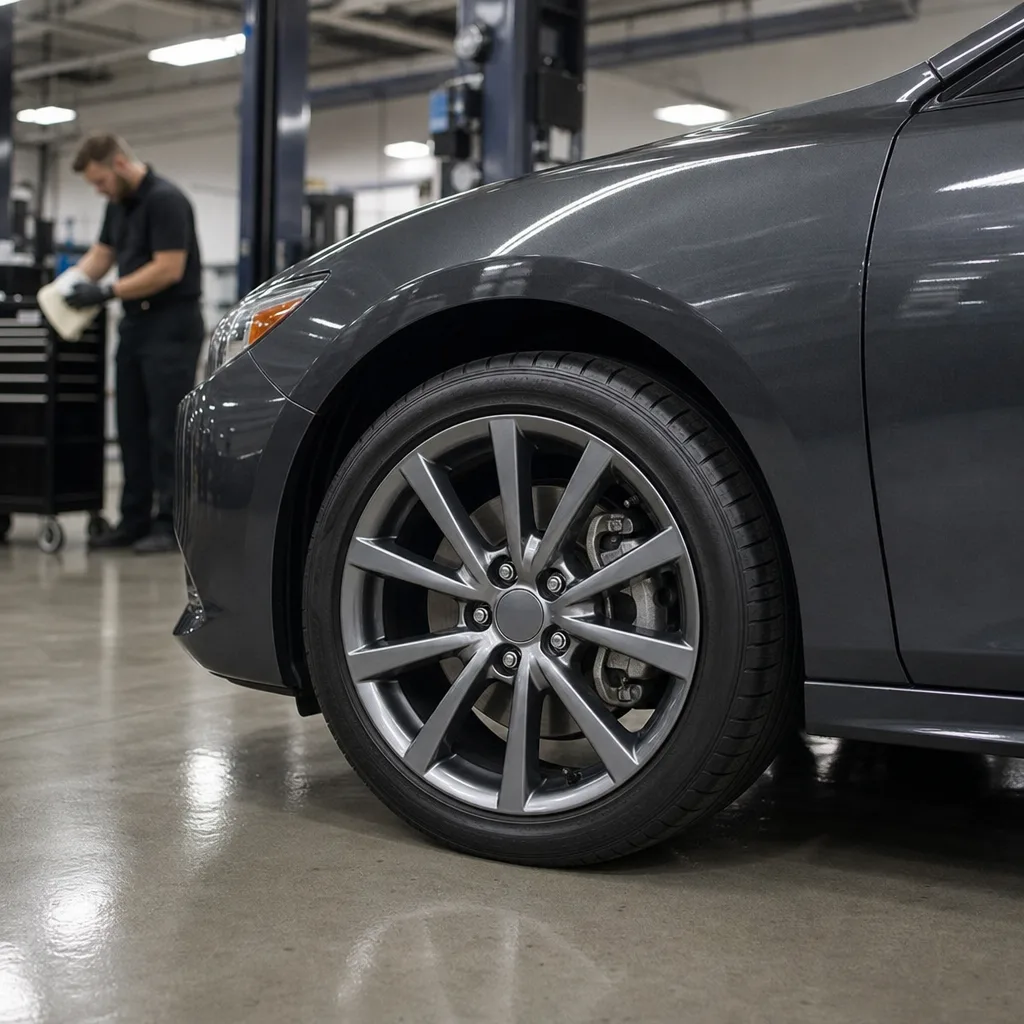
- Look at the repaired spot after the first wash. The finish should be smooth, with no bubbles or lifting edges.
If something still feels off, say so. A shake that stays after a wheel checks out straight usually points somewhere else, and it's worth tracking down rather than living with.
Frequently Asked Questions
How long does a wheel repair take?
It depends on whether you need straightening, refinishing, or both. A bend fix mainly needs the wheel pushed back round and resealed, which is quicker than a full cosmetic repair. If your wheel needs paint, that paint has to cure properly, so a finish job takes longer than straightening alone. Ask about timing when you book so you can plan around it.
Can I drive on a bent wheel until I get it checked?
It's safer not to, especially if you notice a shake that gets worse as you drive or a bulge in the tire. Ease off your speed and get the wheel and tire looked at before putting more kilometres on them. A bend near the hub or a crack near the lug nuts can get worse under load. If the damage is just a shallow scuff with no shake or air loss, it's not urgent and can wait.
Will my tire pressure sensor be affected during a wheel repair?
It can be, since the tire has to come off the wheel for a proper repair, and sensors need careful handling during that process. If your car has tire pressure sensors, they get removed and reinstalled with care when the tire is remounted. A worn sensor can also cause a pressure warning light on its own, separate from any wheel damage. If your light keeps coming back on, it's worth checking whether the sensor or the wheel is the real cause.
Citation
- https://www.caaquebec.com/en/advices/maintaining-a-vehicle/all-you-need-to-know-about-tire-pressure ↩