
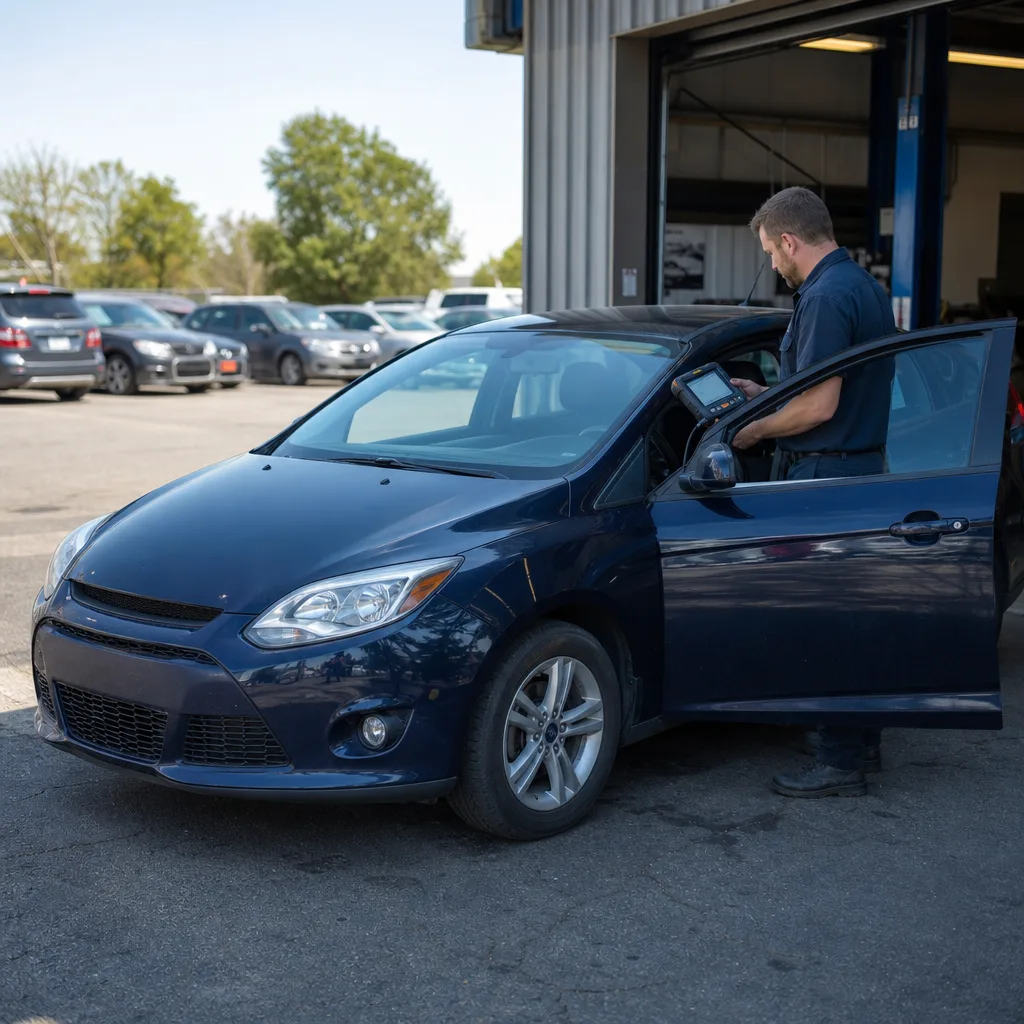
- Codes read, then the part tested
- Sensor or module, confirmed
- Licensed mechanics Alex and Dan
- Serving Orléans since 2013
What the ABS Warning Light Means
An ABS light that stays on means your car has switched off its anti-lock feature because it found a problem it can't trust. Your regular brakes still work, but the wheels can lock up in a hard stop on slippery roads. The light tells you the system found a fault. It doesn't tell you which part caused it, so that's where a proper diagnosis comes in.
First, a quick reassurance. When you start your car, the ABS light should come on for a second or two and then go out. That's the system checking itself, and it's normal. The light only matters if it stays on, if it comes on while you're driving, or if it flickers.
When it stays on, your car's computer has spotted something wrong in the anti-lock braking system and turned that system off. You still have normal brakes. Push the pedal and the car will stop. What you lose is the part that pumps the brakes for you in a panic stop, so the wheels don't lock up and skid. On dry pavement you might not notice a difference. On a slushy morning on St. Joseph Boulevard, or on black ice on the 174, that's exactly when you'd want it working.
The amber ABS light is different from the red brake warning light. A red brake light can point to a problem with the main brakes themselves, such as low brake fluid or a hydraulic issue. That's a more serious situation than an ABS problem alone. If both lights are on together, let us know when you call so we can look at the main brakes first.
You might also see your traction control or stability control light come on at the same time. That doesn't mean three things broke at once. These systems share the same wheel sensors, so when the ABS can't read a wheel properly, the others shut off too.
Here's the part most people don't hear. The light can't tell you which part failed. Many different problems turn on the same light, and some cost far more to fix than others:
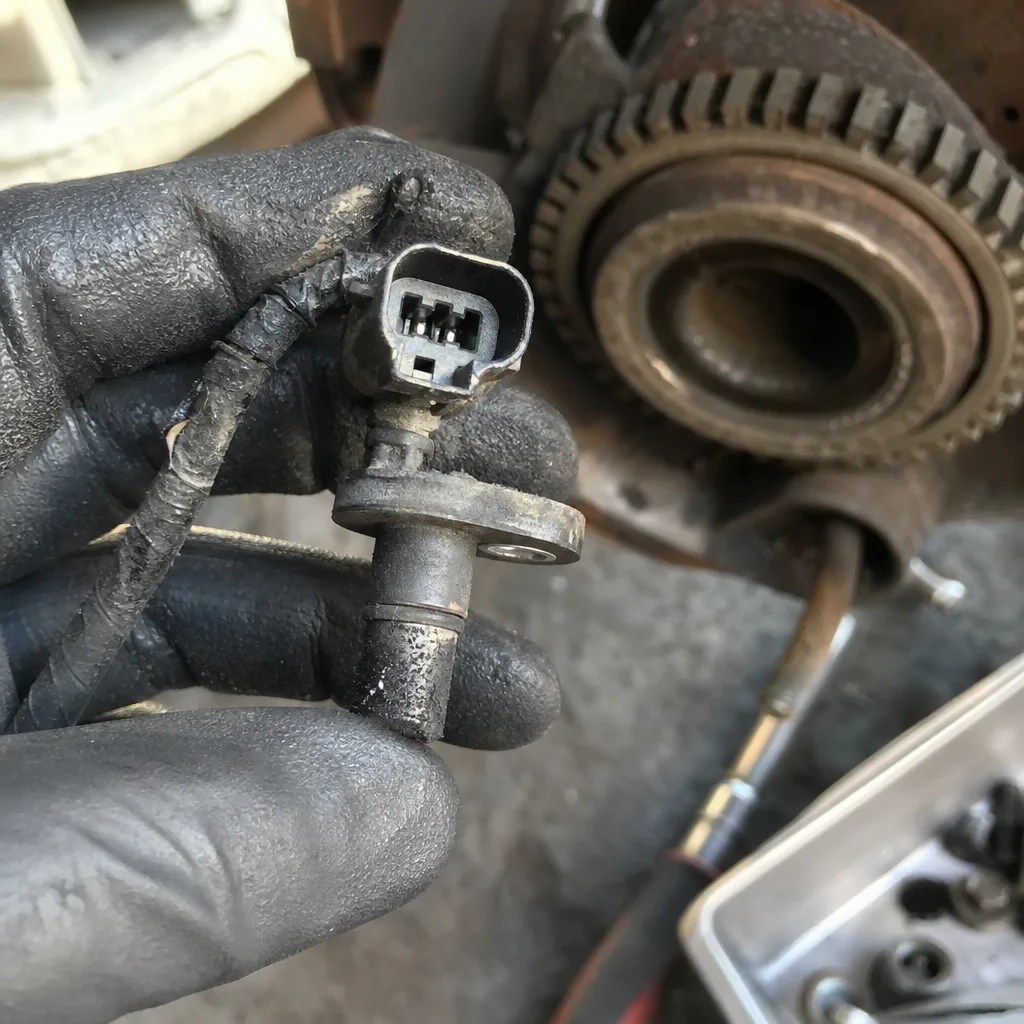
- A wheel speed sensor that's failed or is caked in dirt and rust
- A damaged or corroded wire or connector going to one of those sensors
- A rusted or cracked tone ring, which is the toothed ring the sensor reads
- A blown fuse or a weak battery causing low voltage
- Low brake fluid on some vehicles
- A problem with the ABS control module or pump, which is less common and the costliest fix
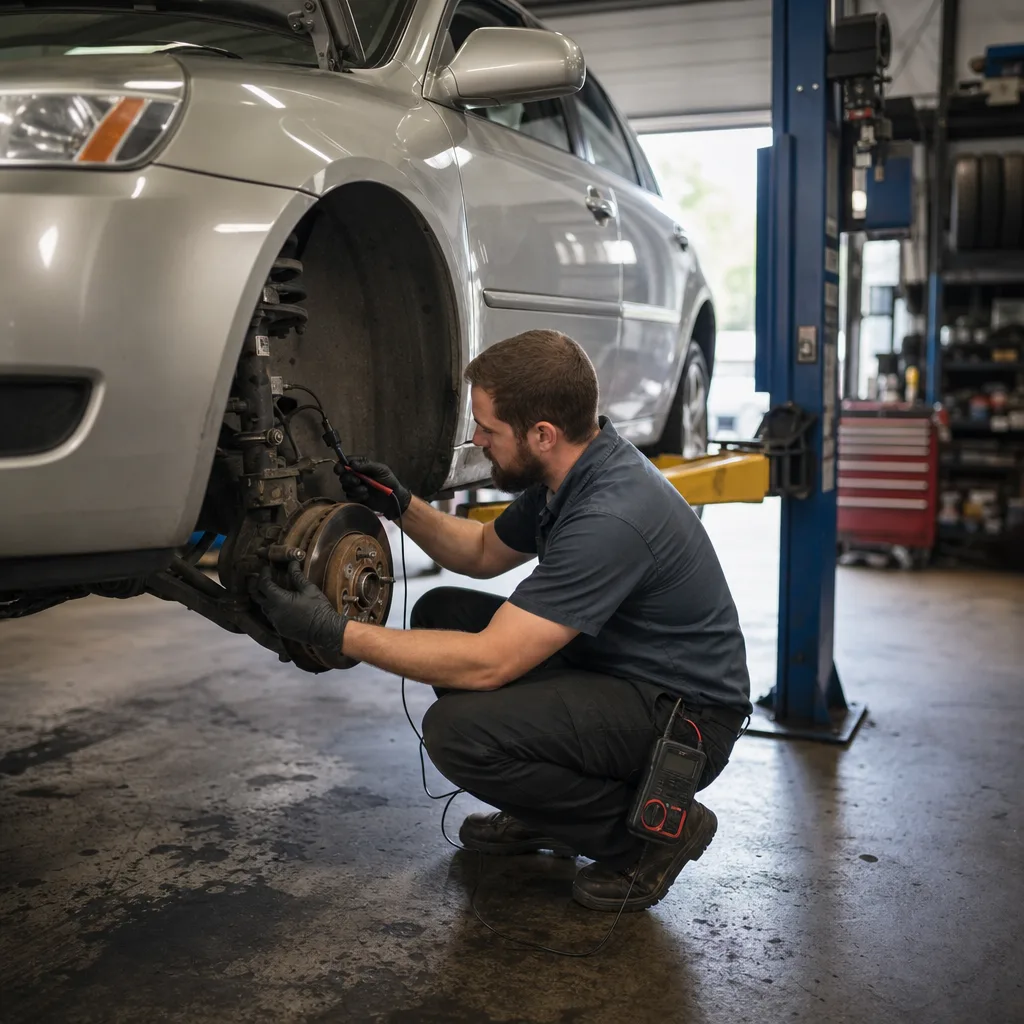
Ottawa winters are hard on the smaller items on that list. Wheel speed sensors and their wiring sit down near the wheels, right where road salt, slush and gravel spray up all season. Salt corrosion on a connector or a tone ring can set off the light just like a failed module can. It's also a much smaller job to fix.
That's why guessing is risky. Replacing a module when the real problem was a corroded wire means you pay for a big part and still have the light on. A good diagnosis starts by reading the stored fault codes. Then it checks the actual sensor, wiring and ring the code points to, so you only pay for the part that's really at fault. Our team's whole approach is built on helping you make an informed decision. We'll show you what we found and explain it in plain words before any work goes ahead.
Is It Safe to Keep Driving With the ABS Light On
Short answer: in most cases, yes. According to Kwik Fit, you can drive carefully to work, home, or to the shop with only the amber ABS light on.[1] Your normal brakes still stop the car, as covered above. Just don't treat it as something to ignore for months, especially once the snow comes.
With the anti-lock feature off, your car will behave the way older cars did in a panic stop. On a dry summer day, you probably won't feel any change. The risk shows up when grip is low and you have to brake hard. Picture freezing rain on 174 when traffic suddenly bunches up, or a kid running out from between parked cars on a slushy side street. Those are the moments ABS is there for, and you won't have it.
So until it's fixed, drive like you've got a little less help than usual:
- Leave more space between you and the car ahead, more than you think you need on wet or icy roads.
- Start braking earlier and more gently so you're not caught needing a sudden hard stop.
- Slow down in bad weather, on hills, and on ramps where ice tends to sit.
- If you have a choice, wait out the worst of a storm before heading out.
Your traction or stability control light may be on too, which means those systems are off as well. That matters most when you pull away on a slippery road or take a corner a bit fast. Ease onto the gas and take turns slower than usual.
Stop driving and get help if you notice any of these along with the ABS light: the red brake warning light is on too, the brake pedal feels soft or sinks toward the floor, you hear grinding or scraping when you brake, the car pulls hard to one side when stopping, or you see fluid leaking near a wheel. Those point to a problem with the main brakes, not just the anti-lock feature, and that's not something to drive on.
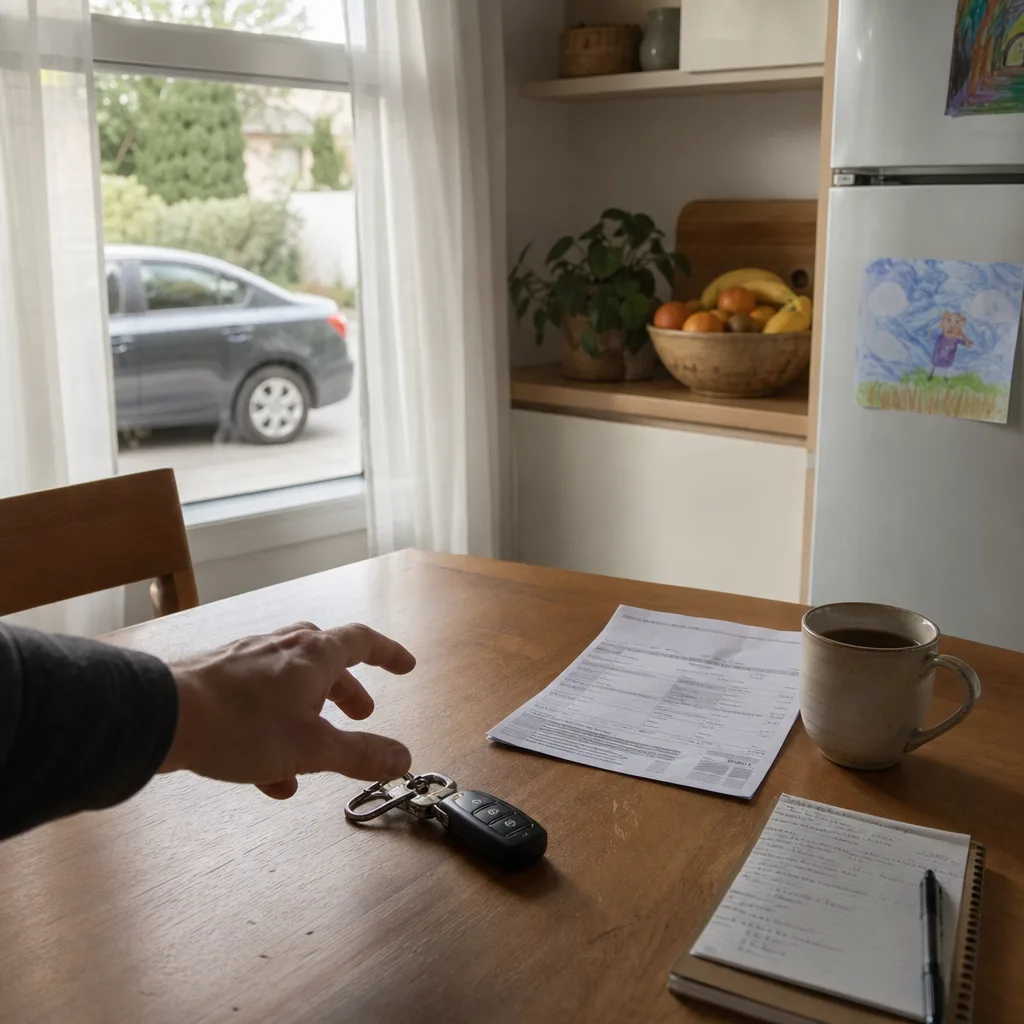
There's also an honest case for not rushing. Say the light came on in July, you mostly drive short trips around town, and nothing else feels off. You don't need to drop everything today. Booking a check within the next week or two is reasonable. It's a different story in November. A problem you could live with on dry roads becomes a real worry once winter tires go on and the roads turn white.
One more reason not to wait too long: a small problem can grow. A sensor connector that's just starting to corrode from road salt can get worse over a few more months of slush. Then a quick clean-up or wiring repair turns into a bigger job. Getting the fault codes read early keeps your options open and usually keeps the fix smaller.
We'd rather tell you straight that you're okay to drive it in for a look than scare you into a tow you don't need. If anything on that warning list is happening, though, play it safe and don't drive it.
Why ABS Repair Costs Vary So Widely
If you ask around, you'll hear wildly different numbers for ABS repair. One neighbour paid for a quick wire fix. Another got told they needed a whole new module. Both can be true. The cost depends almost completely on which part failed, and that's why a proper diagnosis comes before anything gets replaced.
Here's what tends to move the bill up or down.
- Which part is at fault. A cleaned connector or a repaired wire is a small job. A wheel speed sensor costs more. The ABS module or pump sits at the top of the list we went over earlier.
- How the sensor is built into your car. On some vehicles, the wheel speed sensor bolts in on its own and swaps out fairly easily. On many others, it's built right into the wheel bearing hub, so fixing the sensor means doing a wheel bearing replacement too. Same light, very different job.
- Rust and seized parts. After a few Ottawa winters of salt, sensors can rust solid into their mounts. Getting one out without breaking anything takes extra time, and sometimes the sensor snaps and the mount needs cleaning up before a new one will fit.
- Your make and model. Parts prices change a lot from one brand to another. Some cars also need extra steps after a module is replaced, like setting it up to work with the rest of the vehicle.
- Extra work after a pump or module job. Opening up the hydraulic side of the system usually means bleeding the brakes afterward. That adds time and fluidity.
- Faults that come and go. If the light only shows up on bumpy roads or in wet weather, it can take longer to track down. A loose or corroded wire that only acts up some of the time is harder to catch than a sensor that's dead all the time.
That last point is worth a second look. Diagnosis time is part of the cost, but it's usually the part that saves you money. Paying for someone to test the actual sensor, wiring and tone ring is far cheaper than paying for a part you didn't need.
Before you approve any ABS work, whether it's with us or anywhere else, these are fair questions to ask:
- What fault code came up, and which wheel or part does it point to?
- Did you test the part itself, or are you going by the code alone?
- Could this be wiring, a connector or rust instead of the sensor or module?
- Is the sensor separate on my car, or is it part of the wheel bearing?
- What else might need doing once you're in there, like a brake bleed?
A good shop won't mind any of those questions. Helping you make an informed decision is the whole reason Alex and Dan run Ottawa Easy Wheels the way they do. We'll walk you through what we found, which parts are really at fault, and what can wait. Then you decide, with no surprises on the bill.
When ABS Repair Is Not the Real Problem
Sometimes the ABS light is telling the truth about a symptom but pointing you at the wrong system. The anti-lock parts are fine. Something else is feeding them bad information. In those cases you don't need ABS repair at all, and nobody should sell you one.
Here are the most common ones worth ruling out first.
- Tires that don't match. ABS compares how fast each wheel is turning. If one tire is a different size from the others, that wheel spins at a different speed and the system thinks something's wrong. This can happen after a mismatched winter tire set goes on, if one tire was replaced and the other three are worn, or when you're running on a small temporary spare. Fix the tire setup, and the light often goes out on its own.
- A sensor wire knocked loose during other work. Wheel speed sensor wires run close to the brakes and suspension. If the light came on right after a spring tire swap, a brake job or suspension work, a connector may have been bumped or left unplugged. That's a quick check, not a repair.
- A weak battery after a cold snap. ABS needs steady voltage. After a few frosty mornings in January, a tired battery can drop low enough to trigger the light. On some cars the light clears once the voltage is back to normal. If the battery is failing, replacing it is the real fix, not repairing anything in the ABS system.
- Low brake fluid from worn pads. As brake pads wear down, the fluid level in the reservoir drops. On some vehicles that can bring on the warning light. Topping up the fluid hides the clue, but the real answer is a brake pad replacement. If the fluid is low and the pads are fine, that points to a leak, which is a brake repair job and not an ABS one.
- A worn wheel bearing. A loose bearing lets the wheel wobble a little, so the sensor can't get a clean reading off the tone ring. You might also hear a humming or grinding noise that gets louder with speed. In that case the wheel bearing is the problem, and the ABS sensor may be perfectly healthy.
There's also a case where you don't need to do anything. Say the light came on once, maybe during a jump start or right after the battery died, and then went out and stayed out. The system was most likely reacting to a voltage dip. Keep an eye on it. If it doesn't come back, there's nothing to fix.
A few things you can notice yourself before you call anyone. Did the light show up right after new tires, a tire swap or other work? Are you driving on a spare? Has the car been slow to start on cold mornings? Do you hear a hum from one wheel on the highway? Your answers can save time and point straight to the real cause.
We'd rather tell you it's a loose plug or a tire mix-up than replace a part that was never broken. A sensor or module swap won't fix a mismatched tire or a dying battery. You'd still have the light on, and you'd have paid for a part you didn't need.
In-House ABS Diagnosis and Repair, Not a Dealer Referral
A lot of people assume an ABS light means a trip to the dealer. That's an easy assumption to make, since the system sounds high-tech and the word "module" gets thrown around. As covered above, though, many ABS faults come down to a salty connector, a worn sensor, a rusted tone ring or a wheel bearing. None of those need a dealership. They need someone who tests before replacing anything and tells you the truth about what they found.
That's how Ottawa Easy Wheels works. We're a locally owned shop on St. Joseph Boulevard in Orléans, and we've been here since 2013. The shop is owned and run by two brothers, Alex and Dan, who are both licensed mechanics. They work on customers' cars themselves, so the person explaining your ABS problem is the same person who looked at it.
If you're worried about dealer-level know-how, Alex is a licensed automotive technician who spent 10 years at Mazda before going into the private sector. Dan brings experience with trucks, trailers and private-sector automotive work. Between them, you get dealership experience without the dealership runaround.
Here's what you can expect when you bring your car in for an ABS check:
- We start with car diagnostics, reading the stored fault codes and finding which wheel or part they point to.
- We check the actual part behind the code, so a corroded wire doesn't get mistaken for a failed sensor or module.
- You get a digital inspection and a text update, so you can see what we found from home or work instead of waiting by the phone.
- We explain it in plain words, including what needs fixing now, what can wait, and whether something else, like your tires, a weak battery or a worn wheel bearing, is really to blame.
- Nothing goes ahead until you say yes.
Keeping it all under one roof matters for ABS work in particular. The fix often overlaps with other jobs. A sensor built into the hub means a wheel bearing replacement. A pump or module job means bleeding the brakes afterward. A low fluid clue can lead back to worn pads and a brake service. We handle those here too, so you're not bouncing between shops while your car sits.
We're also an authorized TechNet Professional Automotive Service facility, and our neighbours have left us more than 300 five-star reviews on Google. We'd like to think that comes from a simple habit: showing people what's going on with their car and letting them decide.
If your ABS light is on and you're not sure whether it's a quick fix or something bigger, a proper diagnosis answers that question. With winter driving on the 174 and Orléans side streets around the corner, it's worth knowing before the roads turn white.
Frequently Asked Questions
Can one bad wheel speed sensor cause other dashboard lights to come on too?
Yes, it often does. Your ABS, traction control, and stability control systems all share the same wheel sensors. If one sensor sends a bad reading, all three systems can shut off at once and light up together. That doesn't mean three separate parts broke. It usually means one sensor, wire, or tone ring is at fault, and a proper check will trace it back to that single source.
Will replacing a wheel speed sensor also mean replacing the wheel bearing?
It depends on how your car is built. On some vehicles the wheel speed sensor is a separate part that unbolts on its own, so only the sensor needs replacing. On many others, the sensor is built right into the wheel bearing hub, so fixing it means a wheel bearing replacement too. Same ABS light, very different job, which is why checking how your sensor is mounted matters before quoting a fix.
My ABS light and traction control light both came on after I put on a spare tire, is that normal?
Yes, that's a common and simple cause. ABS compares wheel speed across all four tires, and a temporary spare is usually a smaller size than your regular tires. That size difference makes the spare spin at a different speed, which can trigger the ABS and traction control lights together. Swapping back to your regular tire often clears it without any repair needed.