Orléans, Ontario · St. Joseph Blvd
Brake Caliper Replacement in Orléans
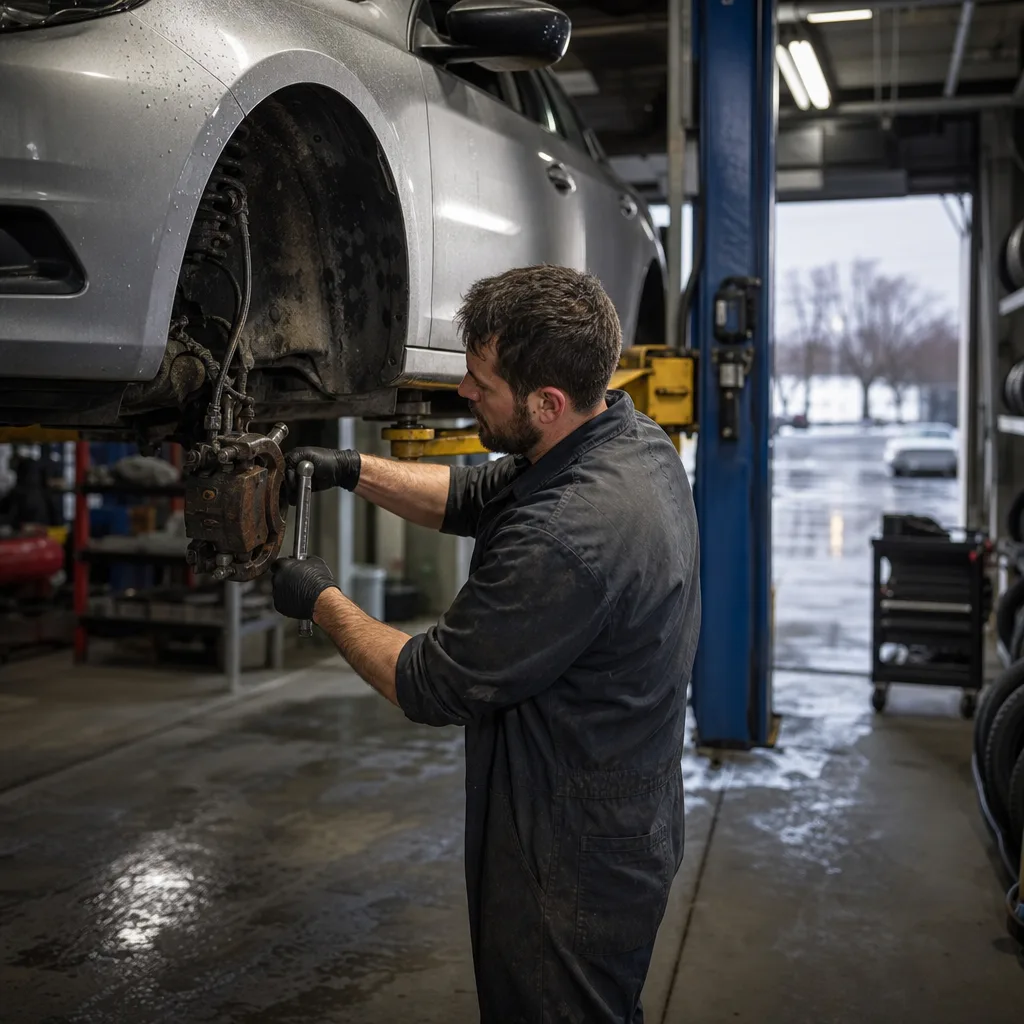
- Each corner judged on its own
- Pins and boots checked too
- Licensed mechanics Alex and Dan
- Serving Orléans since 2013
Signs the Caliper, Not the Pads or Rotors, Is Failing
Pads and rotors wear out slowly and evenly. A failing caliper usually shows up on one wheel only, with pulling, heat, a burning smell, uneven pad wear, or a fluid leak. If your symptoms point to one corner of the car, the caliper is worth a close look before anyone sells you a full brake job.
Most brake trouble is plain wear. Pads get thin, and rotors get grooved or warped. Those parts are meant to be replaced every so often, and the signs are pretty familiar. A caliper is different. It's the clamp that squeezes the pads against the rotor, and when it fails, it tends to stick, leak, or stop moving freely. That changes how the car feels in ways worn pads don't.
Here's a quick way to sort it out. Pad wear usually sounds like a high squeal or a grinding noise. Rotor trouble usually feels like a pulse or shudder in the pedal or steering wheel when you stop. If what you're noticing doesn't fit either one, read on.
- The car pulls to one side when you brake. One caliper is gripping harder or weaker than the one across from it.
- The car pulls even when you're not braking. A caliper that won't let go keeps dragging that wheel.
- A burning or hot smell after a drive, often from just one wheel. A stuck caliper makes a lot of heat.
- One wheel is much dirtier with brake dust, or feels hotter than the others after you park. Don't touch it with your bare hand, because it can be very hot.
- One pad is worn far more than the other pad on the same wheel. This is a classic sign of a sticking piston or seized slide pins.
- Wet spots or oily streaks on the inside of a tire or wheel. That can be brake fluid leaking past a caliper seal.
- A soft or spongy pedal, or a brake fluid level that keeps dropping with no other leak in sight.
- Your fuel mileage drops for no clear reason. A dragging brake makes the engine work harder to keep you moving.
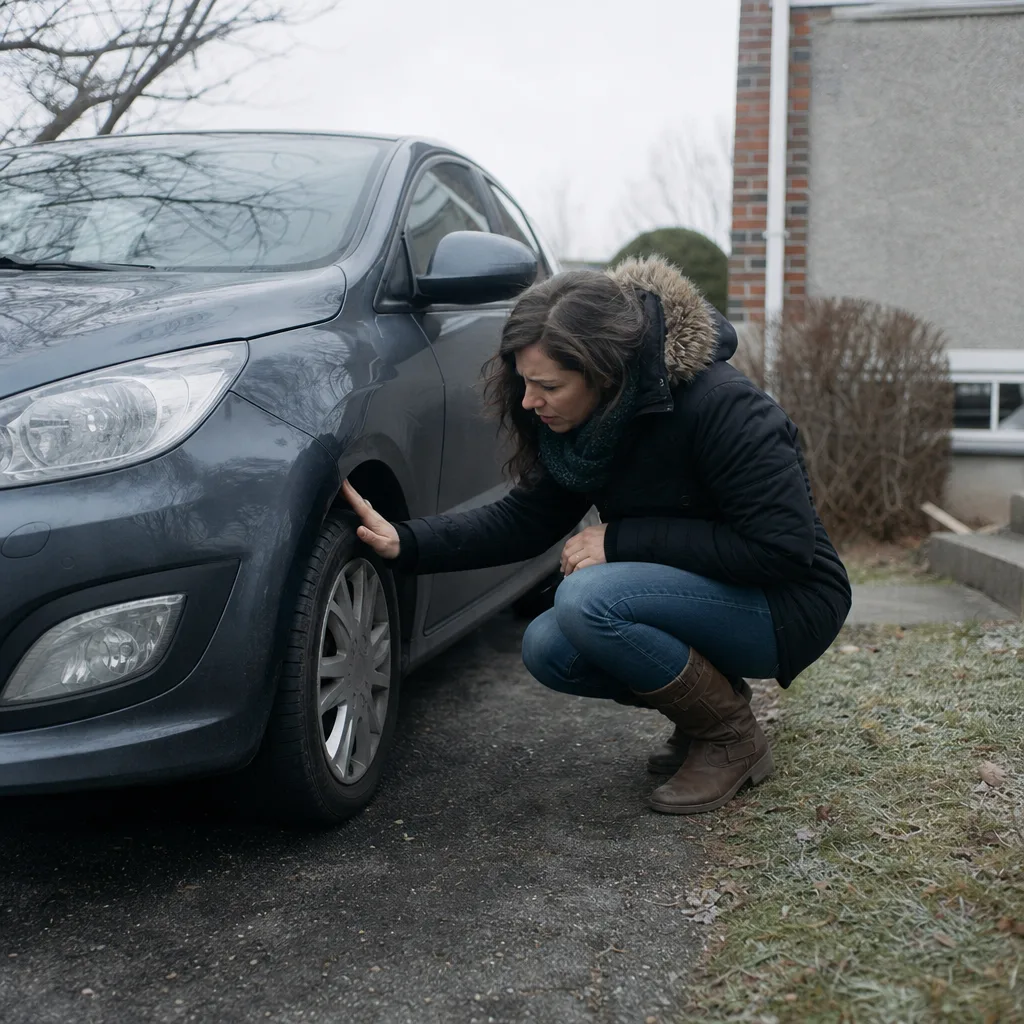
Picture this. You replaced your front pads last year, and now the passenger side is squealing again while the driver side still looks thick. New pads won't fix that. Something is keeping that one side clamped, and putting another set of pads on just means wearing them out early a second time.
Winter makes all of this more likely in Orléans. Salt and slush get into slide pins and around piston boots, and corrosion can make them bind. A caliper that's been fighting rust for a few seasons may start sticking on a cold morning, then seem fine once it warms up. That on-and-off pattern can be confusing, so it's worth mentioning if you've noticed it.
Not every one of these signs means you need a new caliper. Sometimes the slide pins just need cleaning and fresh grease, and the caliper itself is fine. A brake line or hose problem can also cause pulling or a soft pedal. That's why the real answer comes from looking at the parts, not from guessing at the symptom. Once you know which part is failing, you can make the call with your eyes open.
When It's Not the Caliper
A caliper is a bigger repair than a set of pads, so it's fair to want proof before you pay for one. Plenty of cars come in with caliper-like symptoms and leave without a new caliper. Here are the most common cases where something else is to blame.
- Your pads and rotors are just worn out. If both sides of the axle are wearing evenly and the car stops straight, the calipers are probably doing their job. You likely need brake pad and rotor replacement, not new calipers.
- A brake hose is failing on the inside. An old rubber hose can break down inside and act like a one-way valve. Fluid gets to the caliper, but it can't flow back out, so the brake stays clamped. The caliper looks guilty, but it's the hose. Brake line repair fixes it.
- The parking brake isn't fully letting go. On many cars, the rear calipers also handle the parking brake. A sticky cable can drag a rear wheel and make it run hot. Local winters are hard on those cables. Parking brake repair may be all you need.
- The pull is coming from your tires or steering. Low pressure in one tire, worn tie rods, or tired control arm bushings can all make a car wander. The difference is that a brake problem usually causes the car to pull harder when you press the pedal.
- A suspension or tire problem pulls whether you're braking or not.
- The noise is a wheel bearing. A worn bearing hums or growls, and it gets louder as you speed up. It's easy to mistake for a brake noise, but it doesn't change much when you brake.
Some things you can check yourself before you book anything. Check your tire pressures with a gauge. Most people find a soft tire this way. Make sure the parking brake handle or button is fully released. On a manual lever, it should drop all the way down.
There's also one case where you can just wait and see. If your car sat outside overnight in rain or wet snow, a thin layer of rust can form on the rotors. You may hear a scrape or grind for the first few stops. If it's gone after a few minutes of normal driving, that's surface rust wearing off, and nothing needs fixing. If it keeps coming back, or you smell burning or feel a pull, that's different.
What about rebuilding a caliper instead of replacing it? Older cars sometimes had their calipers rebuilt with new seals. Today, that's less common. Rebuilt units are easy to find, and the labour to rebuild one by hand often costs about as much as a replacement. If the piston bore is pitted with rust, new seals won't fix the problem anyway. It's still worth asking about, so you understand your options.
Our whole approach is helping you make an informed choice. If the problem turns out to be a hose, a cable, or a tire, that's what we'll tell you. Fixing the real cause costs you less in the long run than replacing a good caliper and watching the symptom come back.
Why Orléans Winters Wear Down Caliper Hardware
Calipers on a car driven in Florida and calipers on a car driven in Orléans are the same parts. They just live very different lives. Here, they spend months covered in salty slush from St. Joseph Boulevard and the 174, then sit through freeze-thaw swings that can happen several times in one week. That's hard on the small moving parts that let a caliper clamp and let go.
Here's what winter does to them:
- Salt water creeps into tight spaces. Salty spray works its way into the gaps around slide pins and under the rubber boots. Once it's in there, it keeps eating at the metal long after the roads dry up.
- Freeze-thaw cycles crack the rubber. The boots that protect the piston and pins get stiff in the cold. Over a few winters, they can split. A torn boot lets in water and grit, and that's often where sticking starts.
- Brake fluid picks up moisture over time. Brake fluid naturally absorbs water from the air. That water can rust the caliper from the inside, where you can't see it. Regular brake fluid changes help keep the inside of the caliper clean.
- Short winter trips don't dry things out. A quick run to the grocery store doesn't heat the brakes enough to drive off moisture. The car sits, the water stays, and rust has more time to build up.
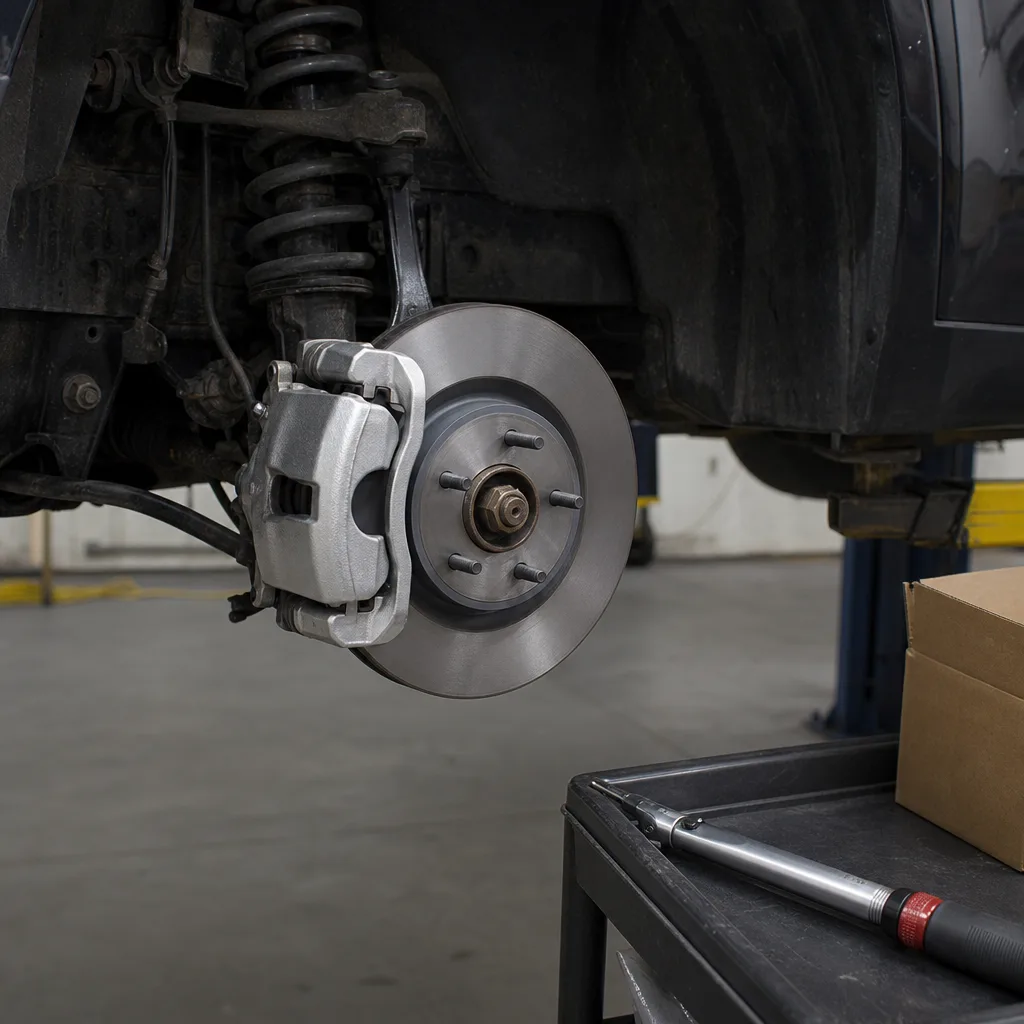
None of this happens evenly. One wheel may take more spray from the road, or have a boot that cracked a year earlier than the others. That's why winter damage so often shows up at just one corner of the car. Three calipers can be working fine while the fourth is stuck. It's also why replacing all of them "just to be safe" can mean paying for parts you don't need. Each one deserves its own look.
Rear calipers tend to have a harder time. The front brakes do most of the stopping, so they move a lot and stay fairly free. The rear brakes do less work, so rust can settle in and freeze them in place. A car that sits for long stretches in winter, like a second vehicle or a weekend car, is even more likely to have a rear caliper bind up.
Spring is often when the problem finally shows. A caliper may stick a little on cold January mornings and seem fine by noon. Then, after a full season of salt, it starts dragging all the time. If your car feels different once the snow melts, winter may have been doing the damage for months.
You can slow this down with a few simple habits:
- Rinse the underside and wheels now and then during winter, especially after a stretch of heavy salt.
- Ask for the slide pins and boots to be checked when your winter tires come off. The wheels are already off for a tire swap, so it's an easy time to look.
- Keep up with brake fluid changes, so moisture doesn't sit inside the calipers for years.
- Drive a car that's been parked for a while on a longer trip now and then, so the brakes warm up and dry out.
Catching a sticky pin or a torn boot early is often a much smaller job than replacing a seized caliper later. That's the kind of thing worth knowing before a small problem turns into a bigger bill.
What Happens During the Repair
Once a caliper is confirmed as the problem, the repair itself is pretty straightforward. Knowing the steps helps you understand what you're paying for and what questions to ask. At our shop, Alex and Dan are the licensed mechanics who work on your car themselves. Through our digital inspection, you can see what we're seeing, with photos and updates sent by text, before any work goes ahead.
Here's what a proper caliper replacement involves:
- Confirm the cause. The wheel comes off, and the caliper, pins, boots, hose, pads and rotor all get a close look. This is where a hose or parking brake problem gets ruled out.
- Remove the old caliper. The brake hose or line is disconnected, and the caliper is unbolted from its bracket.
- Check the parts around it. The bracket, slide pins and hardware are cleaned or replaced. A new caliper on rusty, binding pins can stick all over again.
- Look at the pads and rotor. A stuck caliper often cooks or chews up the pads on that wheel. If they're damaged or worn unevenly, they'll need replacing too.
- Install the new caliper and reconnect the line, using fresh sealing washers where needed.
- Bleed the brakes. Opening the system lets air in, and air makes the pedal soft. Bleeding pushes the air out and tops up the fluid.
- Test it. The pedal should feel firm, and the car should stop straight with no pull, noise or hot wheel after a drive.
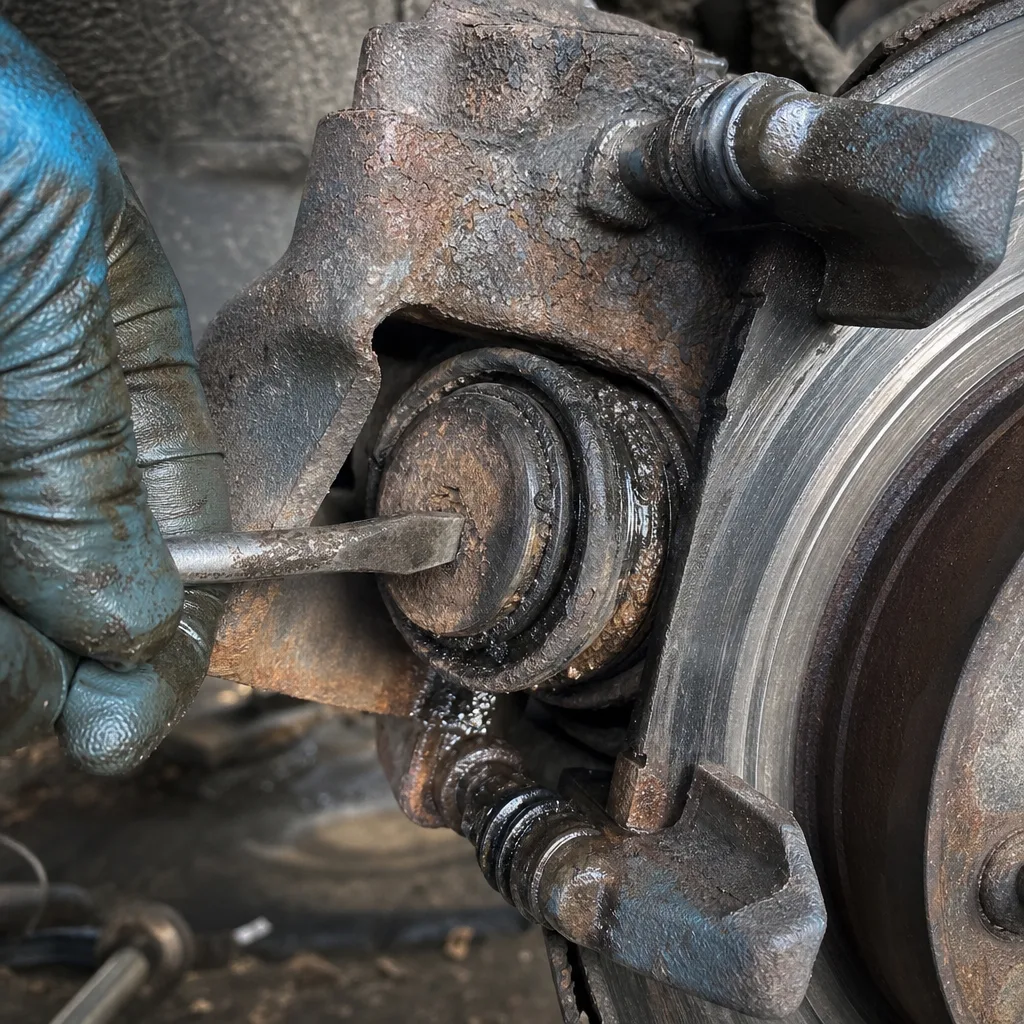
You may hear that calipers should be replaced in pairs on the same axle. Sometimes that makes sense, like when the other side is also leaking or its pins are badly corroded. But a healthy caliper doesn't fail just because its partner did. If someone recommends doing both, ask them what they found on the second one. A clear answer, or a photo, is fair to expect.
We can't quote a price here, because every car is different. What we can do is explain what moves the cost up or down:
- The type of caliper your car uses. Rear calipers with a built-in parking brake are more involved than a simple front caliper.
- Whether you get a new or rebuilt unit, and whether it comes with the bracket and hardware.
- Whether the pads and rotor on that wheel were damaged by the dragging brake.
- Rust. After years of road salt, bleeder screws and line fittings can seize or snap. Freeing or replacing them adds time.
- How many calipers need replacing.
After the repair, the car should feel normal right away. The pull should be gone, the pedal should feel firm, and you shouldn't smell anything hot. If new pads went on, braking may feel a little different for the first few days while they settle in. If the pull, smell or soft pedal comes back, don't wait. Bring it back so it can be checked.
You should leave knowing exactly what was replaced and why. That's the point of doing it this way. You get the facts, you see the parts, and you make the call.
One Caliper or a Pair: How That Decision Gets Made
The short answer is that the other caliper should get its own check, and the results decide it. A caliper isn't like a pair of shoes. One side can be seized while the other side still clamps and lets go just fine. So the real question isn't "Do calipers come in pairs?" It's "What shape is the one across from it in?"
Here's what tells you the second caliper is worth replacing too:
- It's leaking. Even a small damp spot around the piston or the bleeder means the seal is on its way out.
- The piston doesn't push back smoothly. If it's stiff or sticks partway, it's already starting to bind.
- The rubber boot is torn or cracked. Water and grit are getting in, so the piston will likely start sticking soon.
- The slide pins are badly rusted or pitted, not just dry. Dry pins can be cleaned and greased. Pitted ones can't be trusted.
- Its pads are wearing unevenly, the same way the failed side's did. That's the early version of the same problem.
If the second caliper passes all of those, it can stay. A healthy caliper of the same type clamps with the same force as a new one, so the car still stops straight. Putting a new part next to a good one doesn't throw off your braking.
Pads are a different story. According to Power Stop, pads on the same axle should always be replaced together, even if only one caliper is new.[1] Fresh pads on one side and half-worn pads on the other can make the car pull. So you might end up with one new caliper and new pads on both wheels. That's normal, and it's not the same as being sold a second caliper.
There are a few times when doing both makes good sense, even if the second one hasn't failed yet. If both calipers are original parts on an older car that's seen many winters here, and the second one is showing early signs like a stiff piston or a split boot, doing it now saves you a second visit and a second brake bleed in a few months. The same goes if you're planning to keep the car for years and want that axle sorted out in one go.
On the other hand, if your car is newer, or one caliper failed because of a bad hose or a single torn boot, replacing only that one is usually the honest call. The cause was local to that wheel, not age across the whole axle.
If you're told you need two, ask these questions:
- What did you find on the second caliper, exactly?
- Can you show me a photo of the leak, boot or pins?
- What happens if I wait and replace just the one today?
- Is the second one bad now, or just likely to go soon?
A good answer points to something you can see. With our digital inspection photos, you can look at both sides yourself and decide. Sometimes waiting is a perfectly fair choice, as long as you know what to watch for, like a new pull, a hot wheel or a falling fluid level. The decision is yours, and it should be based on what's really on your car.
Frequently Asked Questions
What drives the cost of brake caliper replacement up or down?
Several things change the price, so it is worth asking before you book. The type of caliper matters, since a rear caliper with a built-in parking brake takes more work than a simple front one. Whether you choose a new or rebuilt unit, and whether pads or a rotor also need replacing, changes the total too. Rust is another factor, since years of road salt can seize bleeder screws and line fittings, adding time to the job.
Is it safe to keep driving with a bad caliper?
You should not keep driving on it, because a sticking caliper can drag that wheel and build up a lot of heat. That heat can damage the pad, rotor, and even the wheel bearing over time. A caliper that is leaking fluid also means your brakes are losing pressure, which makes stopping less reliable. If you notice a pull, a hot wheel, or a burning smell, get it checked before driving much further.
What is a common mistake people make with caliper replacement?
The biggest mistake is replacing the caliper without checking the slide pins, bracket, and boots around it. A new caliper bolted onto rusty, binding pins can stick again soon after. Another common mistake is assuming both calipers on an axle need replacing just because one failed, when a healthy caliper often just needs its own close look instead.