Orléans, Ontario · St. Joseph Blvd
Brake Fluid Change in Orléans
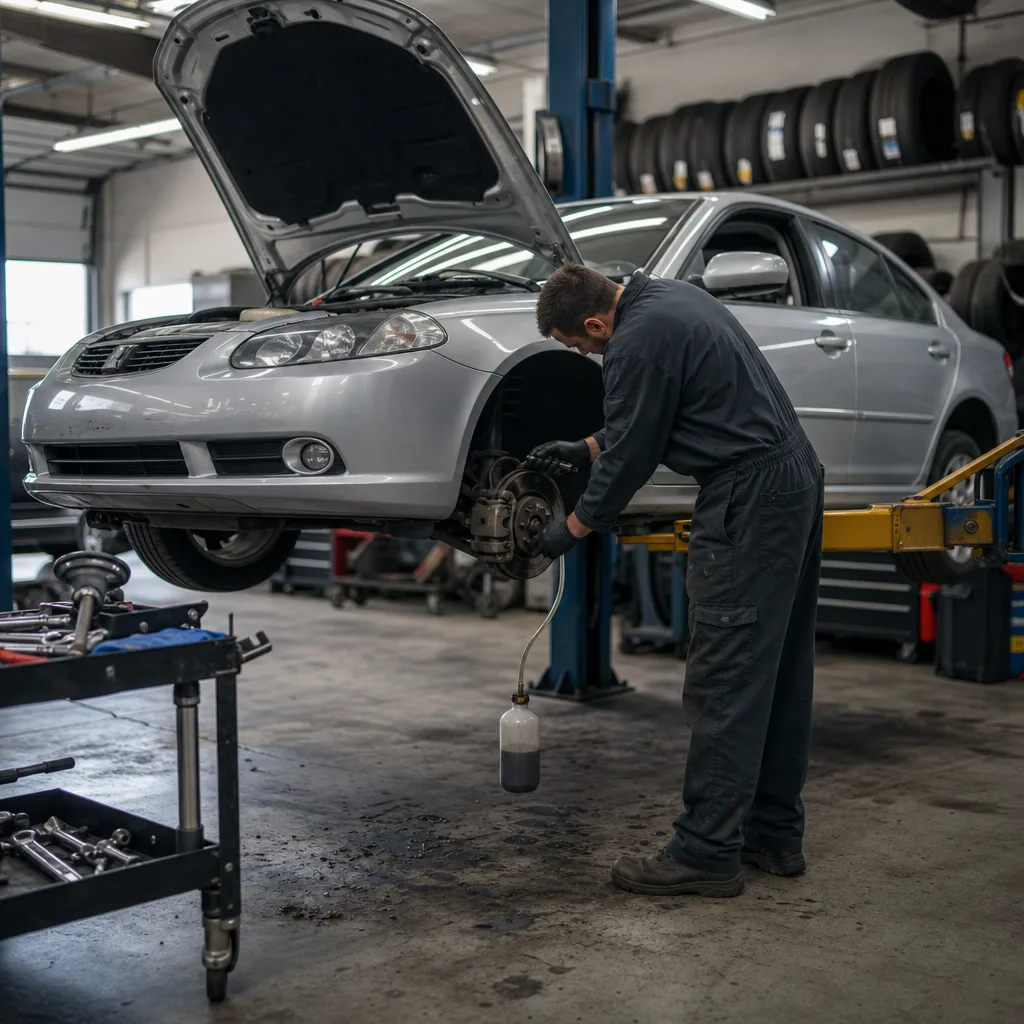
- Fluid tested before it's changed
- All four wheels bled
- Licensed mechanics Alex and Dan
- Serving Orléans since 2013
Know the Signs Old Brake Fluid Is Causing the Problem
Old brake fluid usually shows up as a soft or sinking pedal, dark fluid in the reservoir, or brakes that feel weaker after a lot of hard stopping. Some of these signs can also mean worn pads, a leak, or air in the lines. A quick check tells you which one you're dealing with.
Brake fluid doesn't fail all at once. It wears out slowly, so the changes are easy to miss. You get used to a pedal that feels a little softer every month. Here's what to watch for.
- A soft or spongy pedal. You press and it feels mushy instead of firm, or it takes more push before the car slows down.
- A pedal that sinks lower. If your foot ends up closer to the floor than it did a few months ago, something isn't holding pressure right.
- Dark fluid in the reservoir. Fresh brake fluid is clear to light amber. Old fluid turns darker, sometimes close to the colour of cola. You can often see it through the side of the plastic reservoir under the hood.
- Brakes that fade after heavy use. If stopping feels weaker after a long run of hard braking, then comes back once things cool off, worn-out fluid could be part of the reason.
- A brake or ABS warning light. This can point to low fluid, a sensor issue, or a problem in the ABS system, so it always needs a proper look.
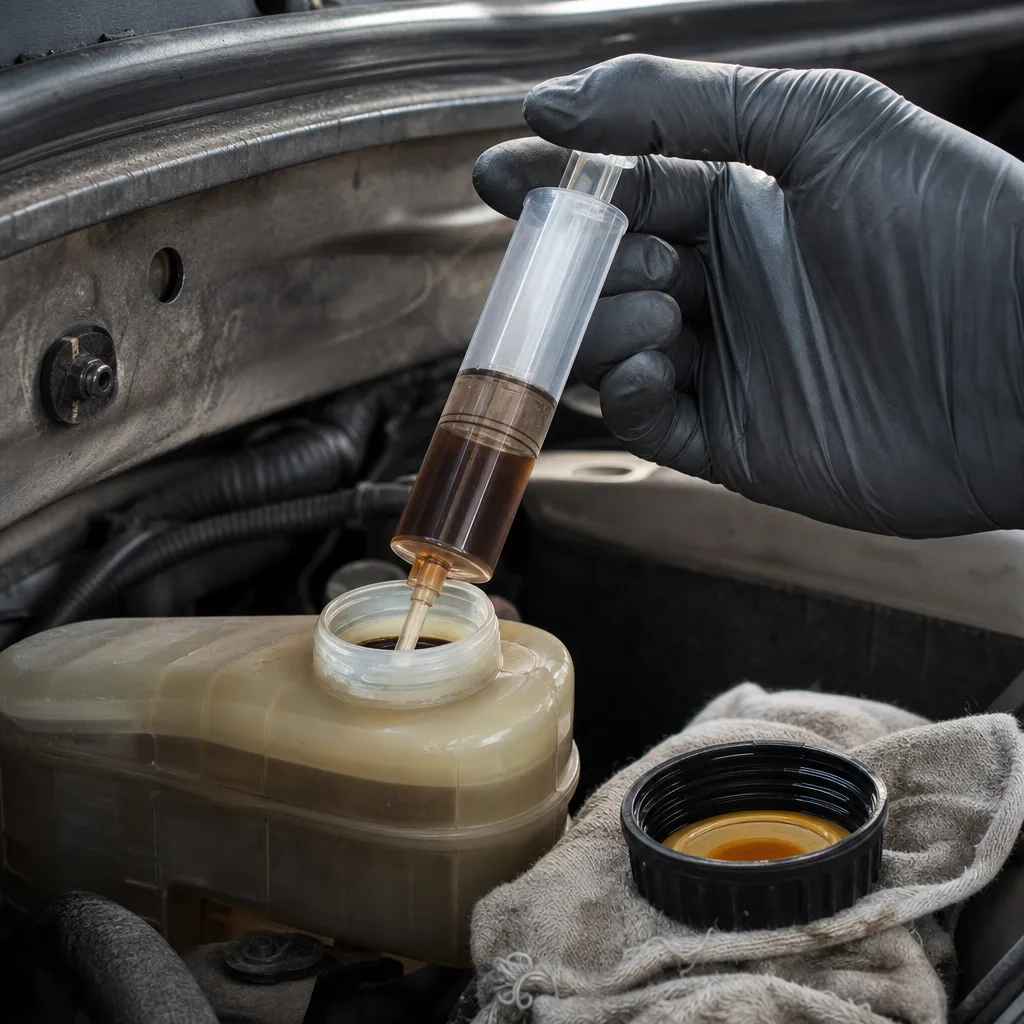
Why does old fluid cause this? Brake fluid slowly pulls in moisture from the air over time. That water lowers the temperature at which the fluid boils. When you brake hard, the parts heat up, and fluid with water in it can form tiny pockets of vapour. Vapour squishes when you press the pedal. Fluid doesn't. That's the spongy feeling.
Our Ottawa weather plays into this. Damp summers and the swing between thaws and deep freezes give moisture plenty of chances to work its way in. Stop-and-go traffic along St Joseph Blvd and quick slowdowns coming off Highway 174 heat up your brakes more often than easy cruising does.
Here's where we want to be straight with you. These signs don't always mean old fluid. According to WAGNER, a low fluid level often means your brake pads have worn down, because the level drops as the pads get thinner.[1] It can also mean a leak somewhere in the lines or at a caliper. A spongy pedal can come from air in the system, not just tired fluid. Fresh fluid won't fix worn pads or a leaking line, and we're not going to tell you it will.
Picture this. You notice the pedal feels a bit soft on your morning drive, and the fluid under the hood looks darker than you remember. That could be a simple fluid change. It could also be a sign your pads need attention. The only way to know for sure is to test the fluid and look over the rest of the system.
That's how we like to work. We check, we show you what we found, and you make the call. If we see something you should know about, we'll text you an update with photos so you can see it for yourself. Then you decide what makes sense for your car and your budget.
Rule Out Other Brake Problems Before Changing Fluid
A brake fluid change replaces fluid that's worn out. It won't fix a part that's broken, worn thin or leaking. If one of those is the real problem, new fluid just puts off the repair you need. Here's how to tell the difference.
- Grinding, squealing or a scraping sound when you stop. That's almost always pads, and sometimes rotors. Fresh fluid won't make it quieter. You likely need a brake pad replacement or brake pad and rotor replacement instead.
- Shaking or pulsing in the pedal or steering wheel when you brake. That usually points to the rotors, not the fluid.
- The car pulls to one side when you stop. A sticking or seized caliper can do this. That calls for a look at the calipers, and maybe a brake caliper replacement.
- Wet spots near a wheel, an oily film on the inside of a tire, or a small puddle under the car. That's a leak. The leak has to be fixed first, often with a brake line repair, before new fluid makes any sense.
- The ABS light stays on, but the pedal feels normal. That's more often a sensor or ABS module problem than tired fluid. It needs ABS repair, not a flush.
- The pedal feels soft right after other brake work. Air may have got into the lines. Bleeding the system fixes that. It's a related job, but the fluid itself may still be fine.
There's also a simple case where you don't need a fluid change at all. Maybe the fluid was changed recently, it still looks clear to light amber, and your pedal feels firm. Then you can likely wait. Check your owner's manual for the schedule your car's maker suggests, and go by that and the condition of the fluid. Don't go by a sticker someone put on your windshield.
You can do part of this check yourself. Pop the hood and find the brake fluid reservoir. It's usually a small plastic tank near the back of the engine bay on the driver's side, and it has marks for minimum and maximum. Look at the level and the colour through the side. You don't need to open it. If the level is fine and the fluid looks clean, that's good news. If it's low, remember the pad wear point from above. Topping it up might hide the real issue instead of solving it.
Think of a driver heading home along Jeanne d'Arc Blvd who hears a faint squeal every time they stop. They might think it's time for new fluid because they read about it online. But a squeal like that is really a pad issue. Changing the fluid first would mean paying for a service that doesn't fix the noise.
So if you've got one of the signs on this list, don't book a fluid change and hope for the best. Book a brake inspection, find out what's going on, and then decide. Sometimes the answer is fresh fluid. Sometimes it's a different repair. Sometimes it's nothing at all yet. You should know which one before you spend a dollar.
What Happens During a Brake Fluid Change
A brake fluid change sounds like a simple top-up, but it's more than that. The goal is to push all the old fluid out of the entire system, from the reservoir under the hood down to each wheel, and replace it with fresh fluid. Here's what a proper job looks like, so you know what you're paying for.
- Test the fluid first. A tech can check how much moisture the fluid has picked up, often with a test strip or a small electronic tester. This shows whether the fluid is really worn out or still has life left. It's the step that keeps you from paying for a change you don't need.
- Check the right fluid for your car. Not every vehicle uses the same type of brake fluid. Your owner's manual or the cap on the reservoir will say which one your car needs. Mixing the wrong types can cause problems, so this matters.
- Draw out the old fluid from the reservoir. Most of the dark, tired fluid sitting up top gets removed before anything else, and the reservoir is filled with fresh fluid.
- Bleed each wheel. This is the main part of the job. Fresh fluid is pushed through the lines while the old fluid comes out at a small valve on each brake. It's usually done one wheel at a time, often starting with the wheel farthest from the master cylinder. The tech keeps going until the fluid runs clean with no air bubbles.
- Keep the reservoir from running dry. If the level drops too low while bleeding, air can get pulled into the lines, and you'd be right back to a soft pedal.
- Check the pedal and the level. Once all four wheels are done, the pedal should feel firm, and the reservoir should sit between the minimum and maximum marks.
- Take it for a short drive. A quick road test confirms the brakes feel solid and stop the way they should.
A few things are good to know. On many newer cars with ABS, some of the fluid sits inside the ABS unit. Some makers call for a scan tool to cycle that unit during the bleed so the old fluid there gets flushed out too. It's a fair question to ask any shop: does my car need that step, and will it be done?
Watch out for a job that only swaps the fluid in the reservoir and stops there. That freshens what you can see under the hood, but the old fluid down in the lines and at the calipers stays put. That's the fluid that takes the most heat when you brake, so it's the part that matters most.
A full fluid change also gives a tech a good look at your brakes while the wheels are being worked on. If something shows up, like a damp fitting or a caliper that's starting to stick, you'll want to hear about it. When we're working on your car, we'll text you with photos so you can see what we see and decide for yourself.
If you already plan to bring the car in, it can make sense to line things up. Lots of Ottawa drivers book their winter tire change in the fall, and having the wheels off is a handy time to ask about the brakes too. That way you head into the slush and salt on Highway 174 with brakes you can trust.
Why Ottawa Winters Make Brake System Checks Worth Doing Together
Brake fluid doesn't wear out on its own. The parts it flows through live right under your car, and in Ottawa that means months of salt, slush and grit. If you're already paying for a fluid change, it makes sense to have someone look at those parts at the same time. You get the whole picture in one visit instead of finding out about a problem in February.
Here's what our winters do to the rest of the brake system:
- Brake lines rust from the outside. Most cars use thin metal lines that run along the underside. Salty slush sprays them all winter, and rust can eat at them until one weeps or bursts.
- Caliper slides get stuck. The pins that let a caliper move can corrode and seize. Then a pad drags, wears unevenly, or the car pulls to one side.
- Bleeder valves seize. These are the small valves at each wheel that the old fluid drains from. After a few salty winters they can rust tight, and an old one can snap if it's forced. It's much better to find that out on a mild fall day than in a snowbank.
- Parking brakes freeze up. If you rarely use yours, the cables and parts can rust in place, or ice can lock them after a slushy drive.
A fluid change is a natural time to catch these things, because the tech is already working at every wheel. Your brakes have already been through a winter of stop-and-go on St Joseph Blvd and slushy merges onto Highway 174. A quick look at the lines, slides and fittings while the fluid is being changed costs you little extra time and can save you a much bigger repair.
Timing matters too. Fall is the best time to make sure everything is solid before the salt trucks come out. You already know the winter tire change trick from above. Spring is the best time to see what the salt did. If you only get one check a year, pick the one that lines up with your tire swap.
To be fair, you don't always need to bundle. If your brakes were inspected recently, the fluid tested fine and nothing feels off, there's no reason to pay for a second look just because the season changed. Go by what your car needs, not the calendar.
If rust is the bigger worry, ask about rustproofing or undercoating. They can help protect the underside, including the brake lines, for the winters ahead. A parking brake that's sticking gets its own fix with a parking brake repair.
Ottawa Easy Wheels is owned and run by brothers Alex and Dan. Both are licensed mechanics who personally work on customers' cars. If we find a rusty line or a sticking caliper while we're changing your fluid, we'll text you photos and explain what it means. Then you decide what to fix now and what can wait. No pressure, just the facts.
What Drives the Cost of a Brake Fluid Change
If you call around for a brake fluid change, you might hear quotes that don't match. That doesn't always mean someone's overcharging. The cost mostly comes down to two things: how much time the job takes on your car, and what kind of fluid your car needs. Once you know what moves those two, it's much easier to compare quotes fairly.
Here's what can push the price up or down:
- The fluid your car calls for. Many cars use a common, low-cost brake fluid. Some newer and European models need a specific type that costs more per bottle. Your owner's manual decides this, not the shop.
- How much fluid the system holds. Bigger vehicles like trucks and SUVs often have longer lines and hold more fluid, so the job uses more product.
- Whether your car needs the ABS step. If your maker calls for a scan tool to cycle the ABS unit during the bleed, as covered above, that adds time and equipment to the job.
- A manual transmission. On many manual cars, the clutch runs off the same reservoir as the brakes. Bleeding the clutch side too is extra work, but it keeps old fluid from mixing back in.
- Rusted or seized bleeder valves. After a few Ottawa winters, a stuck bleeder can turn a simple job into a longer one, and a snapped one may need a part replaced.
- How the shop prices labour. Some shops charge a flat rate for the service. Others charge by the time it takes. Both are fair, as long as you know which one you're getting.
A very low price is worth a second look. Sometimes it means only the reservoir gets swapped and the lines are never bled, the shortcut we warned about earlier. You'd pay less, but the old fluid down at the wheels stays right where it was.
There are honest ways to keep the cost down, too. If the fluid tests fine, the cheapest change is the one you skip for now. If your car is already coming in for other work, like a brake inspection or a seasonal tire swap, ask whether the fluid can be done at the same visit. The wheels are already off, so it can save some time.
Before you book with any shop, these questions will tell you a lot:
- Will you test my fluid first, and show me the result?
- Which type of fluid will you use, and does it match my owner's manual?
- Will you bleed all four wheels, or just replace what's in the reservoir?
- Does my car need the ABS cycle, and is it included?
- If a bleeder is seized or you find a leak, will you call me before doing extra work?
That last one matters most. You should never get a surprise on your bill. When we're working on your car and find something that changes the plan, we'll text you photos and explain what we found. Then you decide what happens next.
Frequently Asked Questions
What makes one brake fluid change cost more than another?
The price mostly comes down to the fluid your car needs and how long the job takes. A common low-cost fluid keeps the price down, while some newer and European models call for a pricier type. Bigger vehicles with longer brake lines hold more fluid, and cars that need an ABS cycling step during the bleed take extra time and equipment. Asking a shop which of these apply to your car is the best way to understand a quote.
Can quick-service oil change shops do a proper brake fluid flush?
Some quick-service shops offer a fluid top-up rather than a full flush of every wheel. A real fluid change pushes old fluid out from the reservoir all the way down to each wheel, not just the reservoir itself. Before booking anywhere, ask whether they bleed all four wheels or only swap what's in the reservoir, since that shortcut leaves the hottest, most worn fluid sitting right where it was.
Citations
- https://www.wagnerbrake.com/technical/parts-matter/automotive-repair-and-maintenance/facts-about-vehicle-brake-fluid.html ↩