Orléans, Ontario · St. Joseph Blvd
Brake Line Repair in Orléans
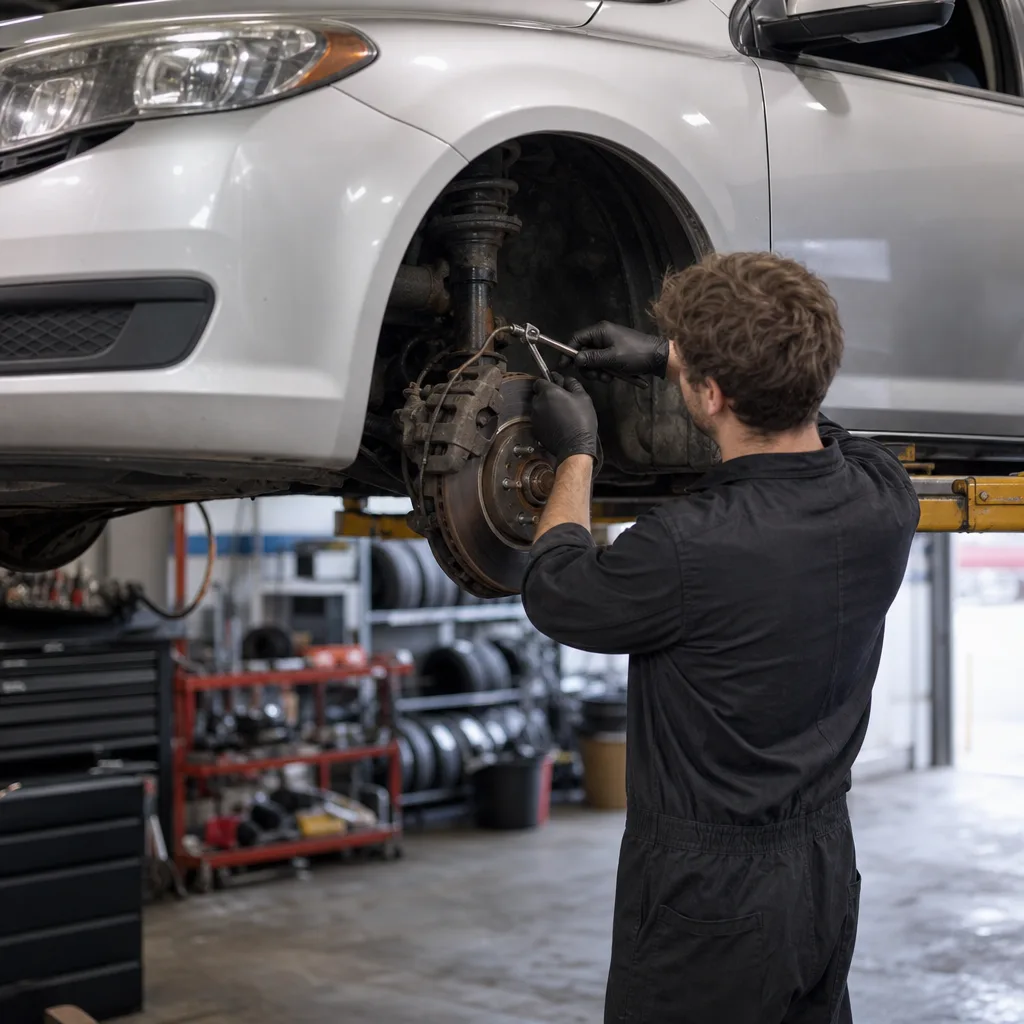
- Full line checked, not just the wet spot
- Bled properly, pedal tested
- Licensed mechanics Alex and Dan
- Serving Orléans since 2013
Warning Signs That Mean Stop Driving Now
If your brake pedal sinks toward the floor, feels soft, or the brake warning light comes on with a soft pedal, park the car and don't drive it. A wet spot near a wheel or under the car can mean brake fluid is leaking from a line. Rust that we spot during an inspection, with no leak and a firm pedal, can usually wait for a booked visit.
Your brakes work because fluid is trapped in a sealed system of steel lines and rubber hoses. When you press the pedal, that fluid pushes the brakes on at every wheel. If a line cracks or rusts through, fluid escapes and the pressure goes with it. A leaking brake line isn't a fix-it-next-month problem. It can get worse in a single drive.
Here are the signs that mean you should stop driving and call for help:
- The pedal sinks slowly toward the floor while you're holding it down at a red light.
- The pedal feels soft or spongy, or it goes down much farther than it used to before the car slows.
- You have to pump the pedal to get the car to stop.
- The red brake warning light is on, especially if the pedal also feels different.
- You see a wet, oily spot on the ground near a wheel or along the middle of the car. Brake fluid is usually clear to light brown and feels slick.
- The car pulls hard to one side when you brake, along with any of the signs above.
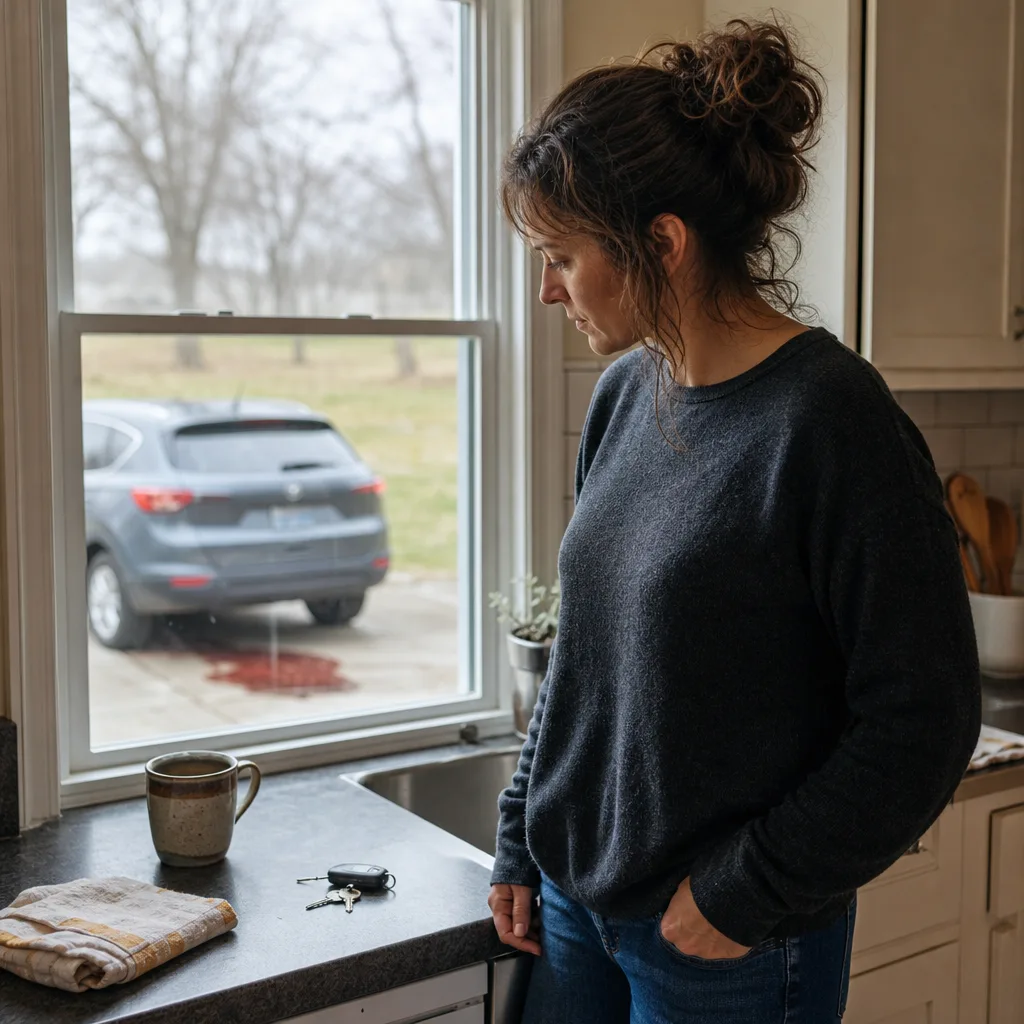
Even one of these is enough reason to park the car. Don't test it on St Joseph Blvd or try to make it home on 174. A brake system that's losing fluid can feel fine for a few stops, then give you very little when you really need it.
Our Ottawa winters make this worth watching. According to Auto Club Group, the salt that keeps local roads clear also sits on the steel brake lines under your car for months at a time.[1] Over the years, that salt can eat through a line from the outside. It often happens with no warning until the day the line starts to weep fluid. If your car has been through a lot of Orléans winters, take a soft pedal seriously.
Not every brake line issue is an emergency, and we'd rather you know that too. Say we've spotted surface rust on your lines during a check, but there's no leak, the fluid level is steady, and the pedal feels firm. That's something to plan for, not panic about. You can keep driving and book a time that works for you. We'll show you what we found so you can decide for yourself.
If you're not sure which group you're in, ask yourself one question. Does the pedal feel the way it always has? If the answer is no, treat it as a stop-driving problem until someone has had a look.
What Causes Brake Lines to Fail
Brake lines rarely fail out of nowhere. Most of the time the damage builds up slowly over years, and it leaves clues long before fluid hits the ground. Knowing what causes it helps you understand what we're looking at under your car and why one worn spot can point to others nearby.
Here are the main reasons a brake line or hose gives out:
- Rust from the outside in. Road salt is the big one here, as we covered above. Steel lines run along the underside of the car, right where salty slush splashes up all winter.
- Rust hiding under clips and brackets. Lines are held to the frame with small clips. Dirt and salty water get trapped behind them and stay wet long after the rest of the car dries off. A line can look fine along most of its length and be badly pitted under one clip.
- Cracked or worn rubber hoses. Each wheel has a short flexible hose that bends as you steer and as the suspension moves. Over time the rubber dries out, cracks, or swells. Heat from the brakes speeds this up.
- Hits from road debris. Chunks of ice, curbs, and potholes can bend or crush a line. In Ottawa's spring thaw, when the potholes open up, a hard hit can kink a line that was already weak from rust.
- Old brake fluid. Brake fluid slowly soaks up moisture from the air. Over years, that water can rust lines and fittings from the inside, where nobody can see it.
- Seized or poorly done fittings. The nuts that join lines together can rust solid. A past repair with the wrong fitting, or a patch that was never meant to last, can also start to weep.
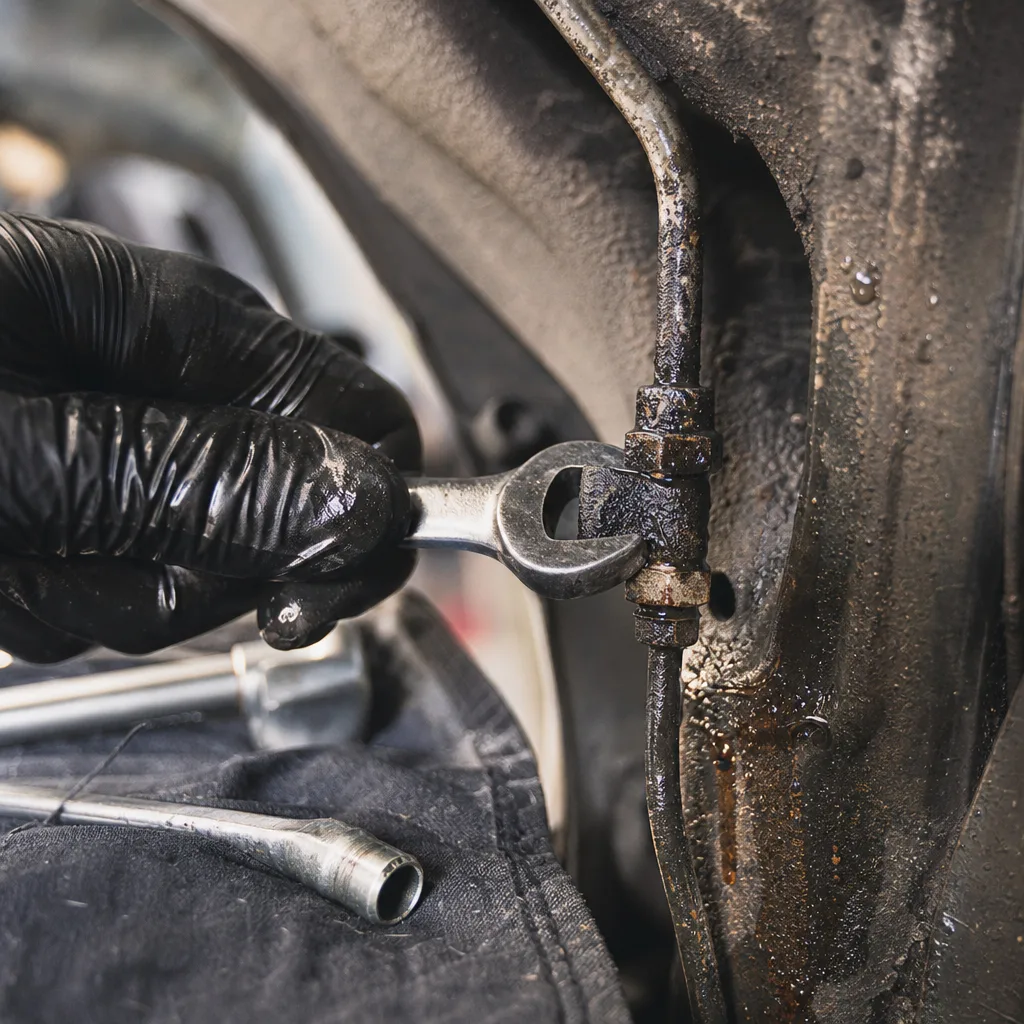
Most of these causes don't stay in one spot. If salt has eaten through one section of line, the rest of the line has spent the same winters in the same slush. A single leak on an older car often comes with other thin or flaky spots close by. It's not a reason to panic. It's a reason to look at the whole line, not just the part that's dripping.
Age matters too. A car that's spent ten or more winters on Orléans roads has had a lot more salt exposure than one that's only seen two or three. A newer car with a leak is more likely dealing with debris damage or a single bad hose than widespread rust.
Some of this you can slow down. Rinsing the underside of your car during and after winter helps wash salt off the lines. Keeping your brake fluid fresh with a regular brake fluid change cuts down on rust from the inside. Undercoating or rustproofing can also add a layer of protection to the parts of the car that take the most salt.
None of these make a brake line last forever, but they can buy you time. Even more useful, they make it more likely that any problem shows up as surface rust you can plan around, not a sudden leak on the way to work.
Brake Line Repair Is Not the Same as Pad, Rotor, or Fluid Service
When something feels off with your brakes, it's natural to think, "I probably need new pads." Sometimes that's true. But brake line repair fixes a different part of the system, and mixing them up can mean paying for a job that doesn't solve your problem.
Here's an easy way to picture it. Your brakes have two main parts. One part does the stopping, and the other part carries the push from your foot to each wheel. Here's how the pieces fit in:
- Pads and rotors are the stopping parts. They rub together to slow the wheel, and they wear down a little every time you brake. When they're worn, you'll usually hear squealing or grinding or feel a shake in the pedal.
- Brake lines and hoses are the plumbing. They don't wear down from braking. They hold fluid under pressure, and they fail when they rust, crack, or get damaged.
- Brake fluid is what moves through that plumbing. A brake fluid change swaps old fluid for fresh fluid. It's maintenance, not a repair.
New pads won't fix a pedal that sinks to the floor. If fluid is escaping from a line, fresh pads still can't get the pressure they need to grab the rotor. A fluid change won't fix it either. If you top up or replace the fluid while a line is leaking, the new fluid drips out the same way the old fluid did. Topping up can even hide the problem for a little while, which makes it more dangerous, not less.
Picture this. Your pedal has felt a bit soft for a few weeks. You notice the fluid level under the hood is low, so you add some. The pedal feels better for a few days, then goes soft again. That pattern points to a leak, not worn pads, and a leak is a line or hose job.
The jobs do overlap in a few ways. When a line or hose is replaced, the system has to be refilled and bled to get the air out, so you're getting fresh fluid as part of the repair anyway. A leak at the wheel can also come from the caliper instead of the hose next to it, and in that case brake caliper replacement may be the right fix. If your pads and rotors are close to worn out at the same time, it can make sense to talk about a brake pad and rotor replacement while the wheels are already off. That's your call to make, not something you should feel pushed into.
Before any brake work, it's fair to ask a few plain questions:
- Is the problem a steel line, a rubber hose, or a caliper?
- Are you fixing one section, or does the whole run need replacing?
- Can you show me where the leak or damage is?
We think you should see what we see. Our digital inspections let us show you photos of your lines and hoses, and we'll text you updates so you're never guessing. Once you know which part is failing, you can choose the right repair with confidence.
What Happens During a Brake Line Inspection and Repair
A good brake line repair starts with finding exactly where the problem is and how far it goes. Then comes the fix, and last, proof that it worked. Here's what each step looks like, so nothing about the job feels like a mystery.
Step one is finding the leak and checking the rest of the line. With the car up in the air, the full run of each line gets checked, from the master cylinder under the hood back to every wheel. A careful check doesn't stop at the wet spot. It looks for the problems that are easy to miss:
- Thin, flaky, or swollen spots along the steel lines, especially near clips and brackets
- Wet or crusty fittings where two pieces join
- Rubber hoses at each wheel that are cracked, bulging, or rubbing on something
- Lines that are bent, kinked, or pushed out of place by a past hit
- Signs of a leak at the caliper instead of the line
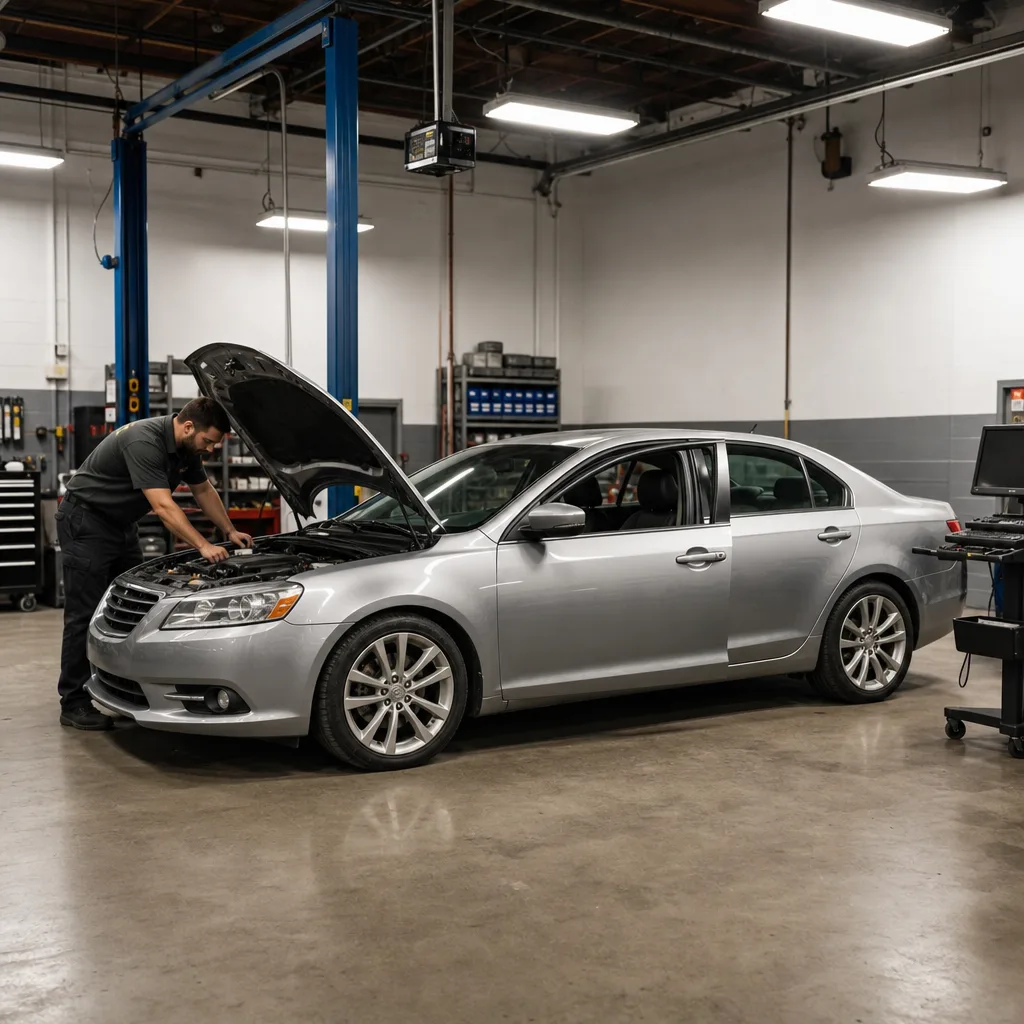
This is where our digital inspections help. We take photos of what we find and text them to you, so you can see the rust or the wet fitting with your own eyes. You don't have to take our word for it.
Step two is choosing the repair. Once you've seen the photos, the main choice is usually how much to replace. If one short piece is damaged and the rest of the line is solid, replacing that section can make sense. If the whole run has been through years of Ottawa winters and it's thin in several places, fixing one spot often just moves the next leak a few inches down the line. In that case, replacing the full run is usually the better buy. We'll explain both options in plain words and let you decide.
Rusty fittings are worth knowing about up front. On older cars, the nuts that hold lines together can be rusted solid, and they sometimes snap when someone tries to loosen them. If that happens, the job grows a little because the next piece has to come out too. It's better to hear that might happen before the work starts than to be surprised later. We'll text you right away if anything changes once the car is apart.
Step three is doing the work. The new steel line is bent to follow the same path as the old one and clipped back in place, so it doesn't rub or rattle. Any worn rubber hoses are swapped out. Then the system is refilled and bled to get the air out, as mentioned earlier. Skipping a careful bleed is one of the most common reasons a pedal still feels soft after a repair.
Step four is checking the fix. The job isn't done when the last fitting is tight. A proper finish includes:
- Pressing the pedal hard and holding it to make sure it stays firm and high
- Checking every new joint and hose for any sign of seeping
- Checking the fluid level after the system settles
- A test drive to make sure the car stops straight and smooth
When you pick up your car, the pedal should feel the way it did before the trouble started, or better. If anything still feels off, tell us. You know your car's pedal better than anyone, and we'd much rather hear about it right away.
How Brake Line Repair Costs Are Estimated
There's no single price for a brake line repair, and anyone who gives you one over the phone without seeing the car is guessing. The cost depends on how much the line needs replacing, how hard it is to reach, and what turns up once the car is apart. Knowing what goes into the number helps you read an estimate and spot one that doesn't add up.
Most brake line estimates come down to two things: parts and labour. The parts are usually the smaller share. Steel line, fittings, rubber hoses, and brake fluid aren't the expensive part of the job. The time it takes to remove the old line, bend and fit the new one, and bleed the system properly is where most of the cost sits.
Here's what tends to move the number up or down:
- How much line is being replaced. A short section near one wheel is a smaller job than a full run from the front of the car to the back. That's why the section-or-full-run choice from earlier matters so much.
- Where the line runs. On some cars, the lines pass behind the fuel tank, exhaust parts, or heat shields. If those have to come down to reach the line, the labour goes up.
- How many winters the car has seen. On an older car that's spent years in Ottawa salt, nearby bolts and clips can be just as rusted as the line. Those pieces take longer to free up and sometimes need replacing too.
- Rubber hoses. If the hoses at the wheels are cracked or worn, swapping them while the system is already open adds a little to the parts cost. It saves you from paying to open and bleed the system a second time later.
- Related parts. If the check finds a leaking caliper or a damaged fitting at the ABS unit, that's added work. It should be listed on its own line so you can see it.
The one cost that's hard to pin down ahead of time is the rusted fitting that snaps, as covered above. A fair estimate tells you up front that this could happen on an older car and what it would mean for the job. A change in the price is something you agreed could happen, not a shock at pickup.
When you get an estimate, from us or anyone else, these questions help you know what you're paying for:
- Is this price for one section or the whole line?
- Are the bleed and fresh fluid included?
- Does anything else need to come off to reach the line?
- What happens to the price if a fitting breaks?
- Can you show me photos of the damage?
That last question matters most to us. With our digital inspections, you'll see photos of your lines and hoses before you decide anything, and we'll text you if something changes once the work starts. You should know what you're paying for and why, and the choice of how far to go stays yours.
Frequently Asked Questions
Can I still drive my car to you if I think a brake line is leaking?
No, you should not drive it. A leaking brake line can lose pressure fast, and what feels okay for a few stops can leave you with very little brake when you need it most. Park the car and call us so we can arrange a tow or come look at it where it sits.
How long does a brake line repair usually take?
It depends on whether one section needs replacing or the whole run. A short section near one wheel is a quicker job, while a full run, especially on an older car with rusted clips and bolts, takes longer because those extra parts have to be freed up or replaced too. We'll give you a clearer time estimate once we see the car on the hoist.
Will my brakes feel different after a brake line repair?
Your pedal should feel firm and high again, the way it did before the trouble started. If it still feels soft or spongy after pickup, that usually means air got trapped during the bleed, so tell us right away and we'll check it.
Does rust on my brake lines mean I need repair right away?
Not always. Surface rust with no leak and a firm pedal is something you can plan around and book at a time that works for you. We'll show you photos of what we found so you can decide, but a soft pedal or a wet spot under the car means stop driving and call us instead.