Orléans, Ontario · St. Joseph Blvd
Brake Pad and Rotor Replacement in Orléans
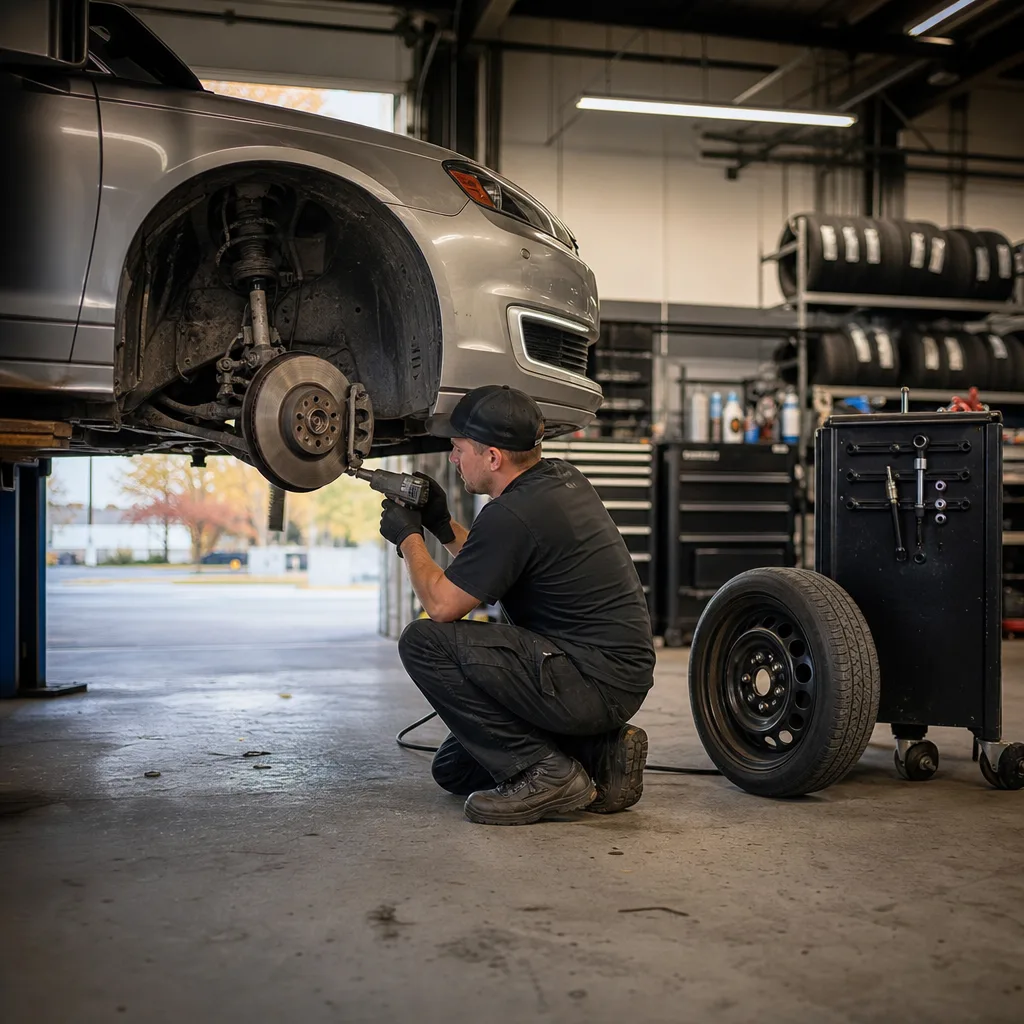
- Rotors measured, not guessed
- Hub face cleaned to bare metal
- Licensed mechanics Alex and Dan
- Serving Orléans since 2013
Signs You Need Pads, Rotors, or Both
A squeal usually points to worn pads, and a pulsing pedal or shaky steering wheel usually points to rotors. Grinding often means you've gone past pads and into the rotors, so you'll likely need both. The only way to know for sure is to look at the parts and measure them.
Your pads are made to wear out. They're the soft part that grips the rotor, so they go first. Rotors are tougher and can sometimes last through more than one set of pads. But not always. The signs your car gives you can tell you a lot about which part needs help.
Signs that point to your pads:
- A high, sharp squeal when you press the brake. Many pads have a small metal tab that makes this sound on purpose when the pad gets thin.
- Your car takes longer to stop than it used to, or the pedal sinks lower before the brakes grab.
- A brake warning light on the dash. Some cars have a pad wear sensor that turns this light on.
Signs that point to your rotors:
- A pulsing feeling in the brake pedal, or a shake in the steering wheel when you slow down. You'll often notice it most when braking from higher speeds, such as coming off Highway 174 at an exit.
- Deep grooves you can see through the wheel, or a raised lip around the outer edge of the rotor.
- Dark blue or purple spots on the rotor surface. These come from too much heat.
- Heavy rust or pitting that doesn't wipe off when you brake. Ottawa winters mean months of salted roads, and that's hard on rotors, especially on cars that sit a lot.
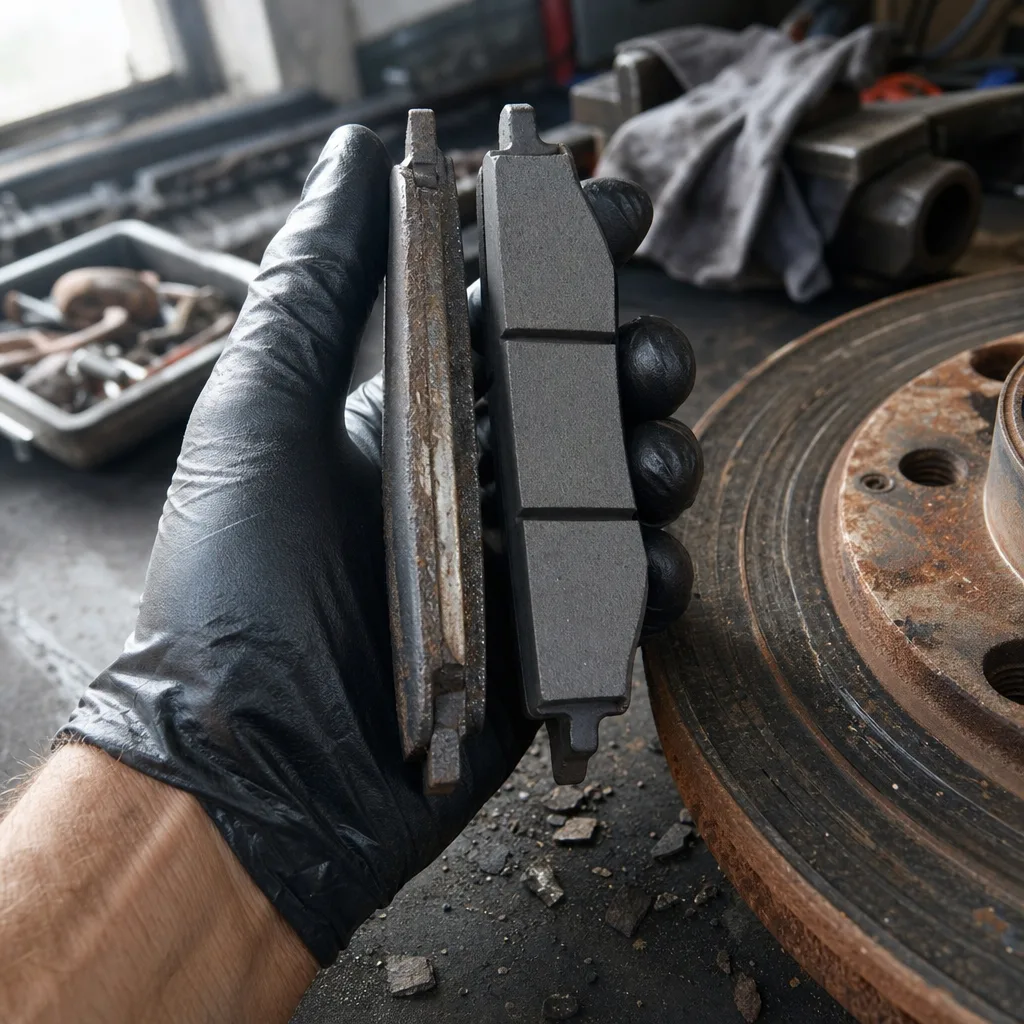
When it's probably both: a grinding or scraping sound. That usually means the pad material is gone and metal is rubbing on metal. At that point the rotor is often scored too deep to reuse. Putting new pads on a damaged rotor is a bit like putting new tires on a bent rim. The new part won't sit right, it can stay noisy, and it'll wear out faster.
Some things sound scary but are normal. A light squeak on a cold, damp morning that goes away after a few stops is common. So is a thin orange film of rust after rain or a car wash. It clears off the first few times you brake. Neither one means you need new parts.
Some signs can also come from other parts. According to Mavis Tire, a car that pulls to one side, or one wheel that smells hot after a drive, can point to a sticking caliper instead of worn pads.[1] A hum that changes with speed, even when you're not braking, may be a wheel bearing. That's why guessing from sound alone only gets you part of the way.
To know whether a rotor can stay, you need to measure how thick it is and compare that to the minimum number stamped on it. You also need a close look at the surface. A good brake check shows you what's found in plain words. Then you can decide whether you need pads, rotors, or both, and you won't pay for a part that still has life in it.
Why Rotors Sometimes Need Replacing Even When Pads Are Fine
It sounds backwards. If the pads are the part that wears out first, how can your rotors be done while your pads still look thick? It happens more than you'd think, and there are a few honest reasons why. None of them have to do with how many kilometres are on your pads.
Rust from not braking enough. Rotors stay clean because your pads wipe them every time you stop. If a car sits in the driveway for weeks, or only does short trips around town, rust builds up faster than the pads can clear it. Hybrids and electric cars run into this a lot. They slow down mostly by using the motor, so the real brakes barely get used. The pads can look almost new while the rotor surface turns rough and pitted. Add an Ottawa winter of road salt and that rust can eat in deep enough that braking won't clean it off.
Uneven thickness. A rotor can wear a little thinner in some spots than in others. The gap might be smaller than the thickness of a sheet of paper, but you'll still feel it as a pulse in the pedal. This can start when a rotor runs a bit off-centre, when wheel nuts are tightened unevenly, or when hot pads sit clamped on one spot of the rotor after a hard stop. The pads themselves can be fine. The rotor just isn't flat anymore.
Heat damage. Long downhill runs, towing, or a sticking caliper can overheat a rotor. That can leave small cracks or hard spots in the metal that new pads won't fix.
Rust where you can't see it. Many rotors have cooling fins inside and a centre section where the wheel bolts on. Rust can build up in those spots and push the rotor out of shape, or flake the braking surface away from the inside. The surface you see through the wheel may look okay while the rotor is breaking down underneath.
So can a rough rotor just be smoothed out instead? Sometimes, yes. Resurfacing shaves a thin layer off to make the rotor flat and clean again. But every cut makes it thinner, and a thin rotor holds less heat and wears faster. If there isn't enough metal left above the minimum, resurfacing isn't safe, and a new rotor is the better choice. That's a measurement call, not a guess. Here are a few times when a closer look is a good idea:
- Your rotors may be worth a closer look even with good pads if your car sits a lot or mostly does short trips.
- The same goes if you drive a hybrid or electric car.
- Pay attention if you feel a pulse in the pedal but your pads were recently replaced.
- Watch for heavy rust that hasn't cleared after a week of normal driving.
The flip side matters too. Surface rust that brushes off with a few stops, or light wear marks on a rotor that's still well above its minimum, aren't reasons to replace anything. A seasonal tire swap is a handy time to have someone look, since the wheels are already off. Either way, the answer should come from what the rotor shows. Then you can make the call yourself, knowing you're only paying for what your car really needs.
When You Don't Need a Full Replacement Yet
A lot of the time, you don't need pads and rotors together. If your rotors are smooth, flat, and still above their minimum thickness, new pads alone will do the job. And if your pads still have good life left, you may not need anything done today.
Here are the most common cases where a full replacement is more than you need:
- Your rotors pass the check. If they measure well above the minimum and show no pulse, deep grooves, or heat spots, pads on their own are a fair and safe choice. You don't have to swap rotors just because the pads are being changed.
- Only one end of the car is worn. On most cars, the front brakes do most of the stopping, so they often wear faster than the rears. Brakes should be done in pairs, with both sides of the same axle together. But if the back brakes are fine, there's no reason to do all four.
- Your pads are thinner but not near the end. Pads wear slowly. If yours aren't close to the wear tab yet, it's fine to plan ahead instead of replacing them now. Lots of drivers time it with their fall or winter tire change, since the wheels are already off.
- The noise is loose hardware, not wear. A rattle or clunk over bumps can come from loose clips or dry slide pins. Cleaning and greasing those parts as part of a brake service can quiet things down without new pads or rotors.
- The pedal feels soft, but the pads look good. A spongy pedal can point to air or moisture in the brake fluid. In that case, a brake fluid change may be what you need, not new pads.
- One caliper is sticking. If one wheel runs hot or the car pulls to one side, the real fix may be a brake caliper replacement on that wheel. You'd likely need pads for that axle too, but not a full brake job on every wheel.
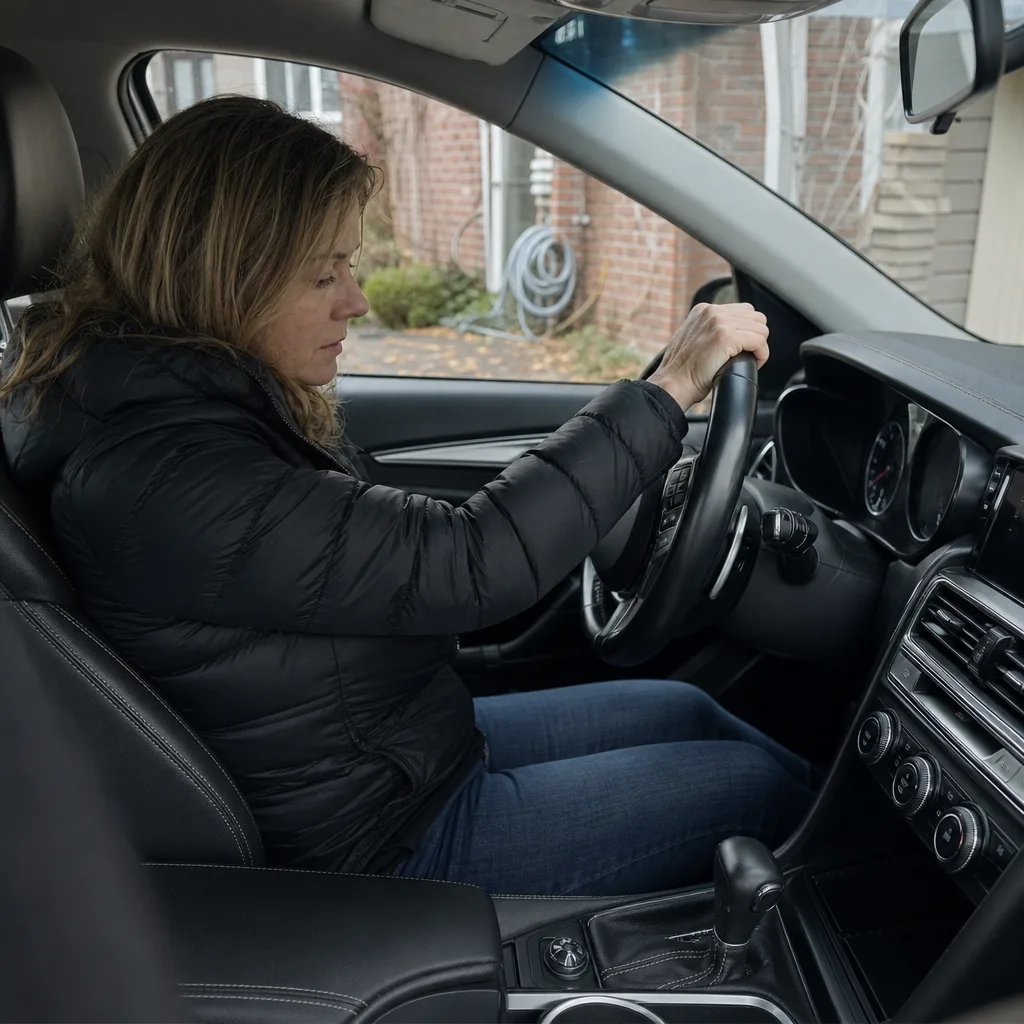
You can also keep an eye on things yourself. On many cars, you can see the outer pad and part of the rotor through the wheel spokes with a flashlight. If the pad still looks thick and the rotor face is smooth and shiny where the pad touches it, you're probably okay for now. Just keep listening and feeling for the signs covered earlier.
Waiting isn't the right call every time, though. If you hear grinding, see a brake warning light, feel the car pull, or notice it's taking longer to stop, don't put it off. Those signs mean something has already worn past the point where waiting is safe, and they can turn a pads-only job into a bigger one.
One more thing to keep in your back pocket. If anyone tells you that you need new pads and rotors on all four wheels, it's fair to ask what the rotors measured and how much pad is left. A real answer comes with numbers and parts you can look at. If the numbers say your brakes still have life in them, that's good news. Keep driving, keep an eye on them, and plan the job for when you need it.
How Pricing Works for Pads and Rotors
Most brake quotes come down to two things: the parts and the time it takes to put them on. Shops usually price brake work per axle, meaning the front pair or the rear pair, not per wheel. That's because both sides of an axle get done together. So a front-only job and a four-wheel job can be very different numbers, even on the same car.
Here's what tends to move the price up or down:
- Pads only, or pads and rotors. Rotors are the bigger part, so adding them raises both the parts cost and the labour. This is why it's worth knowing what your rotors measured before you agree to replace them.
- The type of pad. Pads come in different materials. Some last longer or make less dust and noise, and they usually cost more. A basic pad can be fine for a small car that does easy city driving.
- Rotor quality. Rotors range from simple, budget parts to heavier ones with better rust coatings. With Ottawa's salted roads, a coated rotor can be worth a closer look, but it isn't a must for every car.
- Your vehicle. Trucks, SUVs, and performance cars often have bigger brakes, and bigger parts cost more. Some cars also need special steps, like setting an electronic parking brake into service mode before the rear pads can come off.
- Rust and seized parts. After a few winters, bolts, slide pins, and rotors can rust in place. Getting them loose takes extra time, and sometimes a part breaks and needs replacing.
- Extra parts found along the way. A sticking caliper, a worn brake hose, or old brake fluid can come up once the wheels are off. Those are separate items and should be listed separately.
A small hardware kit, which means new clips and grease for the slide pins, is often part of a good brake job. It's a minor cost, but it helps new pads sit right and stay quiet. Ask whether it's included.
Cheap quotes aren't always cheap in the end. A low price can mean the lowest-grade pads, skipped hardware, or rotors left on that should've been replaced. You might be back sooner, with noise or a pulse in the pedal. On the other hand, the most expensive parts aren't automatically right for your car either. The best choice fits how you drive.
Before you say yes to any brake quote, these questions can help:
- Is this price for one axle or both?
- What did my pads and rotors measure, and can I see the old parts?
- What grade of pads and rotors are you using?
- Are new clips and pin grease included?
- Is anything else on this quote that can wait?
A clear quote breaks out parts and labour, names what's being replaced and why, and keeps the must-do items apart from the can-wait ones. Every line should be easy to understand before any work starts, so you can choose what makes sense for your car and your budget.
What Happens During the Inspection and Repair
A good brake visit has two parts. First comes the check, then the repair you agree to. The check should stand on its own. You shouldn't be locked into anything until you've seen what's going on with your car.
A thorough brake check usually covers these things:
- A feel of the pedal, and often a short drive, to notice any pulse, pull, or noise you've been hearing.
- Wheels off, so the pads, rotors, and calipers can be seen up close and not just through the spokes.
- Measuring both the inner and outer pads. The inner pad can wear faster, and it's hard to see from outside the wheel.
- Measuring the rotors against their minimum thickness, and checking for wobble, grooves, cracks, or heat spots.
- A look at the caliper slide pins, brake hoses, and brake fluid, since those can cause problems that look like worn pads.
Digital inspections let you see what's found, with photos and updates sent by text. You don't have to take anyone's word for what "worn" means. You can look at your own brakes and decide from there.
If you go ahead with pads and rotors, a careful job usually follows these steps:
- The caliper and old pads come off, and then the old rotor.
- The hub face, where the rotor sits, gets cleaned down to bare metal. After a few Ottawa winters of salted roads, rust builds up there. Even a thin layer can make a new rotor sit slightly crooked, and that can bring the pedal pulse back.
- The new rotor goes on, along with new pads, fresh clips, and cleaned and greased slide pins.
- The caliper piston is pushed back to make room for the thicker new pads. On cars with an electronic parking brake, the rear brakes are put into service mode first.
- The wheel nuts are tightened in a criss-cross pattern to the carmaker's spec. That avoids the uneven clamping that can warp a rotor.
- The pedal is pumped until it's firm before the car moves, and then the car is test-driven.
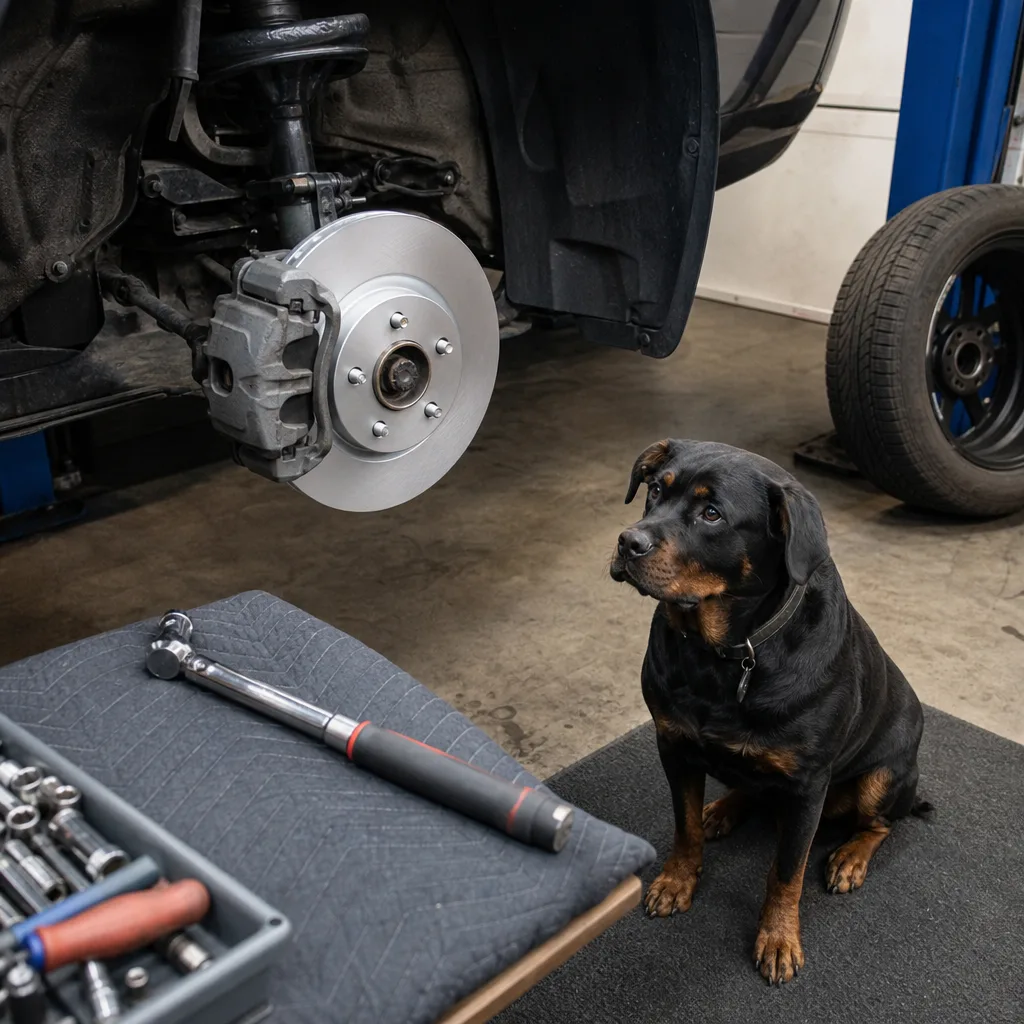
Sometimes the check turns up something else once the wheels are off, such as a seized slide pin, a cracked hose, or dark brake fluid. That should be a conversation, not a surprise. You should hear what it is, why it matters, and whether it can wait, before anything gets added.
Your first few stops after pickup may feel a little different while the new pads settle into the rotors. It's worth asking how to break them in, since a few gentle stops early on help the pads wear evenly. If you feel a pulse, notice a pull, or hear a noise that wasn't there before, don't wait for it to go away. Bring the car back and have it looked at. Brakes that were done right should feel smooth, quiet, and predictable.
Frequently Asked Questions
Do I need to replace all 4 brake pads at once, or can I just do 2?
You only need to replace pads on one axle at a time, not all four. Pads are done in pairs, meaning both front pads together or both rear pads together. Most cars wear front pads faster than rear ones, so it's common to replace just the front pair while the rear pads still have life left.
Can brake pads really last 100,000 miles or more?
Some pads can last that long, but it depends a lot on how and where you drive. City driving with lots of stop-and-go wears pads faster than steady highway miles. Ottawa winters add another factor, since salted roads and short trips can affect wear too. The only way to know where your pads stand is to measure them, not to guess by mileage.
Why does labor cost so much compared to the parts for a brake job?
Labor reflects the time it takes to safely remove old parts, clean up rust, and set everything to spec. After a few winters on Ottawa's salted roads, bolts and rotors can seize in place, which adds time to get them loose without damage. The hub face also needs cleaning down to bare metal before a new rotor goes on, since even a thin layer of rust there can cause a pedal pulse later.