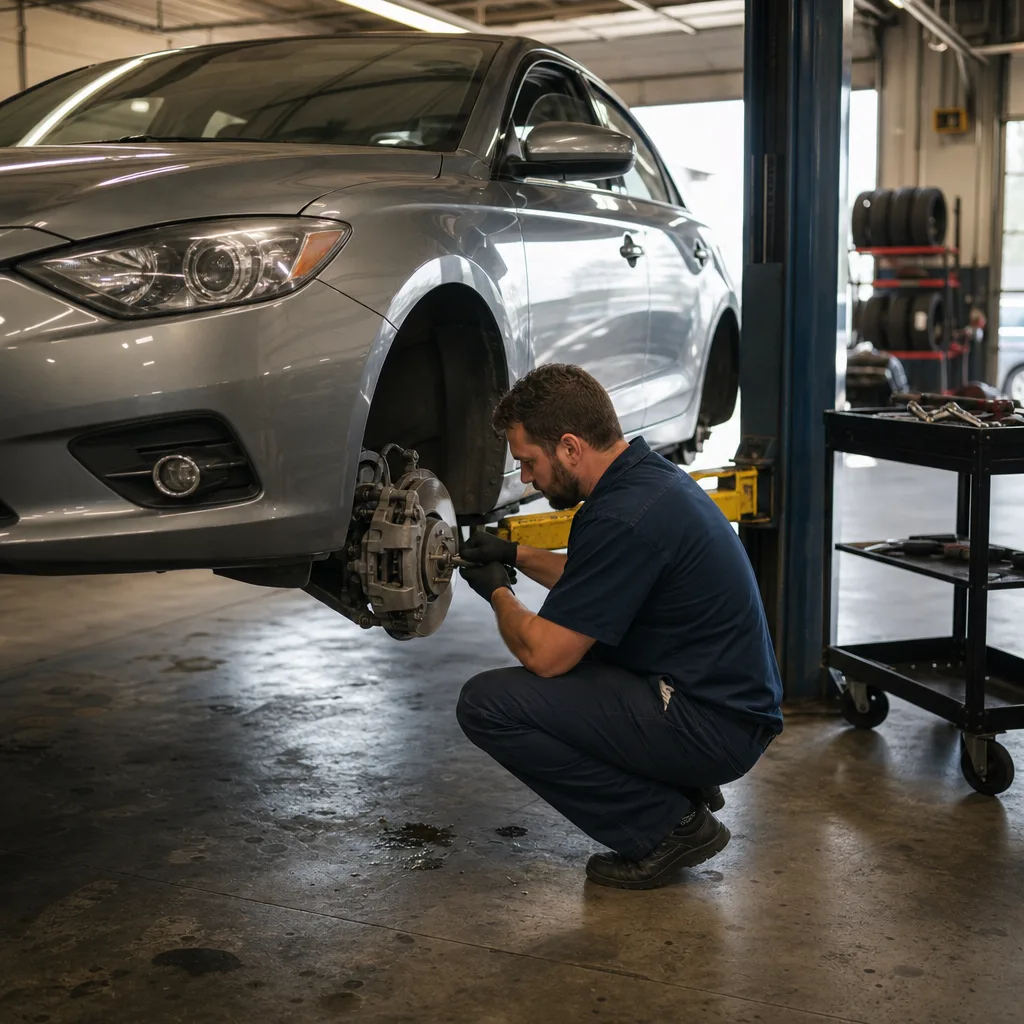
- Wheel off before any quote
- Every wheel checked, not one
- Licensed mechanics Alex and Dan
- Serving Orléans since 2013
Brake Noise and Warning Signs That Need Attention
Squealing, grinding, a pulsing or soft pedal, pulling to one side, and dash warning lights each point to a different brake repair issue. Some, like a light squeak on a damp morning, are often nothing at all. Knowing which is which helps you ask the right questions and pay only for what your car needs.
Your brakes usually tell you when something's changing. The trick is knowing what each sign tends to mean. Here's what to listen and feel for, in plain terms:
- A high-pitched squeal when you brake: many pads have a small metal tab built in that squeals when the pad gets thin. It's a heads-up, not an emergency, but it means the pads are getting close to the end.
- Grinding or a harsh scraping sound: this often means the pad material is worn away and metal is rubbing on metal. That can damage the rotors too, which turns a pad job into a pad and rotor job.
- A pulsing or shaking pedal: you feel it in your foot or the steering wheel when you slow down. This usually points to rotors that have worn unevenly.
- A soft, spongy, or sinking pedal: if the pedal feels mushy or goes closer to the floor than it used to, it can mean air or moisture in the brake fluid, or a leak somewhere in the lines. This one is about stopping power, so it shouldn't wait.
- The car pulls to one side when you brake: a caliper that's sticking or not releasing can cause this, and so can uneven pad wear.
- A burning smell after driving: a brake that's dragging gets hot. You might notice the smell or feel extra heat coming off one wheel.
- A brake or ABS light on the dash: the red brake light can mean low fluid or a parking brake issue. An amber ABS light means the anti-lock system has flagged a fault, even if normal braking still feels fine.
Not every noise means you need a repair, and we'd rather you hear that from us. If your car sat overnight in the rain or after a wet, slushy Orléans day, a thin layer of surface rust can form on the rotors. You might hear a light scrape or squeak for the first few stops, and then it's gone. That's normal. Some pads also make a little noise in the cold and settle down once they warm up. If the sound fades fast and the pedal feels normal, it's often fine to keep an eye on it.
What matters is whether the sign sticks around or gets worse. A squeak that's there every time you stop, a grinding sound that's new, or a pedal that feels different from last week are all worth having checked. Each one also points to different parts. A soft pedal may call for a brake fluid change or a line repair. A pull to one side may lead to brake caliper replacement. An ABS light often needs ABS repair rather than new pads at all.
That's why we look before we quote. When you can tell us what you heard, when it happens, and how the pedal feels, it helps us find the real cause faster. Then we'll show you what we found and explain your options, so you're making the call with all the facts.
Why an Inspection Comes Before Any Repair Decision
The same symptom can come from very different parts. A pull to one side might be a sticking caliper, or it might just be uneven pad wear. Those are two very different bills. If a shop quotes you before anyone has taken a wheel off, they're guessing. That guess usually lands on the bigger job. A proper brake inspection replaces the guess with what's on your car, so you only pay for the parts that need it.
Here's what a good inspection should cover:
- Pad thickness on every wheel, front and back, not just the one making noise.
- Rotor condition, including wear, grooves, and rust on the braking surface.
- Calipers and slide pins, to see whether they move freely or are seizing up.
- Brake lines and hoses, checking for rust, cracks, or leaks.
- Brake fluid level and condition.
- The parking brake, which often gets forgotten until it stops holding.
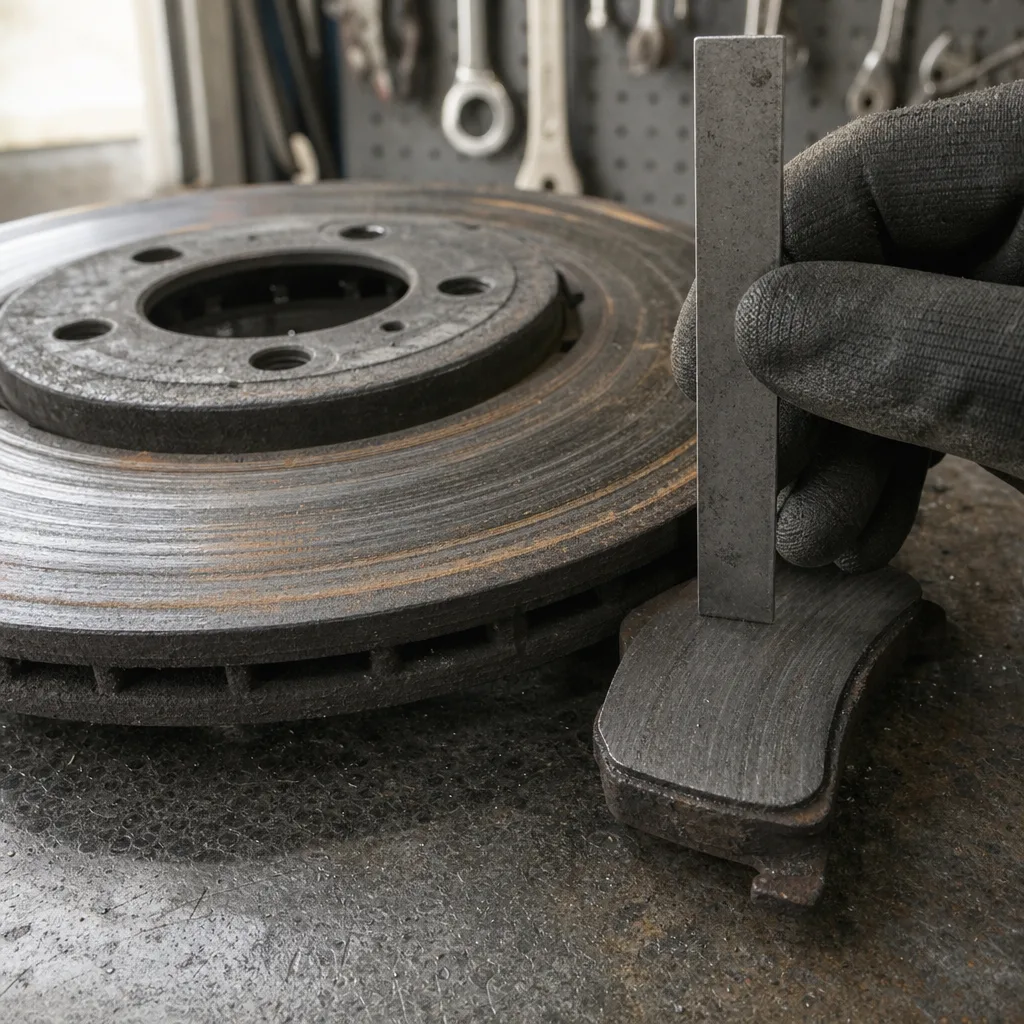
Around Orléans, that full look matters more than it might somewhere warmer. According to Brake Performance, winter road salt gets into everything underneath a car. It can build up rust on rotors, seize caliper slide pins, and eat away at steel brake lines long before you hear a sound.[1] Those problems hide behind the wheel. A quick glance at the pads won't catch them.
An inspection also explains the price, before there's a price. Brake repair isn't one fixed job. The cost depends on a few things:
- Pads only, or pads and rotors together. Worn or damaged rotors add parts and time.
- Whether one axle needs work or both. Brakes are usually done in pairs, front or back, so both sides stop evenly.
- Extra parts like a caliper, a hose, or a section of brake line.
- Your vehicle. Larger trucks and SUVs, or cars with bigger brakes, often need pricier parts.
- The grade of parts you choose, when there's more than one option.
Whichever shop you go to, it's fair to ask a few questions before you say yes. What exactly is worn, and how much life is left? Does this need doing today, or can it wait a few months? Can you show me? Is the quote for one axle or both? A good shop won't mind any of these.
That's how we like to work. Our whole approach is about helping you make an informed decision about your car, with honesty and no pressure. Alex and Dan, the brothers who own the shop, are both licensed mechanics who personally work on customers' vehicles. You're hearing about your brakes from the people who looked at them. We'll share what we found through a digital inspection and send you updates by text. That way you can see the issue for yourself, ask questions, and choose what to fix now and what can wait.
Sometimes the answer is that your brakes are fine for now. You should hear that just as clearly as you'd hear about a problem.
When a Dashboard Light or Light Squeal Doesn't Mean Full Repair
A warning light or a new squeal can make your stomach drop. It doesn't always mean you're headed for new pads, rotors, and calipers all at once. Often the cause is small, and sometimes it's something you can check in your own driveway before you call anyone.
Start with the easy ones. If the red brake light comes on, make sure the parking brake is all the way off. A lever that's up one click, or a pedal brake that didn't fully release, can keep that light on. Lots of people drive across town like that without noticing. If the light goes out once the parking brake is fully released, that was likely the whole story.
If the light stays on, pop the hood and find the brake fluid reservoir. It's usually a small, see-through plastic tank with level marks on the side. Brake fluid drops a little as your pads wear down, because the calipers hold more fluid as the pads get thinner. A level that sits a bit low can be a clue that the pads are getting thin. It doesn't have to mean there's a leak. Topping it up won't fix the thin pads, though. It just hides the clue. If the level drops fast, or you see wet spots near a wheel, that's a different matter.
Here are a few more cases where the fix is usually smaller than people expect:
- An early wear-tab squeal. That built-in squeal is meant to warn you with some pad life still left. It's a sign to book a check soon, not to pull over. You may have time to plan it around your schedule.
- An ABS light with normal braking. The fault is often a single part, like a wheel speed sensor or its wiring. It's not always the whole anti-lock system. Your regular brakes still work, but the anti-lock help on slippery roads may not.
- Noise from only one wheel. A squeak or click on one corner can come from a loose clip, a small stone, or a pad that's shifted. Not every noise means every part needs replacing.
- Pads worn but rotors still in good shape. Rotors don't always need to be replaced with the pads. If they're smooth and thick enough, pads alone can be the right call.
Timing matters too. If your pads are wearing but still have some life left, you don't always have to do the work today. If you swap to winter tires each fall, some drivers like to have the brakes looked at around the same time, so the wheels are already off. That's a fair way to plan it, as long as nothing on the list above has turned into grinding, a soft pedal, or a pull to one side.
The honest test is simple. Is the sign steady and small, or is it new and getting worse? A light you can explain, a squeal that's just starting, or one quiet part that's acting up usually points to a smaller fix. A pedal that feels different, a grinding sound, or a light that stays on with no clear reason needs a closer look. You deserve to know which one you're dealing with before anyone talks about a full brake job.
What Drives the Cost of a Brake Job
Nearly every brake bill comes down to two things: parts and labour. Parts are the pads, rotors, or caliper going on your car. Labour is the time it takes to do the job right on your vehicle. Once you know how those two pieces grow or shrink, a quote stops feeling like a mystery.
Labour is often based on a standard time for that job on your make and model. A small car with simple front brakes takes less time than a truck with bigger parts. That's why two friends can get very different quotes for what sounds like the same work.
The biggest thing you control is timing. A squeal you deal with early often means pads only. Wait until it turns into grinding and the rotors may need replacing too, as we covered above. Let a sticking caliper go long enough and the pads on that wheel can wear out fast, which adds a caliper to the bill. Each step down that road adds parts and time. Booking a check when the first sign shows up is usually the cheapest choice you'll make.
Rust can add time too. After years of salty Orléans winters, bolts can seize and slide pins can stick. A job that should be quick takes longer when a part has to be worked loose or cleaned before the new pieces go on. A good shop will tell you up front if your car shows signs of this, so it doesn't show up as a surprise later.
Be careful with a very low advertised price. A low price that covers one set of basic pads on one axle can grow fast once rotors, hardware, or a second axle get added. That doesn't make the shop dishonest. It just means the price you saw wasn't for the job your car needs.
If you're comparing quotes, make sure they cover the same work. Look for these:
- Whether rotors are being replaced or reused
- Whether new clips and hardware are included, or just pads
- Whether a brake fluid change is listed, and why your fluid needs it
- Whether the quote is the full price with labour, or parts only
A higher quote that includes rotors and hardware may be the better deal next to a lower one that leaves them out and has you back in a few months. The cheapest line on paper isn't always the cheapest over a year of driving.
Here's what should never be on the bill: work your car doesn't need yet. If your rotors are still smooth and thick enough, you shouldn't be paying for new ones. If one axle is fine, it should stay off the quote. When we look at your brakes, we'll walk you through what's worn, what each part adds to the total, and what can safely wait. That way you can decide what fits your budget with the full picture in front of you.
What Happens During a Brake Repair Visit
Once you've decided what to fix, the repair itself is pretty simple. Knowing the steps helps you tell a careful job from a rushed one, because the small details are what keep new brakes quiet and even.
Here's what a good brake repair should include:
- The wheels come off, and the old pads come out. If the rotors are being replaced, they come off too.
- The caliper brackets and slide pins get cleaned and greased. On cars that see Orléans winters, salt crust builds up where the pads sit. If it isn't cleaned off, brand-new pads can stick and wear unevenly.
- New clips and hardware go in when they're part of the job, so the pads sit snug and stay quiet.
- The new pads and rotors go on, and the caliper gets checked to make sure it slides freely and lets go when you lift your foot.
- If the brake fluid is being changed or a brake line is replaced, the system is bled to push out trapped air. That's what gives you a firm pedal again.
- The brake pedal gets pumped before the car moves, so the pads are pressed into place.
- The wheel nuts are tightened to the setting your car maker calls for. Too loose is unsafe, and too tight can warp a rotor.
- A short test drive confirms the car stops straight, smooth, and quiet.
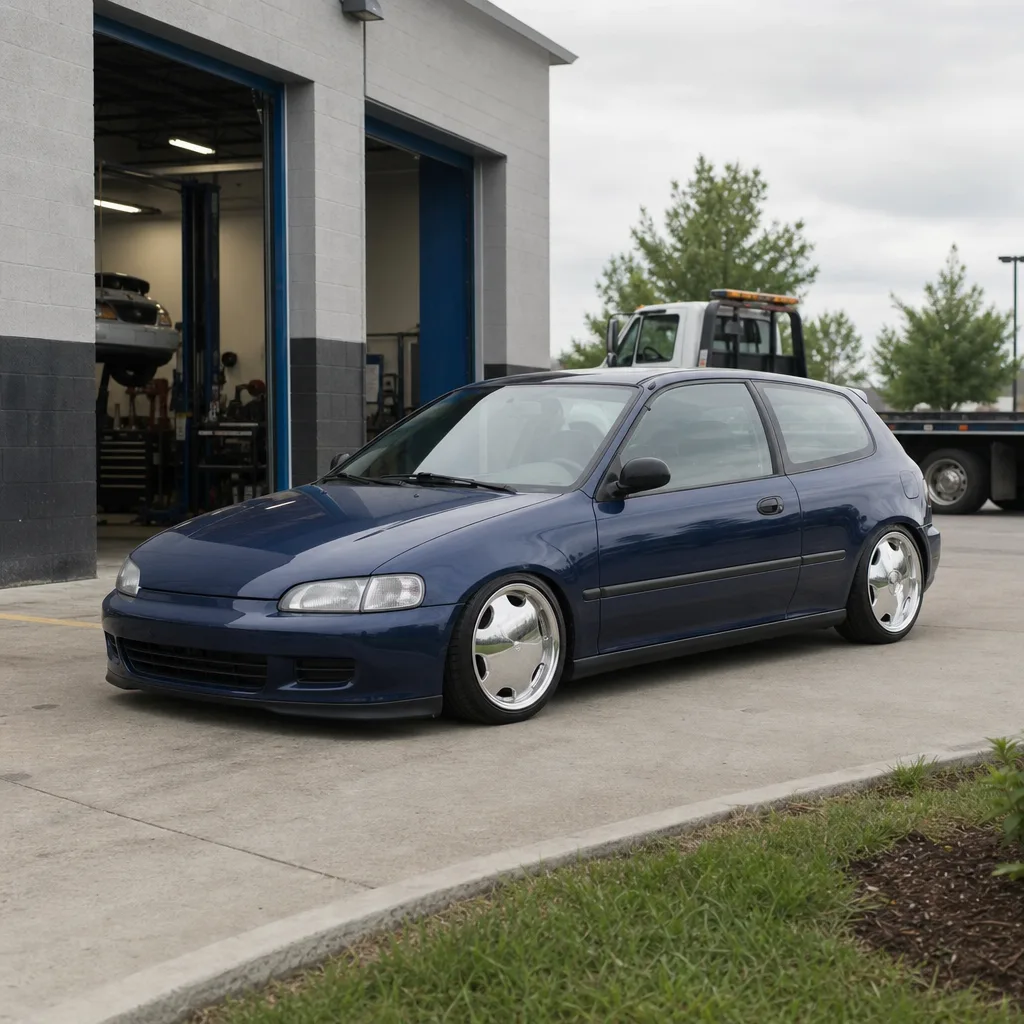
Sometimes the job changes once the wheels are off. A bolt might be rusted solid, or a hose might show a crack that couldn't be seen before. You should hear about that before the work goes further, not when you see the bill. We'll send you a text update and share it through our digital inspection, so you can see it for yourself and decide what to do.
When you pick up your car, your invoice should spell out what was replaced and on which axle. If you'd like to see your old pads or rotors, just ask. Seeing how thin a worn pad really is can make the whole thing click.
On the drive home, the pedal should feel firm right away. New pads can feel a little different for the first few days while they settle in against the rotors. That's normal. If you have alloy wheels, ask whether the wheel nuts should be re-checked after your first short drive.
Call back if you notice any of these after a brake job:
- A grinding or scraping noise that wasn't there before
- The car pulls to one side when you stop
- The pedal feels soft or sinks lower than it should
- A burning smell or one wheel that's much hotter than the others
None of these should be brushed off. A good shop wants to hear about them, and fixing them early keeps a small problem from turning into a bigger one. With Alex and Dan, the brothers who own the shop, working on customers' cars themselves, you can talk to the people who did the work.
Frequently Asked Questions
How much does a full brake job usually cost in parts alone?
Parts alone for a full brake job, like rotors, pads, and fluid, often run a few hundred dollars before labour is added. The exact amount depends on your vehicle size, whether both axles need work, and whether rotors can be reused. That's why we check your car first and show you what's worn before giving you a number.
Can I bring my own brake parts and just pay for labour?
We can talk through that option when you bring your car in for a look. Whether it makes sense depends on the part, since some jobs need pieces matched exactly to your vehicle to work safely. Ask us about it when we go over what your brakes need.
Is it normal for brakes to make noise after winter driving in Orléans?
A light scrape or squeak after a wet or slushy day is often just surface rust on the rotors, and it usually clears after a few stops. Road salt can also build up on caliper slide pins over time, which is a bigger concern than a passing morning noise. If the sound sticks around after your first few stops, it's worth having us take a look.