Orléans, Ontario · St. Joseph Blvd
Parking Brake Repair in Orléans
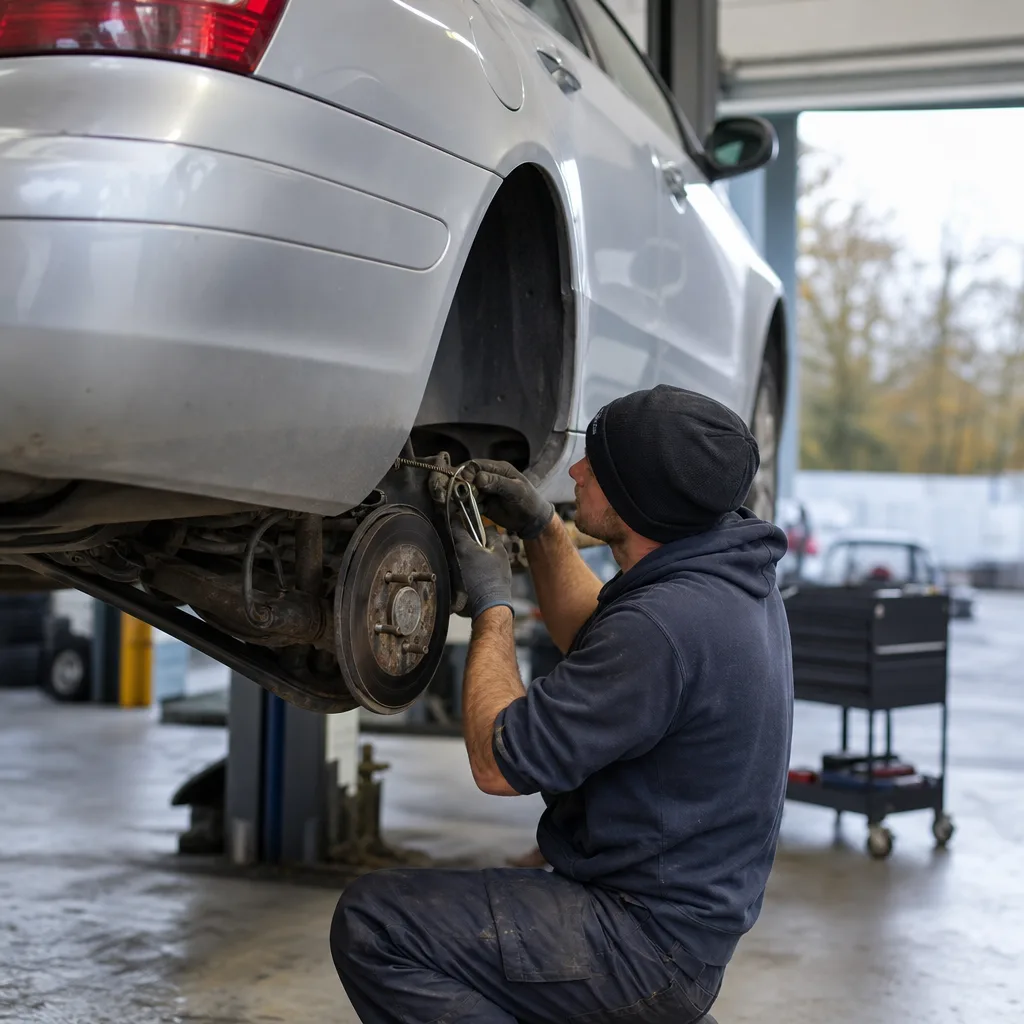
- Cable and electronic systems
- Told plainly what can wait
- Licensed mechanics Alex and Dan
- Serving Orléans since 2013
Signs Your Parking Brake Needs Attention
Most parking brake problems give you a warning before they fail completely. Extra lever travel, a car that creeps when parked, a warning light that won't go out, or a brake that drags are the main signs to watch for. Catching them early usually means a smaller, simpler parking brake repair.
Your parking brake doesn't get much attention until it stops doing its job. The good news is it usually tells you something's off well before it quits. If you know what to watch for, you can get it checked while the fix is still small. That's the whole point of this page: we'd rather you understand what's going on so you can make the call yourself. Here are the signs to watch for:
- The lever or pedal goes farther than it used to. If you're pulling the handle up an extra few clicks, or the pedal sinks closer to the floor before it holds, the cable may have stretched or the rear brakes may need adjusting.
- The car creeps when it's parked. If it rolls a little on a sloped driveway or a lot with any grade, the brake isn't holding the way it should.
- The brake warning light stays on. If the light doesn't go out after you fully release the brake, the switch, the cable, or the brake system may need a look.
- The brake drags after you release it. A burning smell, a rear wheel that feels hotter than the others, or a car that seems sluggish pulling away can mean the parking brake isn't letting go all the way.
- The lever feels loose or won't release. A handle with no resistance, or one that sticks in the up position, often points to a broken, seized, or disconnected cable.
- Grinding or squealing from the back. Worn rear shoes or pads, or a part rubbing that shouldn't be, can show up as noise when you set or release the brake.
Our winters are hard on parking brakes. Salt and slush on Orléans-area roads work their way into the cables and the parts at the rear wheels. Over time, rust can make a cable stiff or seize it in place. On a cold morning after a slushy drive, water trapped in the cable can also freeze, so the brake won't release or won't set properly. If your parking brake acts up mostly in winter, that's a useful clue to mention when you bring the car in.
Many newer vehicles use an electronic parking brake with a button instead of a lever. These have their own signs. You might see an error message on the dash, hear a whirring or clicking from the rear wheels that keeps going, or press the button and get no response. These systems are tied into the car's computer, so the problem could be a motor at the wheel, a wiring fault, or a sensor. That's where proper car diagnostics help pin down the cause instead of guessing.
You don't need to figure out the exact cause yourself. Just notice what the car is doing and when it happens, like only on cold days, only on hills, or every time you release it. Those details make it much easier to find the real problem, so you're only paying for what needs fixing.
When You Don't Need Repair Yet
Not every odd moment with your parking brake means something's broken. Sometimes the honest answer is that your car is doing exactly what it's built to do. We'd rather tell you that up front than have you book a repair you don't need.
Here are some common situations where you can usually hold off:
- The warning light went out once you pushed the lever all the way down. A handle that's even one click up can keep the light on. If it goes off when the brake is fully released, the system is working.
- The brake stuck once on a frozen morning, then worked fine. Water can freeze in the cable after a slushy drive. If it lets go once the car has warmed up and it hasn't happened again, there may be no lasting damage. If it keeps happening every cold snap, that's different.
- You hear a short scrape from the back after a rainy night. A thin layer of surface rust can form on rear brake parts after the car sits wet. If the noise fades after a few stops, that's normal.
- Your electronic parking brake turns on by itself. Many cars with a button set the brake on their own when you shut off the engine or shift into park. Some also release it on their own when you drive away. Check your owner's manual before you assume it's a fault.
- The lever takes a few clicks before it holds. Some travel is normal. Your owner's manual often lists a range. If you're within it and the car is on a hill, you're fine.
One habit helps a lot here. Use your parking brake regularly, even if you drive an automatic. A cable that never moves is more likely to stiffen up and seize, especially with the salt on our roads each winter. Setting it each time you park keeps things moving.
So where's the line? Waiting makes sense when the issue happens once, goes away on its own, or turns out to be normal behavior for your car. Waiting doesn't make sense when the car rolls while parked, the brake won't release, or you notice the dragging or burning smell from the signs above. Those affect how safely your car holds and stops, so don't put them off.
If you're not sure which side of the line you're on, it's fine to just ask. Tell us what happened and when, and we'll give you a straight answer, even if that answer is to keep driving and keep an eye on it. Our goal is for you to make an informed decision about your car, not to sell you a fix it doesn't need.
Quick self-check: Park on a gentle slope in a safe spot, set the parking brake, and shift to neutral with your foot ready on the brake pedal. If the car holds still, the parking brake is doing its main job. If it creeps, it's time to get it looked at.
Why Parking Brakes Seize or Fail in This Climate
You already know that salt and slush are tough on parking brakes. What's useful to know next is where that damage happens. A parking brake has a few main parts. Each one wears out in its own way, and the part that's struggling decides how big the repair will be. Here are the main parts:
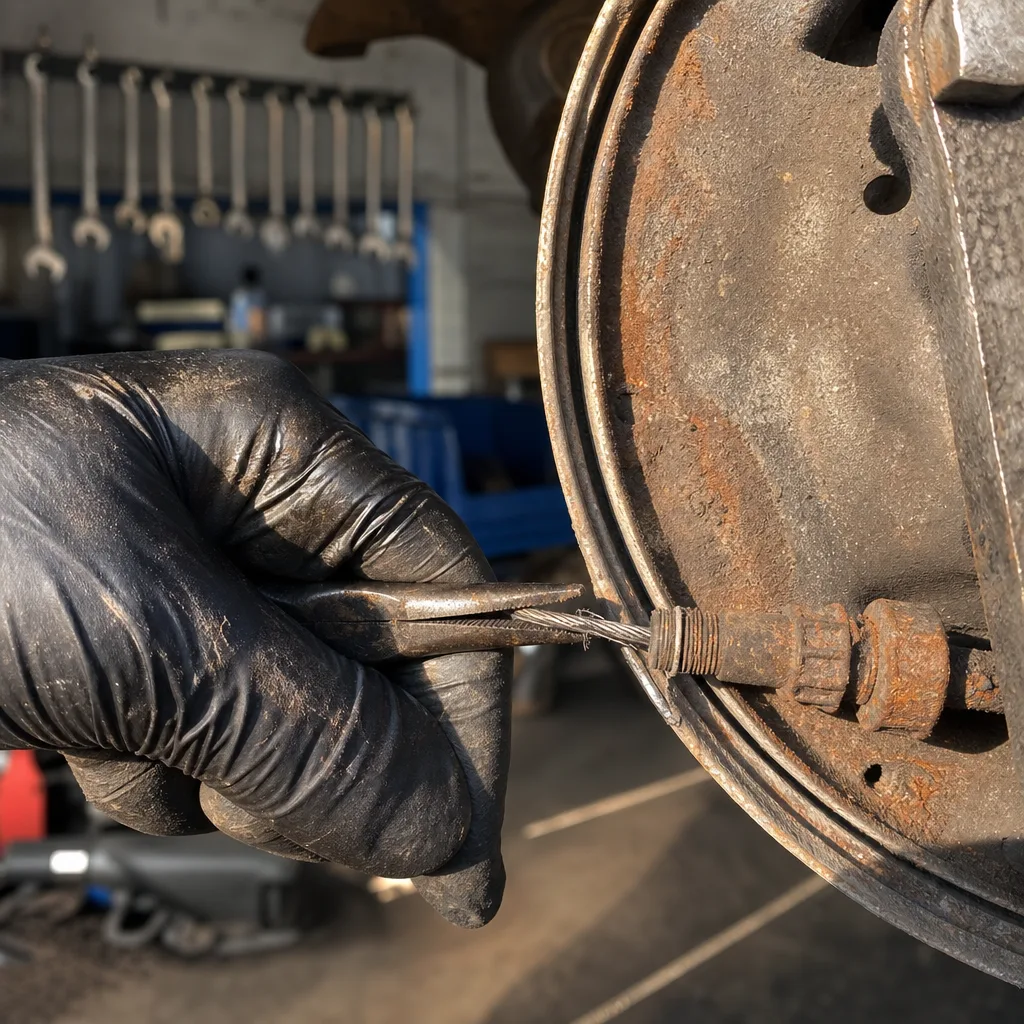
- The cable. This is a steel wire inside a protective sleeve that runs under the car from your lever or pedal to the rear wheels. If the sleeve cracks or a seal wears out, water gets in. The wire rusts against the inside of the sleeve, starts to drag, and can eventually stick in place.
- The bracket under the car. On many vehicles, one cable splits off to both rear wheels at a small bracket that hangs low under the car. It catches spray from every wet road you drive. If it rusts, one side can pull harder than the other, or neither side lets go all the way.
- The parts at the wheel. Many cars with disc brakes in the back have a small drum tucked inside the rear rotor, with its own set of brake shoes. Others use a setup built right into the rear caliper. Either way, the springs, levers, and adjusters sit right where road spray hits. When they rust, the shoes can stick to the drum or the caliper may not fully release.
- The motor on electronic systems. If your brake works with a button, a small motor at each rear caliper takes the place of the cable. That means there's no cable to rust, but the caliper still sits in the spray. Corroded connectors or a seized caliper can make the motor strain or stop working.
Local winters don't just stay cold. Temperatures swing above and below freezing, sometimes on the same day. Every thaw lets a little water seep in, and every freeze makes it expand. Over time, that wears down seals and opens tiny gaps, so more water gets in the next time around. That's why a brake that felt a bit stiff in December can be stuck solid by March.
Rust doesn't stop when the snow melts, either. Salt left in the hidden spots under your car keeps working, especially in damp spring and fall weather. A car can seem fine all summer while a cable slowly gets worse.
This is why timing matters. If a cable is just starting to drag, it can often be adjusted or replaced on its own. If it's left until it seizes, the brake can drag every time you drive. That builds heat that can wear out the rear shoes, pads, or rotors early. What could have been a simple cable job can turn into a cable repair plus a brake pad and rotor replacement.
You can slow some of this down. Rinsing the underside of your car during winter helps clear off salt. Rust protection like undercoating or rustproofing can also help protect the parts under your car, though it won't bring an old, rusty cable back to life.
When your parking brake acts up, the real question is which of these parts is the cause. Once you know that, you can decide what to fix and when, and you only pay for the part that needs work.
Cable-Actuated vs. Electronic Parking Brakes
The type of parking brake in your car shapes what a repair looks like. It's easy to check. A hand lever between the seats or a small pedal by your left foot means a cable system. A button or switch, often marked with a P inside a circle, means an electronic one. Neither type is better. They just break in different ways and get fixed in different ways.
With a cable system, the repair usually starts small and only grows if it has to. Here's how it tends to go, from the simplest fix to the biggest:
- Adjustment. If the lever travels too far but the cable moves freely, tightening the adjuster or setting up the rear shoes may be all it needs.
- One cable. Many cars have a front cable from the lever plus a separate cable to each rear wheel. If only one has rusted, that's often the only one that has to be replaced.
- All the cables. If they're all stiff or seized, it can make sense to do them together rather than come back for each one.
- Parts at the wheel. Worn shoes, rusted springs, or a stuck adjuster inside the rear drum or caliper add to the job.
On a cable job, cost depends mostly on how many parts are worn and how stubborn the rusty bolts and brackets are. A car that's spent years on salted roads can take longer to take apart than one that hasn't.
Electronic systems work differently. There's no cable to stretch or adjust, so the fix depends on finding the exact fault first. It could be the motor on the caliper, the caliper itself, a wiring connector, the button on the dash, or a software problem. That's why the first step is reading the codes the car has stored. Swapping parts on a guess gets expensive fast.
A few things are good to know if you have an electronic brake:
- On some cars, the motor can be replaced on its own. On others, it comes as one unit with the caliper, which costs more.
- Even routine rear brake work, like new pads, usually needs a scan tool to put the system into service mode. Forcing the caliper back by hand can damage the motor.
- A weak battery can set off parking brake warnings. If other electrical things are acting up too, a battery replacement might be part of the answer.
In general, an electronic repair takes less physical work than freeing up rusted cables, but the parts can cost more. A cable repair uses cheaper parts but can take more labour on an older, rusty car. Either way, the price comes down to which part failed, so knowing that is what lets you compare options fairly.
Good questions to ask any shop: Which part failed, and how do you know? Can you replace just the one cable or motor, or does more need to be done? If it's electronic, is the motor sold on its own for my car, or only with the caliper? Clear answers to these tell you what you're paying for and why.
Why a Functioning Parking Brake Matters for Safety Certification
According to the Ministry of Transportation in Ontario, you usually need a Safety Standards Certificate when a used car changes hands.[1] Brakes are one of the main things that inspection looks at, and that includes the parking brake. A parking brake that won't hold, won't release, or shows a warning light can keep a car from getting certified, even if everything else checks out.
That surprises a lot of people. The car drives fine, the regular brakes stop it well, and the parking brake seems like a small thing. But the inspection checks whether the car is safe to put on the road, and a parking brake that can't do its job doesn't meet that bar.
Here's how a parking brake problem tends to come up at certification time:
- You're selling your car. A seized cable or a lever that pulls up too far can hold up the certificate right when you're trying to close the sale. Fixing it ahead of time saves you a second trip and a stressed buyer.
- You're buying a used car. A car that's lived through several winters on salted roads may have a parking brake that's stiff or barely holding. A pre-purchase inspection can catch that before you agree on a price, so you know what you're taking on.
- You've got an electronic brake with a warning on the dash. A fault message or light that won't clear is worth sorting out before an inspection, since the cause could be anything from a wiring connector to a motor at the wheel.
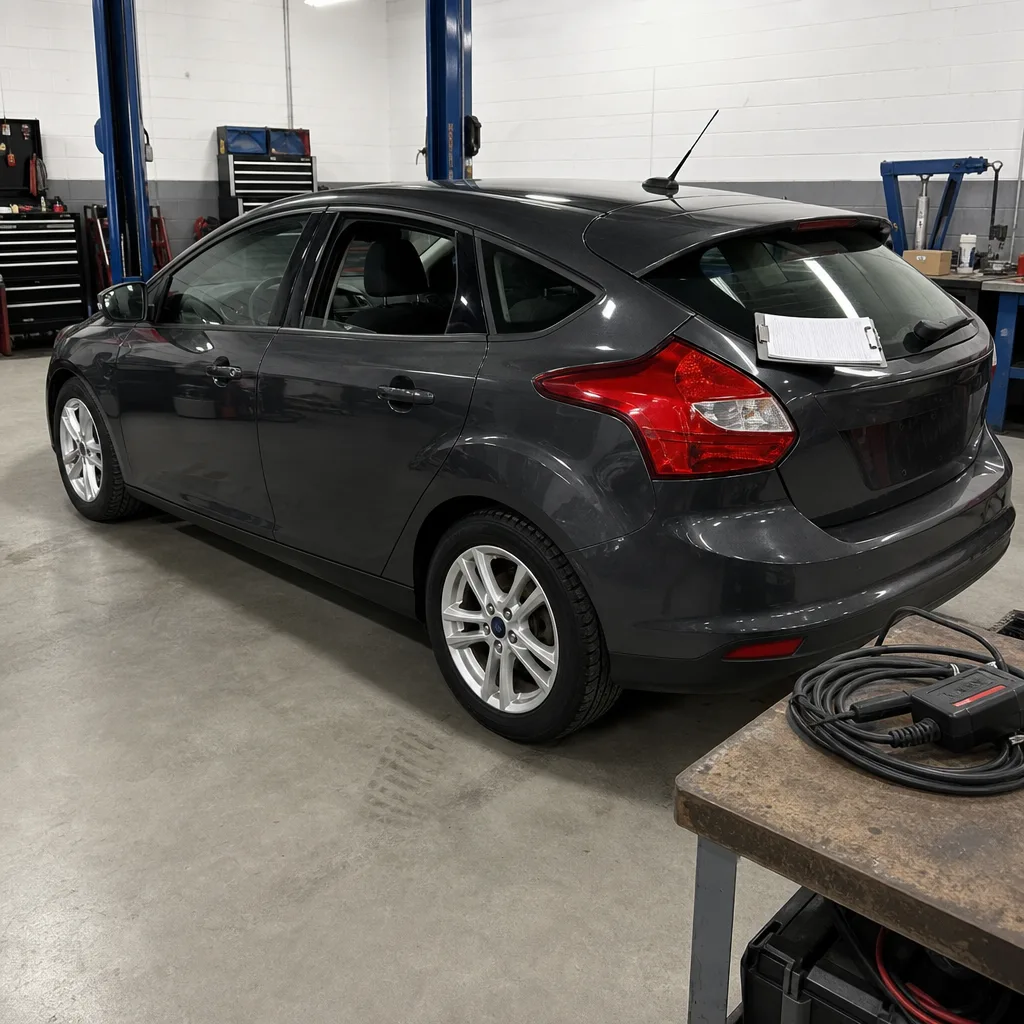
The certificate is only part of it. Your parking brake is what keeps your car from rolling when it's parked on a sloped driveway or a hilly street. If you park on an icy incline in January, you're counting on it to hold, not just the transmission. It's also a backup. If your main brakes ever had a problem, the parking brake is a second way to slow the car down. You hope you'll never need that, but it's good to know it'll work if you do.
This is why it pays to deal with parking brake trouble early. A small fix done on your own schedule costs less and causes less hassle than a seized brake that turns up during a safety inspection or on a cold morning when you need to get to work.
Our shop is owned and run by brothers Alex and Dan. Both are licensed mechanics who work on customers' cars themselves. We'll tell you plainly what we find with your parking brake, which part is causing it, and whether it needs fixing now or can wait. We can text you updates as we go. If your car is heading for a safety standards certificate, we can look at the parking brake along with the rest of the vehicle inspection, so there are no surprises.
Frequently Asked Questions
What does a full brake job cost in Canada?
It depends on what parts need work, since brake jobs cover everything from pads to rotors to parking brake cables. Factors that drive the price up or down include how many parts are worn, whether rust has seized any brackets or cables, and whether your car uses a cable or electronic parking brake. Ask any shop which specific parts failed and why, so you know exactly what you're paying for before work starts.
Can I drive my car if the parking brake warning light stays on?
It's not a good idea until someone checks it, since a light that won't clear often means the switch, cable, or brake system needs attention. If the light goes off once you fully release the lever or pedal, the system may just need one more click. If it stays on even after a full release, treat that as a sign to get it looked at soon rather than waiting.
Will a stuck parking brake damage my brakes if I keep driving?
Yes, a dragging parking brake builds heat at the rear wheel every time you drive, and that heat wears down shoes, pads, and rotors faster than normal. A problem that starts as a simple stuck cable can turn into a bigger repair involving the rear pads and rotors too. If you notice a burning smell or a rear wheel that feels hotter than the others, that's worth checking before your next drive.