
Tire Balancing in Orléans
- Balance checked, not assumed
- Told if it's not the balance
- Licensed mechanics Alex and Dan
- Serving Orléans since 2013
Signs Your Tires Need Balancing
The clearest sign of unbalanced tires is a vibration at highway speed that fades when you slow down. Where you feel it hints at which end of the car to check: a shaking steering wheel usually points to the front, and a buzzing seat or floor usually points to the back. Uneven tread wear and a recent tire swap or pothole hit are also good reasons to get your balance checked.
Unbalanced tires don't usually announce themselves around town. You'll pull onto Highway 174 heading downtown, pick up speed, and feel a shimmy creep in. Slow down and it fades away. That speed-related pattern is the biggest clue. A small heavy spot on a wheel gets worse the faster it spins, so the shake builds as you speed up and then calms down again.
Where you feel the vibration matters too, because it tells us where to start looking:
- Steering wheel shake at highway speed. This usually points to one of the front wheels.
- Vibration in your seat or the floor. This often means the problem is in the back, where you won't feel it through the wheel.
- Scalloped or patchy tread wear. Run your hand over the tread. If it has dips or cupped spots instead of wearing evenly, the tire may have been bouncing instead of rolling smoothly.
- A hum or wobble that started right after new tires or a seasonal swap. A wheel weight can get knocked off, or a tire can shift on the rim after it's mounted.
- A shake that showed up after a hard pothole hit. A big jolt can knock a weight loose or bend a rim slightly.
That last one matters here. Ottawa winters bring plenty of freeze-thaw cycles, and that means potholes every spring on roads like St Joseph Blvd and Innes Road. If your car felt fine in March and shakes in April, a pothole is a likely suspect. Swapping between winter and summer tires is another common trigger. Every time a tire comes off and goes back on, the balance can change.
Now, the honest part. Not every vibration is a balance problem, and we'd rather you know that before you book. Here's how to tell some of the look-alikes apart:
- If the car pulls to one side or the steering wheel sits crooked when you're driving straight, that's more likely an alignment issue.
- If the shake happens mostly when you brake, look at the brakes, not the tires.
- If you hear clunking over bumps or the ride feels loose, worn suspension parts could be the cause.
- If the vibration is there at every speed, even crawling through a parking lot, a damaged tire or bent rim may be the cause instead.
Sometimes it's more than one thing. A bent rim can throw the balance off and wear the tire unevenly at the same time. That's why it helps to have someone look at the whole picture instead of just guessing. When we check your wheels, we'll explain what we found and why, so you can decide what makes sense for your car and your budget.
If you're not sure what you're feeling, pay attention on your next drive. Notice the speed where it starts, where you feel it, and whether braking changes it. Those three details make the problem much easier to pin down, whether it turns out to be balancing or something else.
Balancing vs. Alignment vs. Suspension Issues
These three get mixed up all the time, and it's easy to see why. They all involve your wheels, and they can all make the car feel off. But they're three different jobs, and paying for the wrong one won't fix the problem.
- Balancing is about weight. It makes sure each tire and wheel weighs the same all the way around, so it spins smoothly. Think of a washing machine with all the towels bunched on one side. It thumps harder the faster it spins.
- Alignment is about angles. It sets the direction your wheels point compared to each other and the road. Picture a shopping cart with one wheel that wants to go its own way.
- Suspension is about support. Parts like tie rods, control arms, and wheel bearings hold each wheel steady and keep it pressed to the road. When they wear out, the wheel gets loose and can move in ways it shouldn't.
Here's the key thing to know. Balancing won't fix a pull to one side, and an alignment won't fix a highway shimmy. Each one only solves its own problem. If someone offers you one as a cure for the other, it's fair to ask why.
Where it gets tricky is that these problems can feed each other. A worn tie rod or a tired wheel bearing can let a wheel wobble, and that wobble can feel a lot like an unbalanced tire. You could balance that wheel perfectly and still feel the shake, because the real issue is the loose part holding it. A tire that's been out of balance for months keeps hammering on your suspension with every turn of the wheel. Over time, that extra shaking can wear parts out sooner than they should.
A hard pothole hit on a road like Innes Road can cause all three at once. It can knock off a wheel weight, bend a rim, and knock your wheel angles out in one jolt. That's why one quick fix doesn't always do the job after a rough spring.
When more than one thing is going on, the order matters:
- Fix worn or loose suspension parts first. Balancing a wheel that's mounted on worn parts is money you'll end up spending twice.
- Repair or replace a bent rim, since a wheel that isn't round can't be balanced properly.
- Balance the tires once everything they're bolted to is solid.
- Have the alignment checked after suspension work, because new parts can change the wheel angles.
We'll be straight with you about which of these your car needs. If it's just a balance, that's all we'll do. If we find a worn part, we'll show you what we saw and explain why it matters, and we can text you an update so you're not left guessing. That way you can decide what to fix now and what can wait, based on real information instead of a hunch.
Bundling Balancing With Your Seasonal Tire Swap
If you're in Orléans, you're probably swapping tires twice a year anyway. The fall swap happens before the first snow, and the spring swap comes once the roads clear. Those visits are the easiest time to take care of balancing. Your wheels are already off the car, so checking the balance doesn't mean a separate trip.
Whether you need it every time depends on how your winter and summer tires are set up.
- One set of rims, two sets of tires. If your tires come off the rims and new ones go on each season, plan to balance every time. A freshly mounted tire won't sit on the rim exactly the way the last one did.
- Each set on its own rims. Here you have more choice. If those wheels were balanced last season and the car drove smoothly, you may not need to balance them again. A quick check is still smart in spring, after a winter of potholes on roads like St Joseph Blvd.
- New tires going on. Brand new tires should always be balanced when they're mounted.
So no, you don't need to pay for balancing at every swap. If your wheels are on their own rims and you didn't notice any shimmy last season, just tell us. We'll be honest about whether it's worth doing.
Pricing is set differently from shop to shop, so it helps to know what to ask when you book. Some shops include balancing in a tire change or new tire installation. Others charge for it per tire, as an add-on. A few things can also push the cost up or down:
- Whether the tires are being taken off and put back on the rims, or the whole wheel is just being swapped
- Larger or low-profile wheels, which can take more time to handle
- Tire pressure sensors, which need extra care when a tire is mounted
- Damage found along the way, such as a bent rim that needs repair before it can be balanced
Before you book anywhere, ask three things. Is balancing included or extra? Is it priced per tire or for the set? Will they call or text you before doing any extra work they find? Clear answers up front mean no surprises at pickup.
A little prep makes the visit go faster, too:
- Bring your wheel lock key if your car has locking lug nuts. It's often tucked in the glove box or under the trunk floor.
- Look over your stored tires before you bring them in. Check for cracks, bulges, or tread that's getting low.
- Mention any vibration you noticed last season, including the speed where it started and where you felt it.
- Let us know if a tire pressure warning light came on, since a sensor may need attention during the swap.
Bundling it all into one visit saves you a second trip down St Joseph Blvd. It also lets you head onto Highway 174 knowing your wheels are ready for the season ahead.
What Happens During a Balancing Service
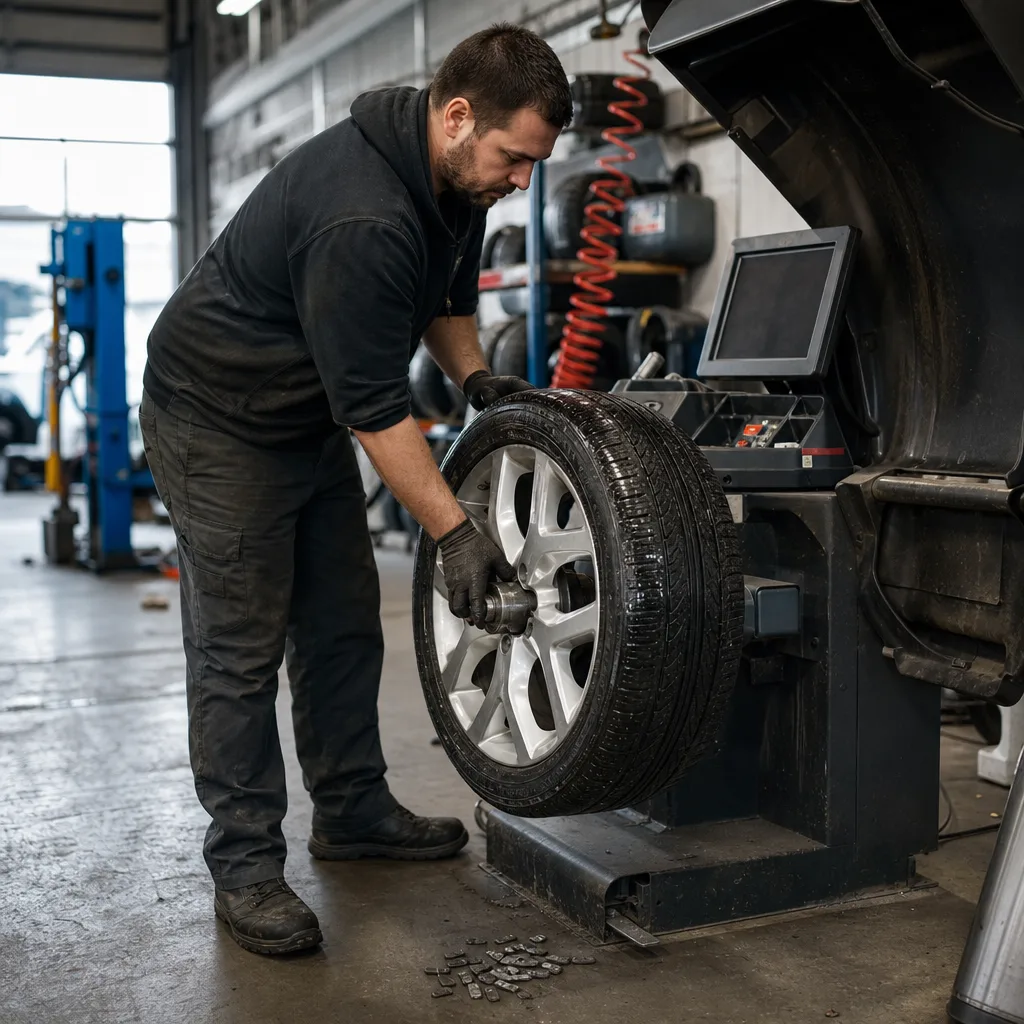
Balancing sounds technical, but the idea is simple. Find the heavy spot on each wheel, add a little weight on the opposite side, and check that it spins smoothly. Here's what that looks like, step by step.
- The wheel comes off the car. Each tire and rim is taken off together, so the whole wheel can be tested as one unit.
- The tire and rim get a quick look first. That means checking for bulges, cracks, uneven wear, a bent rim lip, or old weights that are loose or missing. There's no point balancing a wheel that has a bigger problem.
- Old weights are removed. Starting fresh gives a clean, true reading.
- The wheel is spun on a balancing machine. The machine spins it fast and measures where the heavy spot is and how much weight it takes to even things out. It checks both the inside and outside edges of the wheel, not just one side.
- Small weights are added. Steel wheels usually get clip-on weights on the rim edge. Alloy wheels often get stick-on weights placed on the inside of the rim, where you won't see them.
- The wheel is spun again. This second spin confirms the balance is right. If it's still off, the weights get adjusted and it's tested again.
- The wheel goes back on the car. The lug nuts are tightened to the right spec in a criss-cross pattern so the wheel sits flat and even against the hub.
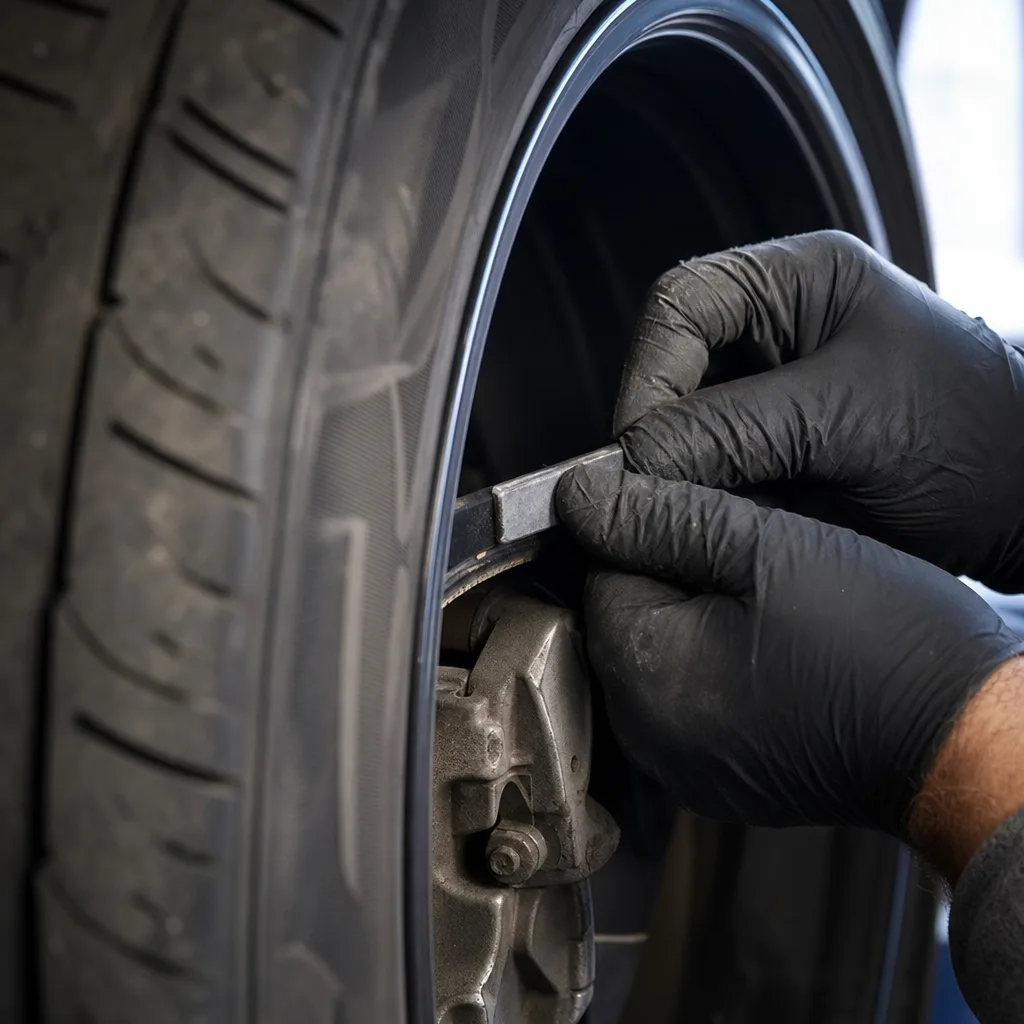
Sometimes a wheel needs more weight than it should to come into balance. That's a clue, not something to cover up with more weights. It can mean the tire's heavy spot is lined up with the rim's heavy spot. Turning the tire on the rim so those spots sit apart can fix it with less weight. In other cases, a tire that won't settle down may have a problem inside it, and it's better to know that than to keep adding weights.
You may also hear about road force balancing. It uses a roller that presses against the tire while it spins, a bit like the weight of the car on the road. It can find problems a regular spin won't catch, so it's worth asking about if you have a stubborn shake that keeps coming back.
If we spot anything along the way, like a cracked tire or a rim that's been bent by a pothole, we'll stop and tell you before doing any extra work. We can text you an update with what we found, so you can make the call without guessing.
After the service, the real test is the drive home. Take it up to highway speed on Highway 174 and pay attention to the steering wheel and your seat. A shake that used to show up at highway speed should be gone or close to it. If it's still there, the cause is likely one of the other issues covered above, like a worn suspension part, and that's useful to know too. Wheels can also shift over time, so it's smart to get the balance checked again after a hard hit or a set of new tires.
For more information on the process of tire balancing, along with some insight on what tire to use and when, Meineke can be a useful resource.[1]
Confirming the Fix Worked
You shouldn't have to take our word that the job worked. You can check it yourself, and you know your car better than anyone. The highway drive mentioned above is the main test, but a few small things can throw off what you feel. It helps to rule those out first so you're judging the balance and nothing else.
Before you decide the shake is gone or still there, keep these in mind:
- Give the tires a few kilometres to warm up. On a cold Ottawa morning, a car that sat overnight can have a slight flat spot in its tires. That causes a light thump that fades once the rubber warms up. It isn't a balance problem.
- Check your tire pressure. A tire that's low can make the ride feel mushy or uneven. Pressure also drops when the temperature falls, so this matters right after a fall swap.
- Pick a smooth, straight stretch of road. Patched pavement and rough spots are common after a freeze-thaw spring, and bumps from the road can feel a lot like vibration from the wheels.
- Drive at the same speed where you felt the shake before. If it used to start around a certain speed, go back to that speed and hold it for a bit.

Then compare it with what you noticed before. Remember where you felt it, in the steering wheel or in your seat, and the speed where it kicked in. If both are calm now, the balancing did its job. If the shake is smaller but not gone, that's still useful information. It can mean one wheel was fixed and another problem is still there.
Keep paying attention over the next few weeks, too. Every so often, run your hand across the tread. If it's wearing smooth and even, the tires are rolling the way they should. If dips or cupped spots keep showing up, something is still making a tire bounce, even if you can't feel it yet. Also watch for a shake that comes back after a hard pothole hit. That doesn't mean the balance was done wrong. A big jolt can knock a weight off or bend a rim, and it's worth a recheck.
If the vibration is still there after a proper balance, don't just live with it. Call us and tell us what you're feeling. Give us the speed where it starts, where in the car you feel it, and whether braking changes it. Those details point us toward the next likely cause, such as a worn suspension part, a bent rim, or a tire with a problem inside it. We'll explain what we think is going on and why, so you can decide what to do next with the full picture in front of you.
A smooth ride at highway speed is the whole point. If yours isn't there yet, let's figure out why together.
Frequently Asked Questions
How long does a tire balancing service take?
Most wheels get checked and balanced in under an hour, especially when it's bundled with your seasonal tire swap. Since the wheels are already off the car during a fall or spring swap, adding a balance check doesn't mean a separate visit. If a problem like a bent rim turns up, it may take a bit longer to sort out.
Can a pothole on roads like Innes Road throw off my tire balance?
Yes, a hard pothole hit can knock a wheel weight loose or bend the rim slightly, both of which cause a shake at highway speed. Ottawa's freeze-thaw winters mean potholes show up every spring on roads like St Joseph Blvd and Innes Road. If your car felt fine in the winter but starts shaking in spring, a pothole hit is a likely cause.
Do I need to balance all four tires or just the ones that feel off?
It depends on where you feel the vibration, since a shaking steering wheel usually points to the front wheels and a shaking seat or floor usually points to the back. Even so, it's common to check all four during a seasonal swap since the wheels are already off the car. That way nothing gets missed before you're back on the highway.
Will tire balancing fix a vibration that only happens when I brake?
No, a vibration that shows up mainly during braking usually points to the brakes, not the tire balance. Balancing fixes a shake that builds with speed and fades when you slow down. If braking is what triggers the shake, that's a different issue worth mentioning when you call.