Tire Change in Orléans
- Swap or mount, explained first
- Torqued to your vehicle's spec
- Licensed mechanics Alex and Dan
- Serving Orléans since 2013
Know What a Tire Change Includes
A tire change can mean two different jobs. One is swapping wheels that already have tires on them. The other is taking tires off their rims and mounting different ones. Knowing which one you need, and what's included, helps you book the right service and compare quotes fairly.
When someone calls asking for a tire change, the first thing worth sorting out is what's on your car and what's in your garage. The words sound simple, but they cover two different jobs. The difference affects how long the visit takes and what you'll pay.
If your winter tires and summer tires each sit on their own set of rims, you need a swap. The tech takes one set of wheels off and bolts the other set on. A swap usually includes:
- Lifting the vehicle and removing all four wheels
- Putting on your other set of mounted wheels
- Setting air pressure to the number on your driver's door sticker, not the number on the tire sidewall
- Tightening the lug nuts to the spec for your vehicle
If you only have one set of rims, the job is bigger. Each tire has to come off the rim and the other tire goes on. That's called mounting. A mount usually includes:
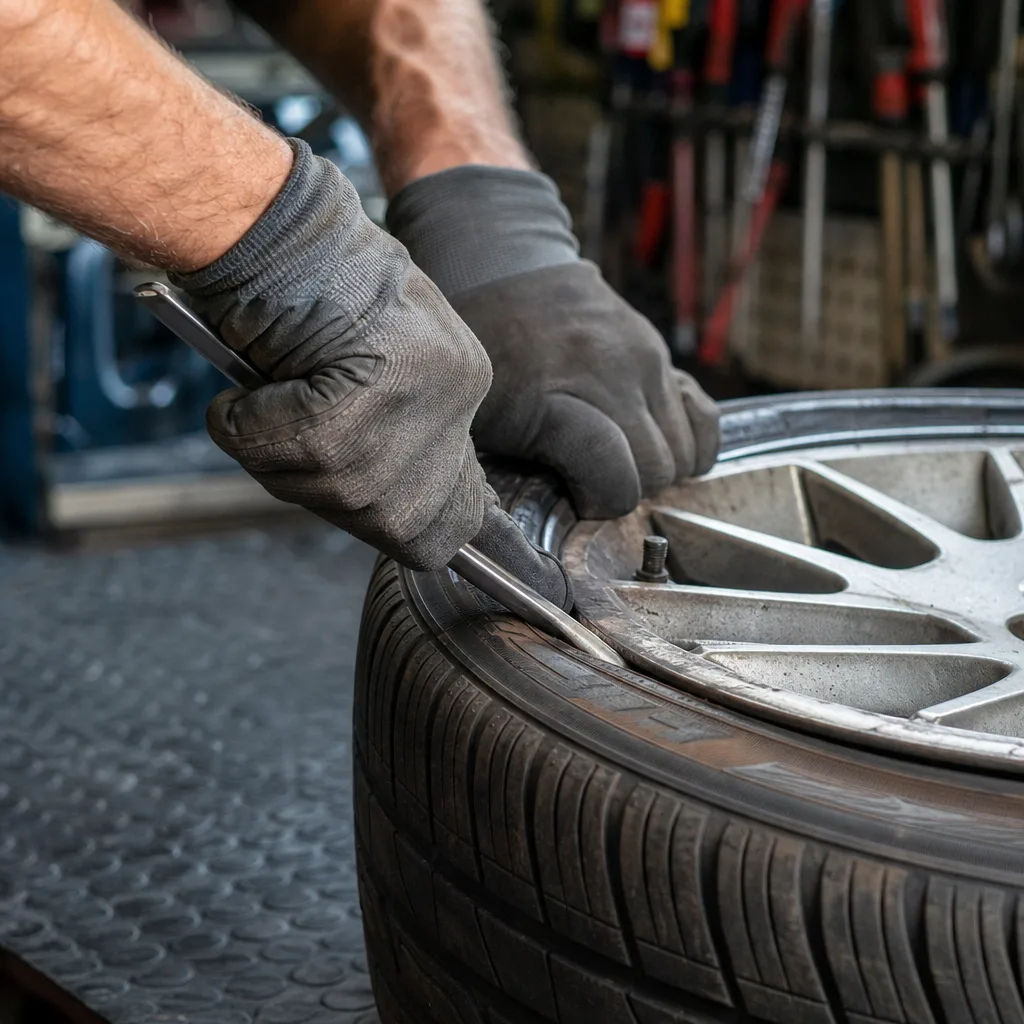
- Removing each wheel and breaking the seal between the tire and the rim
- Taking the old tire off and checking the rim edge for bends, rust, or buildup that can cause slow leaks
- Mounting the other tire and seating it properly on the rim
- Balancing each wheel so you don't feel a shake in the steering wheel at highway speed
- Putting the wheels back on, setting the pressure, and tightening the lug nuts
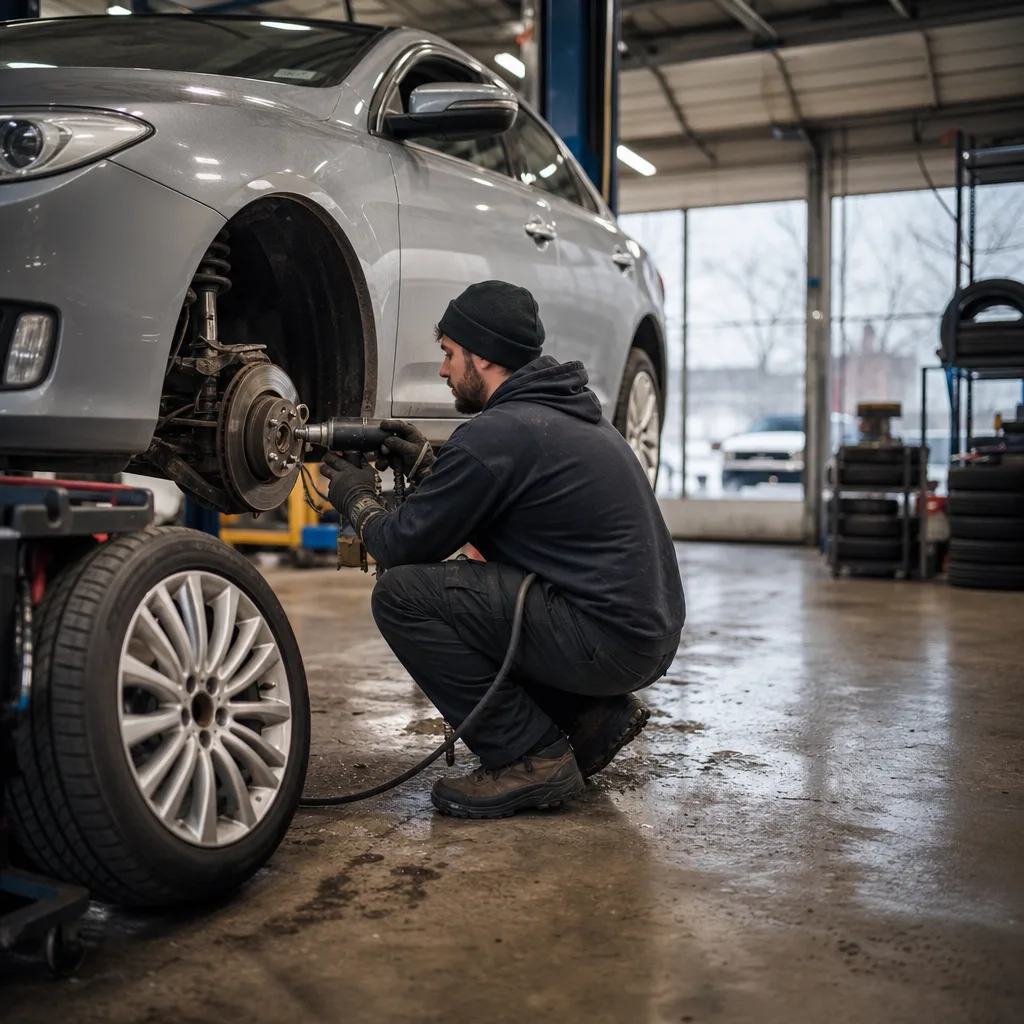
Mounting takes more time and more equipment than a swap, so it costs more across the industry. Many Orléans drivers end up buying a second set of rims for their winter tires for this reason. It can make every spring and fall changeover faster and simpler.
Some items can be included in the base price at one shop and billed separately at another. These are the usual ones that make one quote look cheaper than another:
- Balancing. It's normally part of a mount. On a swap it's often optional, but it's worth doing if you've felt a vibration before.
- Tire pressure sensors. If your dashboard warning light comes on after a changeover, a sensor may need resetting or replacing.
- Valve stems. Rubber stems wear out and are often replaced during a mount.
- Rim damage. A bent or corroded rim may need repair before a tire will hold air.
- Wheel size and tire type. Large wheels, low-profile tires, and run-flats take more time to mount, so they can cost more.
Before you book anywhere, ask three questions. Is this a swap or a mount? Is balancing included? Are there extra charges for sensors, valve stems, or disposal? The answers tell you whether two quotes are really for the same job.
That's why we explain the job before we start. Our goal is to help you make an informed decision about your car, not to add things you don't need. If something like tire balancing, TPMS sensor replacement, or rim repair comes up, we'll tell you why and let you decide.
Time Winter Tire Swaps to Ontario's Cold-Weather Guidance
The best time for a winter tire swap is when the air turns cold, not when the first snow falls. That's the part most people get backwards. By the time snow is on the ground, you've often already spent weeks driving on tires that don't grip well in the cold.
Here's why. The rubber in all-season and summer tires is made for warmer weather. As it gets cold, that rubber gets harder and grips the road less, even on dry pavement. Winter tires use a softer rubber that stays flexible in the cold, plus deeper tread that bites into snow and slush. A common rule of thumb in Canada is to switch once daytime highs stay around 7°C or colder. That's the point where many all-season tires start to lose their grip.
In Orléans, that cold often shows up well before the snow does. Frosty mornings on Highway 174 or St. Joseph Boulevard can leave patches of black ice on bridges and shaded stretches, even when the rest of the road looks fine. If your commute starts early, you'll hit those cold, slick conditions before afternoon drivers do.
Ontario doesn't make winter tires mandatory for most drivers. Still, that doesn't mean they're optional in practice. If you cross into Gatineau or anywhere else in Quebec during the winter, check their rules before you go, because Quebec has its own winter tire requirement.
For a quick look at the tire requirements laws in the provinces, Continental provides a helpful summary.[1]
A few signs it's time to book your fall changeover:
- The forecast shows daytime highs staying in the single digits for more than a few days in a row
- You're scraping frost off your windshield most mornings
- Your tire pressure light comes on during a cold snap, since cold air makes tire pressure drop
- You'd rather book on your schedule than wait in line after the first storm
That last point matters more than people think. Across the industry, demand spikes the moment snow hits the forecast. Everyone who waited calls at once. Booking a week or two earlier, while it's just chilly, usually means more choice of times and less stress.
Spring works the same way in reverse. One warm day in March isn't the signal. Ottawa weather loves a late cold snap. Wait until daytime temperatures stay warm and the chance of a surprise snowfall has passed. Don't leave it too long, though. That soft winter rubber wears down quickly on warm, dry pavement, so running your winter tires into June shortens their life and costs more over time.
If you're on the fence, here's an easy way to think about it. Switching a little early in the fall and a little late in the spring is the safer mistake. Switching late in the fall is the risky one. You can't control when the first freezing rain comes, but you can make sure you're ready before it does.
Confirm Your Steering Wheel Feels Right After the Swap
A good tire change shows up in how your car feels on the drive home. Your hands on the steering wheel will tell you most of what you need to know in the first few days. Here's what to pay attention to, and what to do if something feels off.
Some changes are normal. If you've just put winter tires on, the car won't feel the same as it did on your summer or all-season set. That's expected. Winter tires are softer and have deeper tread, so steering can feel a little less sharp. You may also hear a bit more road hum. Your car is fine, and you don't need to come back. That feeling usually fades after a few days of normal driving.
These signs aren't normal and are worth a call:
- A shake in the steering wheel that starts around highway speed. If it shows up when you merge onto Highway 174 and fades as you slow down, a wheel is likely out of balance.
- The steering wheel sits crooked when you're driving straight, or the car drifts to one side on a flat road. Check your tire pressure first. If the pressure is even, the problem may be in the steering or suspension.
- A clicking, clunking, or knocking sound from one wheel, especially when you start moving or turn. Treat this one seriously.
- Your tire pressure warning light comes on and stays on after the changeover, or one tire keeps losing air.

If you feel a wobble you didn't have before, or hear knocking from a wheel, don't wait to see if it goes away. Pull over somewhere safe and have it checked before you keep driving. A loose wheel isn't something to put off.
Here's a simple check for the first week. Drive a route you know well, like your usual run along St. Joseph Boulevard. Pay attention to how the car tracks, whether the wheel sits centred, and whether anything sounds new. Look at all four tires after a cold night. If one looks lower than the others, check it with a gauge, since a slow leak at the rim is easy to miss at first.
It's also smart to ask whoever did the work whether they recommend a lug nut recheck after your first short drive. Some wheels, especially alloy rims, can settle a little once they're on the road. A quick question at the counter tells you what to expect.
If a shake or pull doesn't go away with balancing or correct pressure, the cause may be something the tires are only pointing to. A worn tie rod or a tired suspension part can cause the same steering feel. We'll show you what we find and explain it in plain words, so you can decide what to fix now and what can wait.
At Ottawa Easy Wheels, Alex and Dan are both licensed mechanics who work on customers' vehicles themselves. If something doesn't feel right after your tire change, you'll be talking with the people who know your car.
Separate a Tire Change from a Flat Repair or TPMS Issue
Not every tire problem means you need a tire change. Sometimes one tire needs a repair. Sometimes it's a sensor. And sometimes it's just cold air. Sorting this out first can save you a trip, or at least make sure you book the right job.
Start with what you're noticing. Each symptom points somewhere different.
- All four tires look fine, but the season has changed. That's a tire change. Nothing is broken. You're just switching sets.
- One tire is low or flat, and the others are fine. That's usually a flat repair, not a change. Look for a nail, a screw, or a bit of debris in the tread.
- The tire pressure light is on, but every tire checks out at the right pressure. That points to a sensor, not the tires themselves.
- One tire keeps going soft every few days, but you can't find anything stuck in it. The leak may be at the rim edge or the valve stem, not in the tire.
Here's the honest part. If your pressure light comes on during a cold snap, you may not need us at all. Grab a gauge, check all four tires first thing in the morning, and fill them to the number on your driver's door sticker. If the light goes off after a short drive and stays off, you're done. That's a free fix at any gas station air pump.
Pay attention to how the light behaves, too. On most vehicles, a light that stays on steady means one or more tires are low on air. A light that flashes for a minute when you start the car, then stays on, usually means the system itself has a problem, like a sensor with a dying battery. Adding air won't fix a flashing light.
Flat repairs have limits. A small puncture in the main tread can often be patched from the inside. Damage on the sidewall, a large cut, or a tire that's been driven flat for a while is a different story. The inside of the tire can get chewed up even when the outside looks okay, so it may need replacing instead. Winter potholes along Orléans side streets and on-ramps can also bend a rim enough to cause a slow leak, which looks like a flat but isn't one.
It's common to have more than one thing going on at once. Say you're changing over to winter tires and one of them has been slowly losing air all summer in the garage. Or the light came on right after a changeover. Mentioning that when you book helps the shop plan for it, so you're not surprised by an extra step.
If you're not sure which one you're dealing with, just tell us what you're seeing. We'll check it, explain what's going on in plain words, and let you decide. Sometimes the right answer is a flat repair or a TPMS sensor replacement. Sometimes it's a few pounds of air and nothing more.
Ask the Right Questions Before You Book
A few minutes in your garage before you call can save you a second trip. Most surprises at a changeover come from the tires that have been sitting in storage, not from the ones on the car. Here's what's worth checking and asking about first.
Start with the tires you're about to put on. They've been sitting for months, so give them a quick look in good light.
- Is there enough tread left? Every tire has small raised bars in the bottom of the grooves. If the tread is close to level with those bars, the tire is near the end of its life. Winter tires lose a lot of their snow grip well before that point.
- How old are they? Look for the letters DOT on the sidewall, followed by a code. The last four digits show the week and year the tire was made. Rubber hardens with age, even on a tire with plenty of tread.
- Do you see cracks, bulges, or flat spots? Small cracks between the tread blocks or along the sidewall are signs the rubber is drying out. A bulge is a safety problem.
- Are all four the same? A matched set grips evenly. Mixing two new tires with two worn ones, or two different models, can make the car handle unevenly on slippery roads.
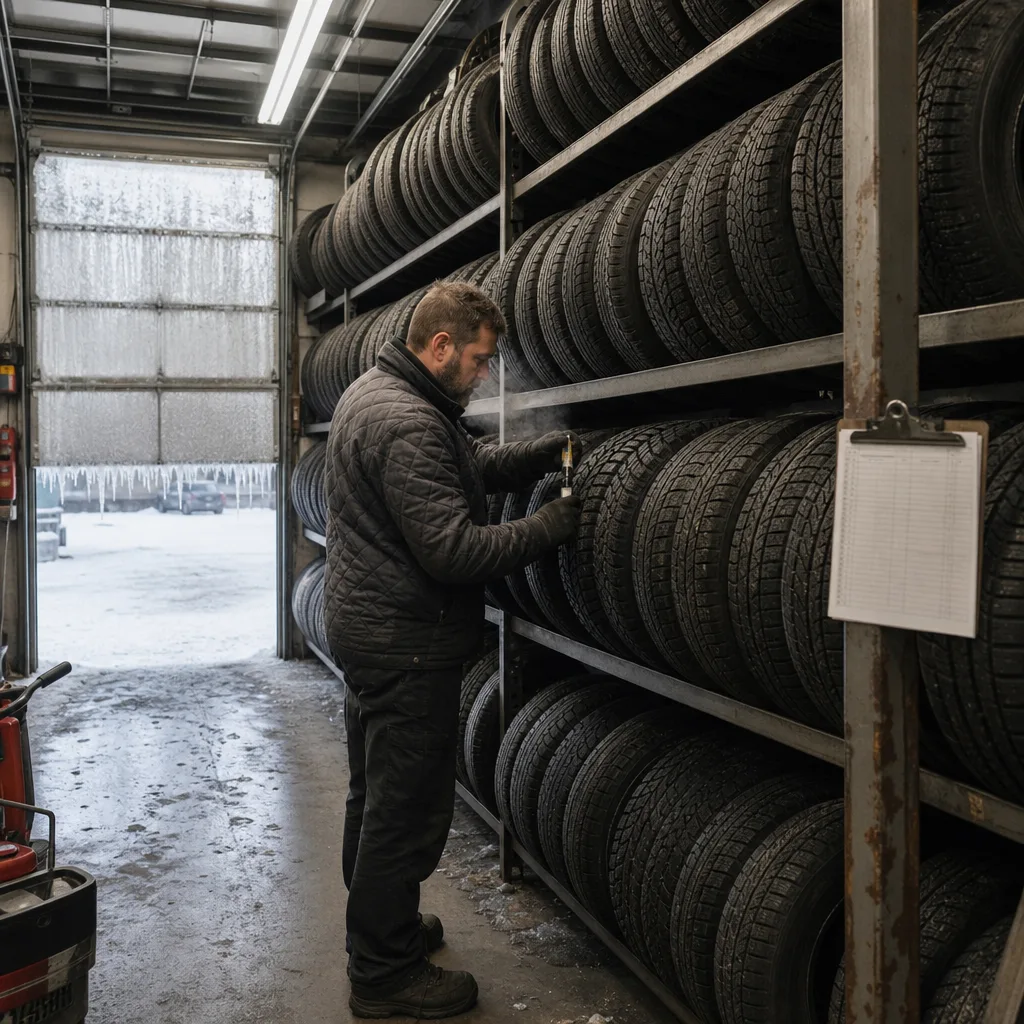
If any of these give you pause, mention it when you book. It's much easier to sort out before the car is up on the lift than halfway through the job.
Next, find your wheel lock key. Many cars have one locking lug nut on each wheel, and it needs a special adapter to come off. It's usually in the glove box, the centre console, or under the trunk floor with the spare. If you can't find it, tell the shop ahead of time so they can plan for it.
It also helps to know where each tire was on the car last season. Some people mark them with chalk or a tag, like front left or rear right. Some winter tires are directional, meaning they're built to roll only one way. If you want your tires moved to even out wear, ask about a tire rotation at the same visit.
Then ask the shop a couple of questions about how they'll keep you in the loop.
- Will you look over my tires and tell me what you find before doing anything extra?
- How will you let me know if something comes up while my car is there?
- Is there anything you recommend I check after the first few drives?
A good shop answers these without hesitating. You should never find out about an added charge when you're picking up the car.
At our shop, that's how we like to work. Our mission is honesty and transparency, and helping you make informed decisions about your car. If we spot worn tread, an old tire, or a rim that needs attention, we'll show you what we see and text you an update, so you can decide what makes sense. The choice stays yours.
Frequently Asked Questions
Do I legally need winter tires in Ontario?
No, Ontario doesn't require winter tires for most drivers, but that doesn't mean you should skip them. If you drive into Quebec, including nearby Gatineau, you'll need to check their winter tire rules before you cross over since Quebec sets its own requirement. Many Orléans drivers switch anyway once daytime highs settle near 7°C, because all-season rubber loses grip well before snow falls.
What is the 7°C rule for winter tires?
The 7°C rule is a simple guideline for timing your tire swap. Once daytime highs stay around 7°C or colder for several days in a row, all-season and summer tire rubber starts to harden and grip less, even on dry roads. Winter tires use softer rubber built to stay flexible in that cold, so switching around this temperature mark keeps you ahead of the first icy morning rather than reacting after it hits.