Orléans, Ontario · St. Joseph Blvd
Undercoating in Orléans
Empowering customers to make informed decisions.
- Full underside checked on the hoist
- Grime off before the coating
- Licensed mechanics Alex and Dan
- Serving Orléans since 2013
Spotting the First Signs Your Undercarriage Needs Protection
Rust doesn't show up overnight; it creeps in through small bubbles, flakes, and grinding sounds long before you see a hole. Orléans winters push a lot of salt onto Innes Road and Tenth Line Road, and that salt works its way into your frame rails. Catching early signs saves you from a much bigger repair later on.
Rust doesn't wait for spring to show up. It starts quiet, usually somewhere you can't see right away. Around here, the salt trucks are out on Innes Road and Tenth Line Road from November through March. That brine gets kicked up into your wheel wells with every drive. Give it a season or two, and that salt starts eating through the metal underneath your car.
So what does that look like? It's small stuff at first, easy to miss if you're not looking underneath the vehicle.
- Bubbling or flaking paint near the wheel wells and lower door panels
- Rust flakes or orange dust showing up on your driveway after a slushy drive
- A new grinding or squeaking sound from underneath, especially over bumps
- Brown or reddish streaks running down from the frame after it rains
- Visible pitting or scaling on the frame rails when you look underneath
We had a customer last winter who noticed rust flakes on her driveway after parking overnight. She figured it was nothing, just dirt. It wasn't dirt. It was her rear frame rail starting to flake. That's a common one. By the time you can see it on the ground, it's already been working underneath for a while.
Deciding Between Undercoating and Rustproofing
Here's something we clear up almost every week at the shop. People walk in asking for rustproofing when what they want is undercoating, or the other way around. They're not the same job. According to Synchrony, undercoating puts a protective layer on the underside of your vehicle to guard against stone chips, moisture, and the daily grind of driving on Orléans roads through slush and salt season.[1] Rustproofing goes further. It works to slow down corrosion that's already trying to take hold in seams, joints, and hidden metal folds.
So which one do you need? Ask yourself a simple question first: is your vehicle newer with clean, unmarked metal underneath, or has it already seen a few Ottawa winters with the salt trucks out?
- Newer vehicle, first winter or two on Orléans roads: undercoating is usually the smarter starting point
- Vehicle three years or older that's been through several salt-heavy seasons: rustproofing deserves a real look
- Noticing surface rust starting on brake lines or frame rails: that's a rustproofing conversation, not undercoating
- Just bought the vehicle and want to protect it going forward: undercoating fits that goal well
We'll look underneath your vehicle and tell you which one makes sense. Sometimes it's neither. If there's already heavy rust damage, no coating fixes that. We'd rather tell you the truth than sell you a service that won't do what you're hoping for.
When Your Vehicle Doesn't Need Undercoating Yet
Here's the honest truth. Not every car needs undercoating right away, and we'll tell you that straight to your face. If your vehicle is brand new, or if it's only a year or two old with no rust showing anywhere, you probably don't need it yet. Newer vehicles built in the last decade already come with factory rust protection on the frame and body panels. Adding a second layer too early doesn't really do much.
So when should you wait? A few situations come to mind.
- Your car is under a few years old and has no visible surface rust on the frame, wheel wells, or rocker panels
- You just bought the vehicle and don't yet know its full history of exposure to salt or moisture
- You live in a newer Orléans subdivision like Avalon, where most homes have garages and cars spend less time parked on salted streets over winter
- The vehicle is a lease and you don't plan to keep it long term
Not sure which category you fall into? That's pretty common, and it's a fair question. We see this every week. Folks assume older equals worse off, but sometimes a five-year-old car parked in a garage every night looks better underneath than a two-year-old one that sits outside on the street.
If your car's underside is clean and dry when we take a look, we'll tell you to hold off. We'd rather you spend that money on something your vehicle needs right now, like a brake inspection or an oil change. That's just how we do things here.
What Happens During an Undercoating Visit at Our Orléans Shop
So what happens when you bring your car in? It's not complicated, but a few steps matter more than people think.
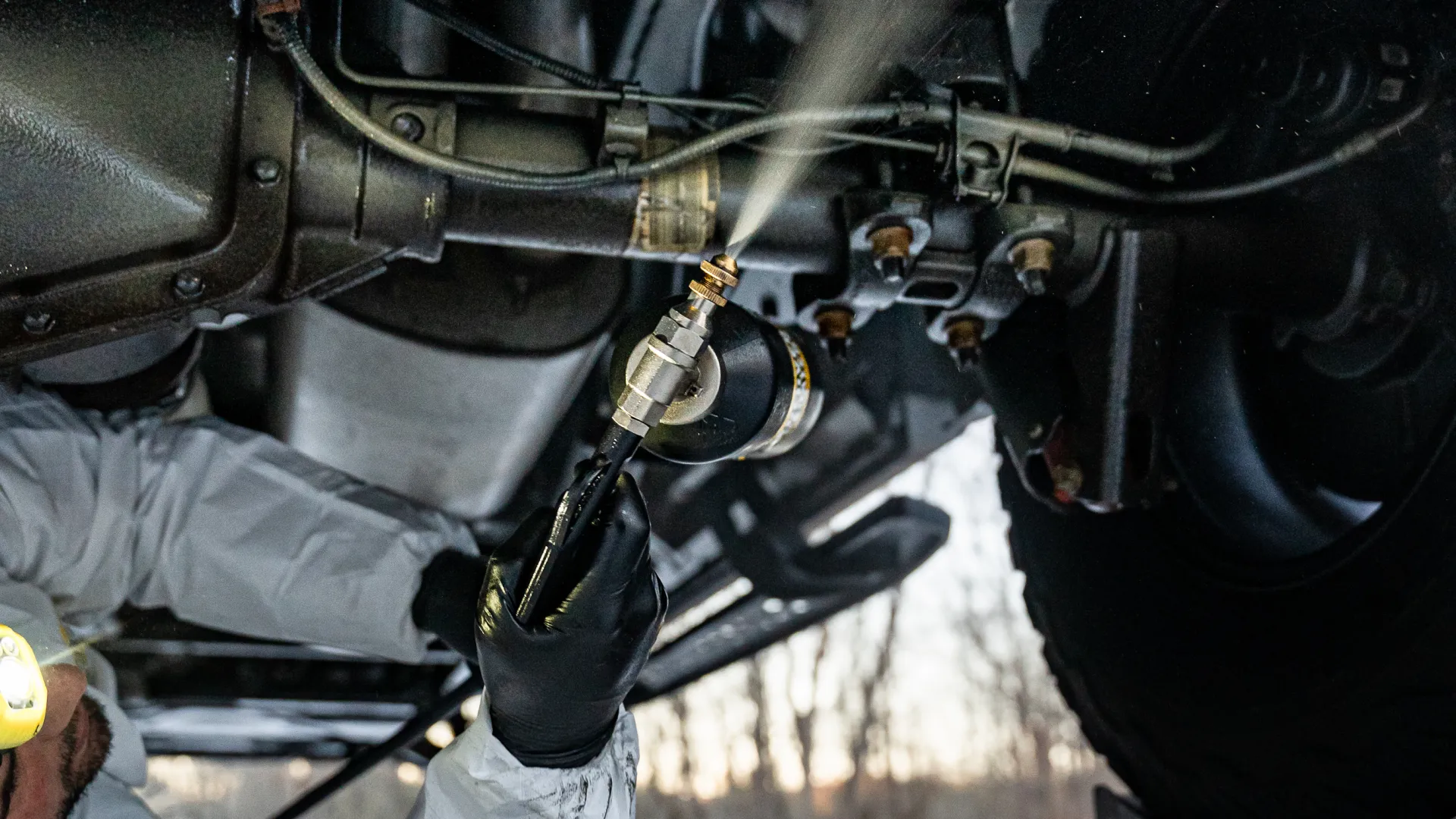
- We get your vehicle up on the hoist so we can see the full underside, not just what's visible from the ground.
- We check the frame, wheel wells, and exhaust area for existing rust, dirt, and old coating that's flaking off.
- Any loose debris or road grime gets cleaned off first. Coating over mud and salt residue just traps moisture underneath.
- We apply the undercoating to the frame rails, wheel wells, and other exposed metal. We work it into seams and joints where rust likes to start.
- We let it cure before the car goes back on the road, so it bonds instead of running off.
That drying step gets skipped by shops in a hurry. We don't rush it.
Folks driving on Innes Road or Tenth Line Road all winter know how much salt gets kicked up onto the underside of a car during a slushy commute. That salt sits in the wheel wells and frame seams long after the snow melts. When someone brings in a car with surprising rust, it starts in one of those spots we check first.
We'll also walk you through what we found in plain language. No guessing at what a rating on a sheet means. If we spot rust that's already started, we'll tell you straight instead of just coating over it and hoping for the best. That's the kind of honest conversation we think you deserve before any work gets done.
How Undercoating Pricing Works in the Auto Repair Industry
Let's talk about money for a second, because that's what you're really wondering. Undercoating pricing isn't one flat number across the industry. Shops price it based on a few real factors, not just because they feel like it.
Vehicle size matters a lot. A small sedan takes less product and less time than a full size pickup or an SUV with a longer frame. Coverage type matters too. Some jobs cover just the underbody. Others include wheel wells, fender liners and the frame rails themselves. The product used changes things too. Rubberized coatings behave differently than oil based ones, and each has its own application process.
- Vehicle size and undercarriage complexity
- How much surface area needs coverage
- Whether rust or road grime needs cleaning first
- Type of coating product used
- How much prep and drying time the job requires
Prep work is the part people forget about. If there's dirt, salt residue or surface rust already on the frame, that has to get cleaned off first. Skip that step and the coating won't stick right. It just peels or flakes later.
Before you book anywhere, ask what's included. Does the quote cover the full undercarriage or just certain panels? Is cleaning and prep part of the job, or extra? A shop that walks you through this before you pay isn't trying to upsell you, they're just being straight with you. That's the whole point of us doing a digital inspection first, so you see exactly what you're paying for, not guessing.
Frequently Asked Questions
What should I do to get my vehicle ready for an undercoating visit?
You don't need to do much, just try to keep the underside as clean as possible before you come in. We clean off loose debris and road grime first anyway, since coating over mud or salt residue traps moisture underneath. If your car has been driving through slush on Innes Road or Tenth Line Road, a quick rinse at home helps, but it's not required. We handle the rest once your vehicle is up on the hoist.
How long does it take before I can drive my car after undercoating?
Your vehicle needs to cure before it goes back on the road, so the coating bonds instead of running off. This step gets skipped by shops in a hurry, but we don't rush it. Driving too soon can smear the coating in the wheel wells and seams where it matters most. We'll let you know exactly when your car is ready so the protection holds up through slush season.
How do I know if I need undercoating or rustproofing instead?
It depends on your vehicle's age and history with Orléans winters. Undercoating works best on newer vehicles with clean metal underneath, protecting against stone chips and salt from roads like Innes Road and Tenth Line Road. Rustproofing is for vehicles three years or older that have already been through a few salt-heavy seasons, or if you're seeing surface rust on brake lines or frame rails. We'll check underneath and tell you which one fits your situation.
What are the first signs my vehicle needs undercoating protection?
Watch for bubbling paint near the wheel wells, rust flakes on your driveway after a slushy drive, or a new grinding sound from underneath over bumps. Orléans winters push a lot of salt onto roads like Innes Road, and that brine works into your frame rails over a season or two. One customer thought rust flakes on her driveway were just dirt, but it was her rear frame rail already flaking. Catching it early saves you a much bigger repair.
Does my newer car in Orléans still need undercoating?
Not always, and we'll tell you that straight if it doesn't. Vehicles built in the last decade already come with factory rust protection, so adding a layer too early doesn't do much. If you live in a newer Orléans area like Avalon where most homes have garages, your car likely spends less time parked on salted streets, which also helps. We'll look underneath and tell you if your money is better spent elsewhere right now.